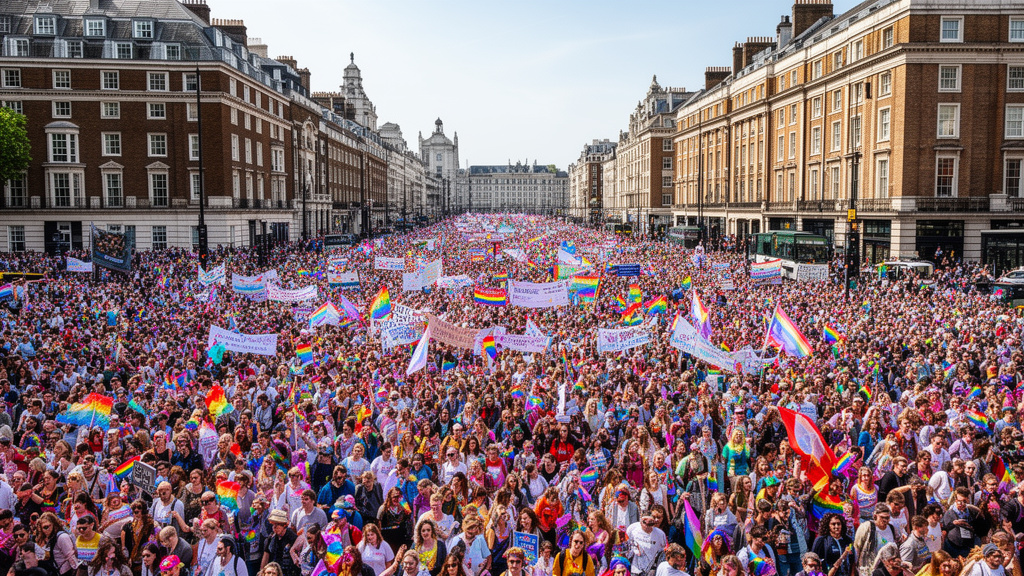
In a display of unprecedented scale, an estimated 150,000 people marched through the heart of London for Trans Pride, solidifying the event’s reputation as the largest gathering of its kind in the world. The massive turnout served as both a celebration of community and a potent statement of intent, as participants demanded greater visibility, legislative protection, and improved access to essential healthcare services. The sheer volume of attendees signals a shift in the global advocacy landscape, positioning London as a central nexus for the trans rights movement.
Key Highlights
- Record Attendance: An estimated 150,000 participants joined the march, setting a new global benchmark for Trans Pride events and confirming London’s status as a key hub for the movement.
- Core Demands: The march prioritized urgent calls for trans-inclusive healthcare, enhanced safety measures, and a rejection of discriminatory legislative discourse.
- Global Significance: Organizers and activists declared this the largest trans-focused gathering in history, highlighting the growth of grassroots activism into mass-mobilization politics.
The Unprecedented Scale of London Trans Pride
The energy in London was palpable as 150,000 individuals filled the city’s historic thoroughfares. What began as an advocacy event has transformed into a global phenomenon, drawing participants not just from across the United Kingdom, but from the international community. The scale of this year’s march reflects a growing urgency; the attendees were united by a shared objective: to move trans rights from the periphery of political discourse to the center of social policy.
The Mechanics of the March: A Display of Solidarity
Logistically, coordinating 150,000 people through central London is no small feat. The route, which traditionally winds through iconic urban spaces, became a sea of banners, flags, and chants. Unlike corporate-sponsored pride events, London Trans Pride has maintained a distinct grassroots character. This allows for a more focused, protest-oriented atmosphere where the primary objective is visibility and legislative pressure rather than commercial celebration. The sheer density of the crowd served as a physical manifestation of the community’s resilience, occupying space in a way that commanded the attention of both the public and policymakers.
Key Political and Social Drivers
To understand why 150,000 people took to the streets, one must look at the current political climate. The primary driver for this record-breaking turnout is the ongoing crisis regarding trans healthcare access. Long waiting lists for gender-affirming care in the UK have become a focal point of frustration. Activists at the march pointed to the systemic delays that prevent thousands of trans individuals from accessing medically necessary care, arguing that these administrative barriers are, in effect, a form of institutional discrimination.
Furthermore, the discourse surrounding trans safety has become increasingly polarized. The march served as an antidote to the hostile rhetoric often found in media and political circles. By occupying the streets, participants were reclaiming the narrative, asserting their right to exist, to express their gender identity, and to live free from harassment. The presence of such a vast, diverse crowd—ranging from youth activists to established human rights advocates—highlighted the intergenerational nature of the movement.
The Evolution of Trans Pride: From Protest to Global Phenomenon
The evolution of Trans Pride from a niche protest to the world’s largest gathering of trans individuals is a testament to the digital age’s ability to facilitate community building. Social media campaigns allowed organizers to mobilize participants at an unprecedented speed and scale. However, the success of the event also highlights a transition in protest culture. The modern activist is increasingly savvy about media optics and strategic messaging. Organizers have successfully channeled the frustration of the community into a highly disciplined and impactful demonstration of solidarity that serves as a blueprint for similar movements globally.
Looking Ahead: Policy Impacts and Community Resilience
The impact of this march extends far beyond the day of the event. In the political arena, a protest of 150,000 people creates a “political cost” for inaction. When a demographic group can mobilize such a significant portion of the population, policymakers are forced to acknowledge the weight of their demands. Whether this leads to tangible changes in the National Health Service (NHS) policies or legislative reforms regarding gender recognition certificates remains to be seen. However, the movement has successfully shifted the baseline of the conversation: trans rights are now clearly recognized as a matter of public concern rather than a fringe issue. The resilience displayed in London will likely serve as a catalyst for future actions, creating a sustained pressure campaign that organizers hope will result in substantive, long-term policy shifts.
FAQ: People Also Ask
What was the primary goal of the 150,000-person march?
The march was primarily aimed at advocating for better trans-inclusive healthcare, increased safety for the trans community, and bringing awareness to the systemic issues and discrimination faced by trans individuals in the UK and globally.
How does this event compare to other Trans Pride gatherings?
Organizers identified this event as the largest Trans Pride gathering in the world. While other cities host Pride events, the scale of this London march—reaching 150,000 participants—has set a new global benchmark for attendance and organization.
Why is London considered a hub for this movement?
London serves as a major intersection for international media, policy, and advocacy. The ability to mobilize 150,000 people in the capital gives the movement significant leverage, ensuring that their demands are heard by national and international political bodies.