
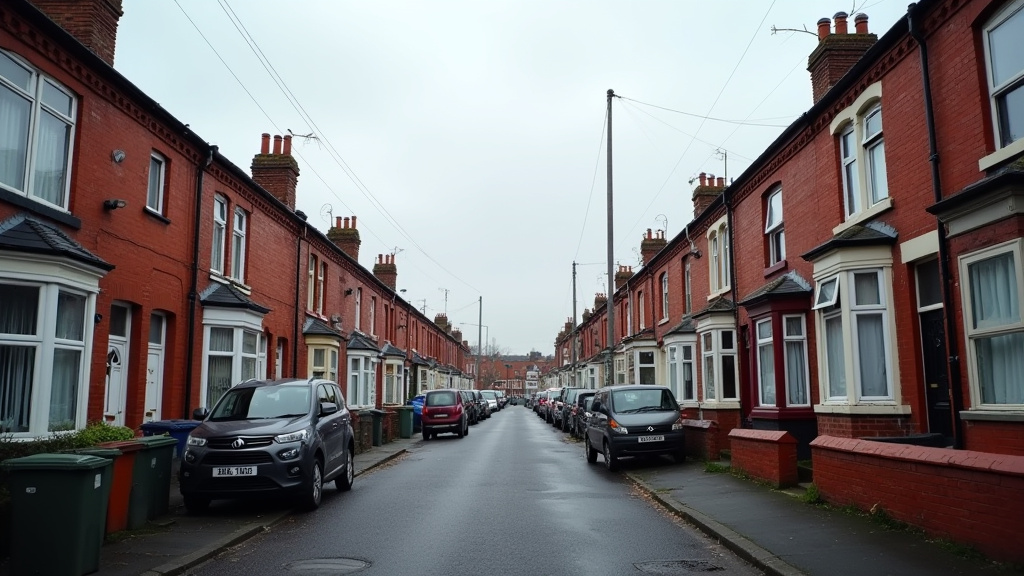
The current council tax system in the United Kingdom is creating a massive, structurally ingrained fiscal imbalance that effectively transfers wealth from Northern England to the capital, according to a recent analysis by the thinktank Centre for Cities. The report highlights that Londoners are benefiting from a £3bn annual subsidy, a figure that underscores a growing divide in regional equity and calls into question the government’s commitment to ‘Levelling Up.’ By failing to update property valuations since 1991, the system has created a regressive framework where the value of homes in the North—which have seen significantly lower growth compared to the astronomical rise in London property prices—remains taxed at rates disproportionate to their actual market value.
The 1991 Valuation Trap: Why the System is Broken
At the heart of the inequality is the decision to keep council tax bands pegged to property values from 1991. For over three decades, the property market has undergone a radical transformation. In London, the surge in house prices has been exponential, yet the council tax band—and the corresponding tax rate—for a mansion in a prime London borough is frozen in a 1991 time capsule.
Conversely, households in the North, where property value growth has remained sluggish or stagnant in comparison, are effectively paying a higher share of their property’s worth in tax. This creates a distortion where an owner of a modest terraced house in a Northern city often finds themselves in the same or similar council tax band as a home in London that has appreciated in value by several hundred percent over the last thirty years. The Centre for Cities argues that this is not merely an administrative oversight; it is a structural bias that essentially subsidizes London’s tax obligations at the expense of Northern residents.
The North-South Divide: A Fiscal Imbalance
The £3bn annual subsidy is a staggering indictment of regional disparity. In economic terms, this subsidy represents a transfer of fiscal capacity that should be utilized for local services, infrastructure, and regional regeneration. When Northern households pay a higher effective rate of tax on their homes, it suppresses local disposable income and constrains the spending power of those communities.
This discrepancy creates a compounding effect. London local authorities, while having access to a different tax base, are supported by a system that has allowed them to keep residential tax bills artificially low relative to the current market value of homes. Meanwhile, Northern councils are faced with the paradox of needing to raise taxes to fund essential services while their residents are already feeling the weight of a higher tax burden relative to their asset values. The result is a stifling of regional economic growth, contradicting the core goals of the Levelling Up agenda, which aims to provide equitable opportunities across all regions of the United Kingdom.
The Economic Cost of Political Inertia
The primary barrier to reform is the political fear associated with property revaluation. The last time a major change was attempted—the introduction of the Community Charge, or ‘Poll Tax’ in the early 1990s—it led to significant civil unrest and the downfall of a government. Consequently, successive administrations have avoided revaluation, fearing a voter backlash from those in London and the South East who would see their council tax bills rise significantly if brought into line with modern market values.
However, the status quo is becoming economically unsustainable. The Centre for Cities emphasizes that without a fundamental overhaul of the system—such as introducing more tax bands or conducting a long-overdue national property revaluation—the geographic inequality will only deepen. The £3bn drain on the North is not just a statistical anomaly; it is a persistent tax on economic development. By continuing to protect the current system, the government is essentially choosing to maintain a regime that penalizes the North to avoid short-term political friction in the capital.
Future Predictions: Can the System Be Saved?
Looking ahead, the pressure for reform is likely to mount as local authorities in the North continue to struggle with budget deficits and the rising cost of social care. Economists suggest that a move towards a ‘Fairer Tax’ system could involve a gradual revaluation or a national shift to a land-value tax, which would decouple property wealth from the arbitrary bandings of the 1990s.
Failure to address this £3bn subsidy will likely lead to greater regional resentment and a failure of the ‘Levelling Up’ promise. If the UK is to achieve genuine economic parity, the fiscal framework must be modernized. Until then, the North will continue to pay the price for a housing and tax market that hasn’t seen a update in over thirty years.