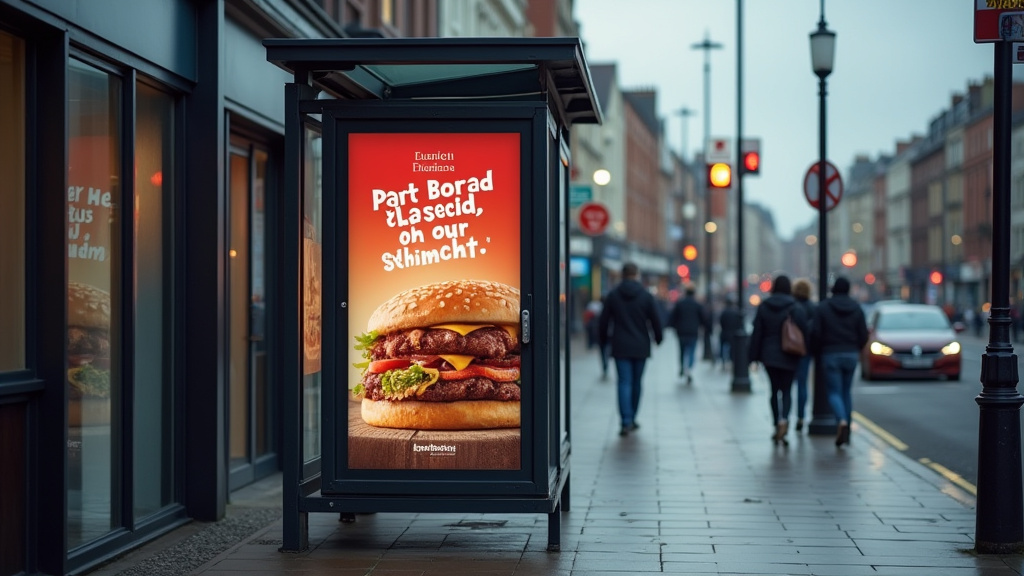
Adfree Cities, the UK-based campaigning organization, has officially launched its latest challenge to the status quo of outdoor advertising. Titled “Gag Big Ag,” the campaign directly targets the ubiquity of meat-based fast food and factory-farmed product advertisements on public, council-owned land. By pressuring local authorities to treat high-carbon advertising similarly to previous restrictions on tobacco, gambling, and payday loans, the group is forcing a critical conversation about the intersection of municipal policy, public health, and the climate crisis.
The ‘Gag Big Ag’ Initiative: A Call For Policy Change
The central premise of the “Gag Big Ag” campaign is straightforward yet legally and culturally complex. Adfree Cities argues that local councils, many of which have declared climate emergencies, are hypocritically facilitating the promotion of industries that contribute significantly to greenhouse gas emissions. The campaign urges municipal leaders to update their advertising policies to exclude products from factory farming and high-emission food production.
For Adfree Cities, this is not merely an aesthetic choice regarding the clutter of city streets. It is a calculated effort to de-normalize industrial meat consumption. By removing these advertisements from bus stops, digital billboards, and council-owned property, the organization believes that public authorities can exert meaningful influence on social norms and consumer behavior, effectively ‘gagging’ the aggressive marketing tactics of large agricultural corporations.
The Climate Contradiction: Advertising As A Policy Tool
One of the primary pillars of the campaign is the data-driven argument regarding climate change. Livestock production, particularly factory farming, is a massive contributor to global greenhouse gas emissions. According to various environmental studies, the meat and dairy industries are responsible for a significant percentage of global emissions, often cited in the 14% to 18% range, alongside substantial impacts on land use and biodiversity loss.
For local councils, the contradiction is stark. When a council declares a climate emergency—a common legislative step across many UK municipalities—it signals a commitment to reducing the local carbon footprint. Adfree Cities asserts that continuing to profit from advertising space sold to high-carbon industries undermines these official declarations. The group challenges councils to look at their advertising inventory not just as a revenue stream, but as a space that can either reinforce sustainability goals or actively work against them.
Navigating The Advertising Loophole: Precedent And Ethics
The precedent for such bans is already firmly established. Across the UK and in various global cities, advertising for tobacco products has been banned for decades. More recently, there has been a significant shift toward banning or restricting advertisements for unhealthy food, alcohol, and gambling products near schools or in public transport hubs. These policies are based on the understanding that public space should not be used to promote products that cause documented public harm.
‘Gag Big Ag’ seeks to frame high-carbon meat advertising within this same category of ‘public harm.’ The argument is that if advertising for cigarettes is restricted because of health risks to the individual, and gambling advertising is restricted due to the socio-economic risks, then advertising for products that accelerate climate change should be restricted due to the systemic risk to the public at large. This framing shifts the focus from individual choice to collective accountability.
Secondary Angles: Exploring The Broader Impact
To understand the full scope of this campaign, one must look at three distinct secondary angles:
1. The Economic Dependency of Councils: Many local authorities rely on advertising revenue to bridge funding gaps. Opponents argue that banning specific industries limits the pool of advertisers, potentially leading to budget deficits. The campaign faces the hurdle of proving that sustainability is worth the potential revenue loss, or that such revenue is ethically compromised.
2. The Normalization of Dietary Choices: The meat industry spends millions on marketing to ensure that meat-based fast food is perceived as a default, affordable, and desirable choice. This campaign attempts to disrupt that normalization. If this succeeds, it could act as a cultural litmus test for how society views the role of advertising in shaping dietary habits versus personal autonomy.
3. The Future of ‘High-Carbon’ Regulation: If Adfree Cities succeeds, it could set a legal and cultural precedent for other ‘high-carbon’ industries. This might eventually lead to debates about advertising bans for fossil fuel-powered vehicles, high-emission aviation, or even fast fashion, effectively creating a new category of ‘climate-prohibited’ advertising.
As the campaign gains traction, the debate is likely to move from local council chambers to the national stage, forcing a wider reckoning on what role public advertising plays in the era of environmental crisis.
FAQ: People Also Ask
What is the specific goal of the ‘Gag Big Ag’ campaign?
The primary goal is to convince local councils to update their advertising policies to ban advertisements for meat, dairy, and factory-farmed products on all council-owned advertising sites, citing the climate impact of these industries.
Which councils are being targeted by Adfree Cities?
The campaign is national in scope, targeting councils across the UK that have declared climate emergencies but still allow high-carbon advertising on public infrastructure.
How is this different from junk food ad bans?
While similar in methodology—restricting public space for certain products—’Gag Big Ag’ focuses specifically on the environmental impact of industrial agriculture, whereas junk food bans are primarily driven by public health concerns like obesity and diabetes.
Can councils legally ban specific types of advertisements?
Yes, local authorities have considerable control over the advertising policies for their own assets (like bus shelters and billboards). However, they must navigate existing contracts with advertising companies, which can complicate the implementation of new bans.