Two Jewish men, aged 34 and 76, were hospitalized on Wednesday following a stabbing attack in the Golders Green neighborhood of north London. The Metropolitan Police have formally declared the incident a terrorist attack, a decision that underscores the gravity of the assault and the mounting fears of a deliberate campaign targeting the Jewish community. The suspect, a 45-year-old male, was arrested at the scene on suspicion of attempted murder after a confrontation that also involved police officers. While the investigation remains in its early stages, the classification of the incident as terrorism signals a significant escalation in the response from law enforcement and intelligence services.
The Incident in Golders Green
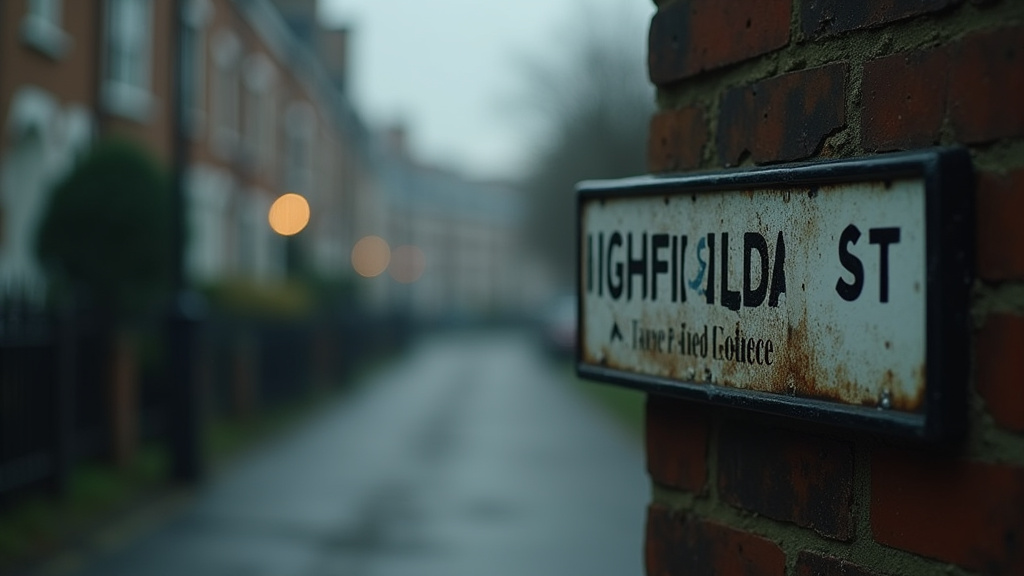
The attack occurred at approximately 11:16 a.m. local time on Highfield Avenue in Barnet. Witnesses and surveillance footage indicate that the assault was sudden and violent. The two victims, who were walking in the area, sustained stab wounds and were immediately transported to a local hospital, where they are currently in stable condition. The swift intervention of members of Shomrim—a volunteer Jewish civilian patrol organization—was instrumental in the suspect’s detention. The suspect reportedly attempted to target further members of the public before engaging with police officers, who were forced to use a Taser to bring him under control. No police officers were injured during the apprehension, though the event has left the surrounding community deeply shaken.
The Terror Declaration: A Strategic Response
Assistant Commissioner Laurence Taylor, the head of Counter Terrorism Policing, confirmed the classification of the event as a terrorist incident shortly after the arrest. This legal and procedural designation is crucial in the United Kingdom, as it shifts the investigation from local law enforcement to specialized national counter-terrorism units. This designation is not applied lightly; it requires evidence or strong suspicion that the act was motivated by ideological, religious, or political extremism.
By framing the Golders Green stabbing as a terror incident, the Metropolitan Police are signaling that they are treating the event not merely as a random act of violence, but as a deliberate strike against a protected community. This allows for a deeper level of intelligence gathering and wider coordination with the security services to determine whether the suspect acted alone or as part of a broader extremist network. The investigation is currently exploring potential connections to recent acts of arson and vandalism that have targeted Jewish sites, including synagogues and ambulances in the same borough.
Understanding the Escalation: A Pattern of Violence
The Golders Green incident does not exist in a vacuum. Over the past several months, London has witnessed a concerning rise in antisemitic incidents, characterized by arson, property damage, and localized harassment.
The Link to Recent Arson Attacks
For weeks, the Metropolitan Police have been investigating a series of arson attacks against Jewish infrastructure in North London. These have included fires set at the premises of Hatzolah, a Jewish emergency medical service, as well as several synagogues. While detectives are still working to confirm definitive links between the Wednesday stabbing and these previous crimes, the proximity of the incidents—both geographically and in terms of their target—is a primary focus of the inquiry. The terror declaration serves as an umbrella under which these various threads of investigation can be consolidated, allowing authorities to view the situation as a cumulative threat to community safety rather than as a series of isolated crimes.
The Social and Political Fallout
Prime Minister Keir Starmer reacted swiftly, stating that “attacks on our Jewish community are attacks on Britain,” a sentiment echoed by officials across the political spectrum. The Prime Minister called for an emergency meeting of the government’s response committee to discuss the incident, signaling that the safety of the Jewish community is a matter of national security. However, the government’s response has faced intense scrutiny from local residents. During a press conference at the scene, Metropolitan Police Commissioner Mark Rowley encountered vocal criticism from bystanders who shouted “shame on you” and called for his resignation, reflecting a deep-seated frustration among some members of the Jewish community who feel that authorities have been too slow to act in the face of persistent intimidation.
Secondary Angles: Beyond the Headlines
1. The Vital Role of Volunteer Security
The role of Shomrim in this incident highlights the increasing reliance on volunteer security organizations within London’s minority communities. As traditional police resources are stretched thin, these volunteer groups have become a vital line of defense. Their prompt intervention in the Golders Green attack likely prevented further casualties. However, this raises complex questions about the role of civilian patrols: while they provide immediate security, their existence also reflects a perceived shortfall in state-provided protection, creating a broader debate about the balance of community safety between the public and the private sectors.
2. The Mental Health and Radicalization Nexus
Metropolitan Police have noted that the suspect has a history of serious violence and mental health issues. This adds a layer of complexity to the ‘terror’ designation. In modern counter-terrorism, the lines between ‘lone wolf’ attacks, radicalized individuals, and those with severe psychological disturbances are often blurred. Intelligence agencies must navigate these nuances carefully. If the suspect was driven by ideological hatred, the case becomes a matter of radicalization and extremist influence. If the actions were primarily driven by mental health factors that were then framed through an antisemitic lens, the security challenge becomes one of public health and institutional failure to identify high-risk individuals before they act.
3. The Future of Urban Social Cohesion
Ultimately, the stabbing forces a reckoning regarding the state of social cohesion in London. A vibrant, multicultural city is now struggling with the reality of targeted hate-driven violence that is specifically intended to make a population feel unwelcome. The psychological impact of such events cannot be overstated. When citizens are forced to question their safety while simply walking to a bus stop or attending a synagogue, the fabric of urban life begins to fray. The challenge for the government is not just to police the streets, but to rebuild a sense of shared security and trust between the state and its vulnerable communities—a task that will require far more than just increased patrols.
FAQ: People Also Ask
Q: Why was this attack classified as terrorism?
A: In the UK, a terrorist incident is defined by the intent to influence a government or intimidate a population, often driven by political, religious, or ideological causes. The classification allows police to access specialized national counter-terrorism resources and indicates that the attack is suspected of being specifically targeted at the Jewish community.
Q: Are the victims of the Golders Green stabbing okay?
A: Both victims, aged 34 and 76, were taken to the hospital following the attack. As of the latest updates, they are reported to be in stable condition, though the physical and psychological toll of such an event is significant.
Q: Is there a known motive for the attacker?
A: Police have confirmed the suspect, a 45-year-old man, is in custody. While detectives are investigating his background, potential motives, and possible links to previous arson attacks, they have noted he has a history of serious violence and mental health issues. The investigation is actively looking into whether the attack was ideologically motivated.
Q: What is Shomrim, and why were they mentioned?
A: Shomrim is an independent, volunteer Jewish civilian patrol group that operates in London and other major cities to provide neighborhood security. They were on the scene in Golders Green and helped detain the suspect before police arrived, playing a crucial role in preventing further violence.