
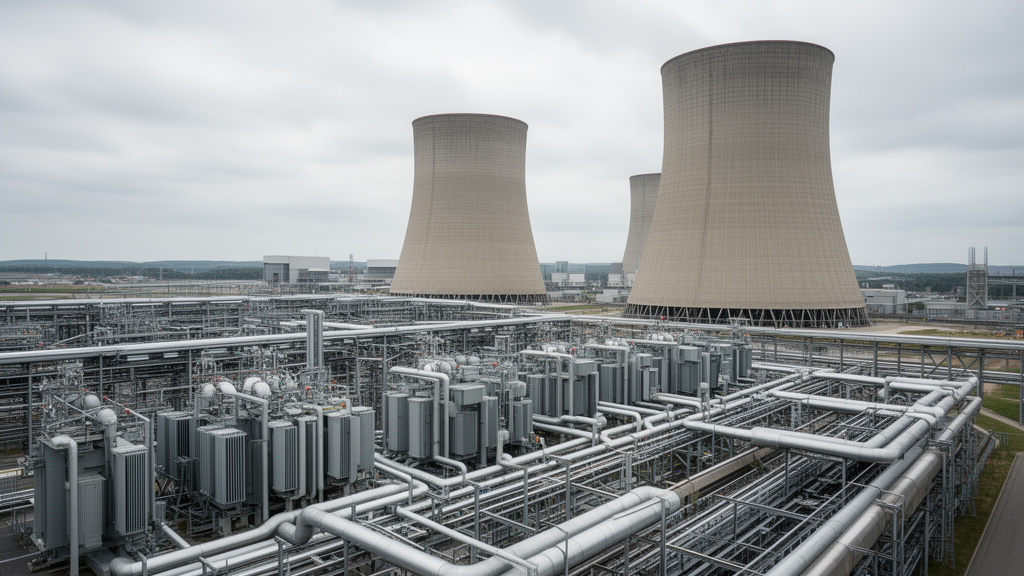
In an unprecedented escalation of cyber warfare, security agencies have confirmed that a power plant within the United Kingdom was temporarily disabled by Iran-linked hackers. This incident, which represents the first successful disruption of its kind on British critical infrastructure, underscores a dangerous paradigm shift in how nation-state actors are targeting Operational Technology (OT) rather than traditional Information Technology (IT) systems. The breach, which utilized specialized access to industrial control hardware, has sent shockwaves through the national security establishment and prompted an immediate review of Britain’s power grid resilience.
Key Highlights
- Unprecedented Breach: This event marks the first confirmed successful cyberattack of its kind against a power plant located in the United Kingdom.
- Technical Vector: The attackers exploited Programmable Logic Controllers (PLCs), the industrial hardware that manages physical processes within energy facilities.
- Geopolitical Attribution: Intelligence and cybersecurity experts have linked the attack to Iranian-affiliated hacking groups, suggesting a widening scope of regional conflict.
- Infrastructure Vulnerability: The incident highlights the inherent weaknesses in legacy industrial control systems that were never designed for an internet-connected environment.
The Digital Siege on Britain’s Energy Grid
The infiltration of a United Kingdom power plant by Iran-linked threat actors represents a turning point in the global cybersecurity landscape. For decades, the theoretical risk of a “cyber-kinetic” event—where digital code results in physical damage or disruption—was a primary concern for western intelligence agencies. With this latest incursion, that theory has become a reality. The ability to manipulate Programmable Logic Controllers (PLCs) effectively allows attackers to move beyond data theft and into the realm of physical sabotage, such as disrupting cooling systems, halting electricity generation, or interfering with grid load balancing.
The Mechanics of the PLC Exploitation
At the heart of the attack were the PLCs, the silent workhorses of modern industrial infrastructure. These devices are essentially ruggedized computers tasked with monitoring and controlling physical machinery—valves, turbines, and generators. In this specific incident, the attackers reportedly exploited vulnerabilities within the remote access configurations of these devices. Unlike traditional IT security, which benefits from years of rigorous penetration testing and patching, OT environments often rely on “security through obscurity.” The attackers leveraged this lack of scrutiny, bypassing standard network authentication to send unauthorized commands to the plant’s industrial control logic.
Cybersecurity forensic teams examining the breach found signatures consistent with known Iran-linked threat groups. The methodology echoes the patterns observed in previous global attacks against water treatment facilities and energy providers, where the goal was not immediate widespread destruction, but rather to prove capability, demonstrate reach, and sow psychological terror. By temporarily disabling the facility, the hackers demonstrated that they could bypass the “air-gapped” assumptions that many critical infrastructure operators still cling to.
The Shift from Espionage to Sabotage
For years, the U.K.’s cybersecurity posture focused heavily on preventing state-sponsored espionage—the theft of intellectual property or the surveillance of government communications. This attack represents a fundamental shift in that threat model. The motivation here appears to be strategic disruption rather than data collection. By targeting power generation, the threat actors are signaling that they can impose real-world costs on the U.K. in response to shifting geopolitical dynamics.
This raises urgent questions about the interdependencies of our energy grid. Modern power plants are increasingly integrated with digital management systems to improve efficiency and reduce maintenance costs. However, every point of connectivity is a potential point of entry for a sophisticated adversary. The challenge for U.K. regulators is how to secure these legacy industrial systems without halting the essential operational efficiencies that the modern grid requires.
Securing Critical National Infrastructure (CNI)
In the wake of this historic breach, the British government has accelerated initiatives to harden Critical National Infrastructure (CNI). This involves a multi-layered approach: isolating control networks from the public internet, implementing stricter Zero Trust architecture, and deploying advanced anomaly detection systems capable of identifying unauthorized PLC modifications in real-time.
Experts argue that the era of relying on physical isolation is over. Every power facility in the country must now assume that its industrial control systems are high-value targets. This requires a cultural shift within energy companies, where cybersecurity is no longer relegated to the IT department but is integrated into the core engineering and operational functions of the plant. The cost of such upgrades is significant, but as this recent attack proves, the cost of inaction—potential power outages, industrial accidents, or even public safety threats—is far higher.
FAQ: People Also Ask
Q: How did the hackers gain access to the power plant?
A: Reports indicate the attackers exploited vulnerabilities in the remote access configurations of Programmable Logic Controllers (PLCs), allowing them to bypass standard security protocols and issue unauthorized commands.
Q: What are Programmable Logic Controllers (PLCs)?
A: PLCs are specialized, ruggedized computers used in industrial settings to automate and control physical processes, such as the operation of turbines, valves, and power distribution systems.
Q: Is this the first time a UK power plant has been targeted?
A: While there have been reconnaissance and probing attempts on various critical infrastructures over the years, this is reportedly the first confirmed instance of a successful cyberattack resulting in the temporary disabling of a power facility in the United Kingdom.
Q: What is the significance of the Iran link?
A: Attribution to Iran-linked actors is significant because it suggests a state-level, or state-proxy, intent to conduct disruptive operations against Western infrastructure, rather than the profit-motivated activities typically seen with criminal ransomware gangs.