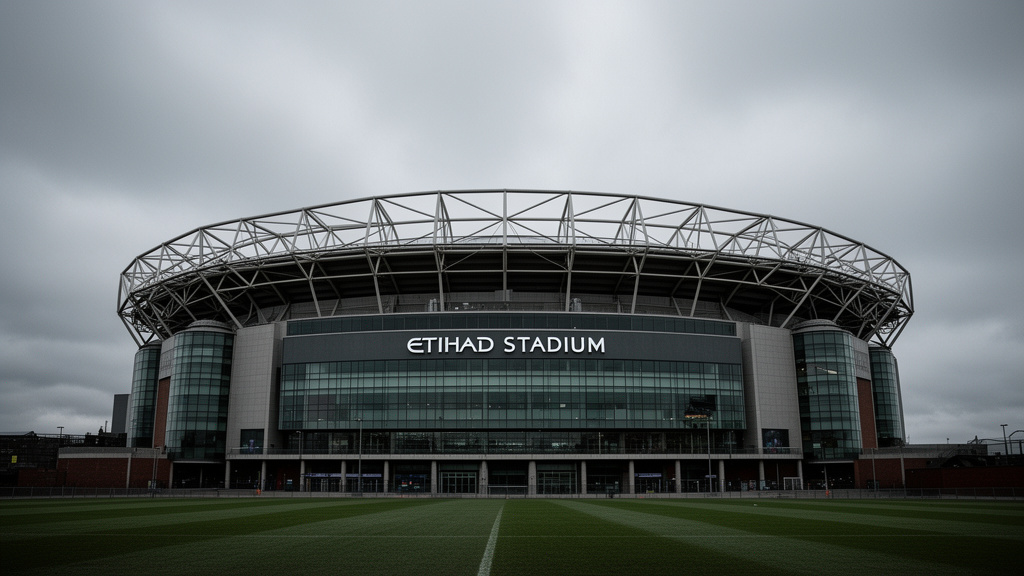
The landscape of English football has shifted seismically as Manchester City has been found guilty of 114 breaches of Premier League financial regulations. This conclusion follows an exhaustive two-year investigation into the club’s financial conduct, marking one of the most significant legal challenges in the history of the sport. As the club officially signals its intent to appeal the ruling, the footballing world remains in a state of high tension, awaiting the ultimate resolution of a saga that questions the very foundations of financial fairness in the Premier League.
The Anatomy of the Charges: Unpacking the 114 Breaches
The charges brought against Manchester City are not merely procedural; they represent a fundamental inquiry into the financial operations of the club over a decade. The 114 breaches cover a wide spectrum of alleged financial irregularities, primarily focusing on the period between 2009 and 2018. At the heart of the case are accusations regarding the inflation of sponsorship revenue and the concealment of player and manager remuneration.
Regulators have scrutinized the club’s compliance with Profit and Sustainability Rules (PSR), alleging that Manchester City failed to provide accurate financial information. The complexity of these charges lies in the intricate web of entities involved, with investigators examining whether funding was routed through associated parties to circumvent the regulations designed to ensure a level playing field. The guilty verdict suggests that the Independent Commission found sufficient evidence to validate the Premier League’s stance that the club’s financial reporting did not adhere to the standards mandated by the league’s rulebook.
The Independent Commission and the Standard of Proof
Unlike standard disciplinary proceedings, the case against Manchester City was adjudicated by an Independent Commission. This body was tasked with reviewing the immense volume of documentation submitted by both the Premier League and the club. The duration of this process—spanning over two years—underscores the meticulous nature of the inquiry. The Commission’s findings imply a failure of governance at the highest levels of the club’s financial administration.
This verdict serves as a critical test for the Premier League’s regulatory enforcement capabilities. For years, critics have argued that the league lacked the teeth to effectively police its wealthiest members. This ruling effectively dismantles that narrative, signaling a new era of enforcement where financial transparency is prioritized over corporate obfuscation. The findings set a precedent that could ripple through the other nineteen clubs, signaling that no entity, regardless of its commercial power, is immune to regulatory scrutiny.
The Road Ahead: The Appeals Process and Legal Uncertainty
Following the verdict, Manchester City has confirmed its intention to lodge an immediate appeal. This stage of the process introduces a new layer of complexity. The legal battle is expected to move into a phase of intense scrutiny regarding the procedural fairness of the initial investigation and the interpretation of the financial rules themselves.
An appeal does not pause the reality of the verdict; it merely suspends the immediate imposition of sanctions while the legal teams prepare their case. This creates an atmosphere of prolonged uncertainty. For the club, this involves a multi-pronged strategy: challenging the scope of the charges, questioning the admissibility of certain evidence, and potentially seeking to mitigate any penalties that the Independent Commission may suggest. This phase is likely to be protracted, requiring teams of specialized sports lawyers to navigate the intersection of corporate law and football regulations.
Secondary Angle: The Impact on Club Valuation and Brand Integrity
The reputational damage associated with this guilty verdict is a critical consideration for the club’s ownership and stakeholders. Manchester City has built its brand on the premise of relentless success and modern, professional efficiency. A public finding of financial misconduct strikes at the core of this image. The economic implications are multifaceted; potential sponsors, commercial partners, and even broadcast agreements could face clauses related to ethical conduct and regulatory compliance.
Furthermore, the long-term impact on the club’s ability to operate within the transfer market is significant. If the eventual sanctions involve strict budgetary caps or limits on player registration, the club’s ability to maintain its competitive dominance in the UEFA Champions League and domestic competitions will be severely compromised. The ‘City’ brand, which has become synonymous with sporting excellence, must now reconcile its legacy with a stain of systemic regulatory failure.
Secondary Angle: The Future of Football’s Financial Regulations
This case has become the ultimate stress test for the Premier League’s Profit and Sustainability Rules. Financial Fair Play (FFP) has long been a subject of debate, with many arguing that the rules entrench existing power structures. However, this verdict suggests that the regulations are being interpreted with renewed vigor. The outcome of the Manchester City case will undoubtedly influence how the league shapes its financial rules moving forward.
We may see a push for greater transparency in sponsorship accounting and more stringent requirements for the disclosure of associated-party transactions. The ripple effects will likely be felt in the boardroom of every major club in Europe. As leagues aim to stabilize their financial ecosystems, the Manchester City case will serve as the primary case study—a warning to those who attempt to stretch the boundaries of the law.
Secondary Angle: The Human Element and Managerial Stability
Amidst the legal chaos, the focus on the pitch remains a point of intense speculation. For the manager and the playing squad, the uncertainty surrounding the club’s future status presents a significant distraction. While the players remain professional, the threat of points deductions or even more severe sanctions creates an environment of instability. The ability of the club’s leadership to insulate the squad from the legal fallout will be a defining factor in how they finish the current season. The psychology of a team operating under a dark cloud of potential disqualification is a variable that is difficult to quantify but impossible to ignore.
FAQ: People Also Ask
What are the 114 charges against Manchester City?
The 114 charges relate to alleged breaches of Premier League financial rules between 2009 and 2018. They include accusations of inflating sponsorship income, failing to disclose accurate manager remuneration, and non-compliance with UEFA’s Financial Fair Play regulations.
What happens next now that the club has been found guilty?
The club has signaled its intent to appeal the ruling. This initiates a formal appeal process where the findings of the Independent Commission will be reviewed by an appeal board. Sanctions, if any, are typically on hold until the appeal process is concluded.
Could Manchester City be expelled from the Premier League?
While the range of potential sanctions is broad—including heavy fines, point deductions, or the stripping of past titles—expulsion is technically within the power of the Independent Commission. However, such a severe penalty is historically rare and would likely be the subject of a massive, drawn-out legal fight.
How does this affect the Premier League’s reputation?
The case is viewed as a litmus test for the Premier League’s governance. A guilty verdict demonstrates that the league can enforce its rules against its most powerful members, which may restore credibility among other clubs and fans, though it also raises questions about how such breaches went undetected for years.