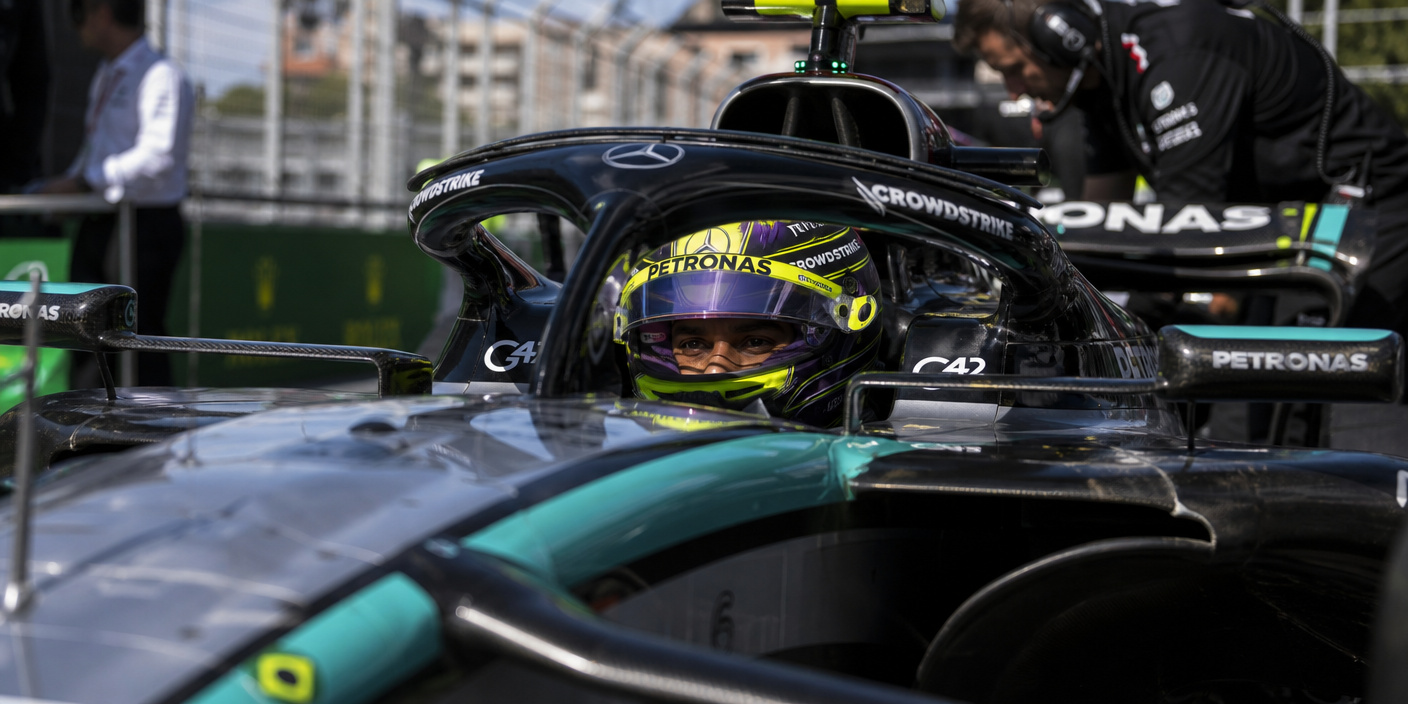
Lewis Hamilton has conceded that his 2026 F1 title dream is effectively over following a disastrous Spanish Grand Prix in Madrid, where he trailed Mercedes’ Kimi Antonelli by 76 points. The veteran champion, seeking to secure his final legacy in the sport, faced a candid reality check after a weekend marked by technical failures and strategic missteps that allowed his rising-star teammate to seize a commanding lead in the Drivers’ Championship standings.
Key Highlights
- Lewis Hamilton has officially conceded the 2026 championship, citing the 76-point deficit to Kimi Antonelli as insurmountable.
- The Madrid Grand Prix weekend was labeled a “total mess” by Sky Sports pundits, who openly questioned Hamilton’s race management and the Mercedes pit wall’s strategic decisions.
- The 76-point gap represents the widest margin between Hamilton and his teammate in over a decade, signaling a potential shift in the team’s hierarchy.
- Analysis of the Madrid circuit performance reveals specific data points where Antonelli outperformed the seven-time champion, particularly in high-speed cornering sections.
The Madrid GP: A Turning Point for the 2026 Season
The 2026 Formula 1 season was envisioned as a final, glorious campaign for Lewis Hamilton, a narrative of redemption and a push for an unprecedented world title. However, the streets of Madrid have proven to be the stage for a dramatic collapse in those aspirations. The Madrid Grand Prix, a new addition to the calendar, offered a technical challenge that the Mercedes W17 package struggled to reconcile with Hamilton’s driving style. While Kimi Antonelli thrived, finding the apexes and maintaining tire life through the tight, twisting sectors of the IFEMA circuit, Hamilton was plagued by inconsistent car balance and a strategy that ultimately left him stranded in the mid-field.
The Mathematical Reality: A 76-Point Mountain
In Formula 1, a 76-point gap is not merely a deficit; it is a chasm. With the championship entering its final stages, the physics of the standings offer little room for error. Antonelli’s consistency has been the hallmark of his 2026 campaign, while Hamilton’s season has been punctuated by the kind of misfortune usually reserved for midfield runners. The math is brutal: to overcome this gap, Hamilton would require a string of race victories coupled with multiple retirements for the young Italian, a scenario that seems increasingly unlikely given the current reliability of the Mercedes machinery.
The Sky Sports Controversy: Pundits Weigh In
The post-race analysis on Sky Sports was particularly scathing, with several analysts pointing to the “Madrid Mess” as a systemic failure rather than just bad luck. Pundits questioned why Mercedes opted for an aggressive alternative strategy for Hamilton, which effectively forced him into traffic, while simultaneously gifting Antonelli a clean air advantage. The criticism focused heavily on the communication between the pit wall and the driver, suggesting that Hamilton—perhaps in a moment of frustration—overrode the team’s initial data-driven calls, a decision that proved catastrophic. The debate has ignited a wider conversation about the internal power dynamics at Brackley, with many observers suggesting the team is now fully, albeit quietly, pivoting their resources to support Antonelli’s championship charge.
Mercedes’ Internal Power Struggle
This season has been defined by the friction between the sage veteran and the prodigious rookie. Kimi Antonelli’s elevation to the lead Mercedes seat was always touted as the future of the team, but few expected the timeline to accelerate this rapidly. The Madrid Grand Prix served as a visceral visual representation of this changing of the guard. Throughout the weekend, telemetry indicated that Antonelli was extracting more rotation from the W17 on corner entry, a trait that Hamilton, despite his legendary adaptability, could not replicate. The struggle isn’t just about speed; it is about the car’s fundamental handling characteristics aligning perfectly with the newer generation of drivers who have grown up in the simulator-heavy era.
Analyzing the Madrid GP Performance Gap
To understand the magnitude of the defeat in Madrid, one must look at the sector times. In Sector 2, the most technically demanding part of the track, Antonelli was consistently three-tenths faster. This was not a driver issue alone, but a synergy issue between the car setup and the pilot. Hamilton’s feedback to engineers throughout Friday and Saturday practice was contradictory, leading to a “Frankenstein” car setup that neither offered top-end speed on the straights nor the grip required in the twisty middle section. When the lights went out, the car was an enigma, and Hamilton paid the price.
The Generational Torch Pass
There is a bittersweet quality to this development. For fans of Lewis Hamilton, seeing their hero admit defeat is painful, yet it acknowledges the inevitable. In the history of the sport, we have seen this transition before—Senna to Schumacher, Schumacher to Alonso, and now, the shift from Hamilton to Antonelli. The younger driver has demonstrated a level of poise that suggests the 2026 title is well within his grasp. He is not just beating Hamilton; he is neutralizing him, forcing the veteran to drive a car that seems increasingly built to suit his younger teammate’s aggressive style.
Strategic Implications for the Remainder of the 2026 Season
With the championship title essentially out of reach, the remainder of the season transforms into an evaluation period. The strategic implications are vast. Does Mercedes maintain a ‘let them race’ policy, or does the team officially declare Antonelli the number one priority? Hamilton’s own admission suggests he may prioritize helping the team secure the Constructors’ Championship over his own personal glory. It is a humble, albeit somber, pivot for a driver who has dominated the sport for so long. The focus now shifts from chasing points to maximizing the final developmental data for the 2027 challenger, ensuring the team remains competitive in a rapidly evolving technical landscape.
FAQ: People Also Ask
1. Can Lewis Hamilton still mathematically win the 2026 title?
Technically, yes, but it would require a historic collapse from Kimi Antonelli and near-perfect performances from Hamilton in every remaining race. Hamilton himself has conceded that the gap is now too large to realistically close.
2. What exactly did Sky Sports blame Hamilton for in Madrid?
Sky Sports analysts, including the commentary team, focused on the strategic disconnect between Hamilton and his race engineer. They argued that Hamilton’s insistence on a specific pit-stop window, contrary to team simulations, placed him in heavy traffic and ruined his tire management, effectively ending his podium chances.
3. Is Kimi Antonelli now the official number one driver at Mercedes?
While Mercedes has not issued a formal press release demoting Hamilton, the operational reality of the team’s strategy and the championship standings imply that the resources and priority have shifted toward Antonelli to ensure he secures the title.
4. Why did the Madrid Grand Prix cause such a performance gap between the two Mercedes drivers?
Analysis suggests the Madrid street circuit favors a setup that creates high mechanical grip in tight corners—a setup Antonelli dialed in perfectly. Hamilton struggled to find the right balance, resulting in the car oversteering on entry and understeering on exit, costing him valuable lap time.