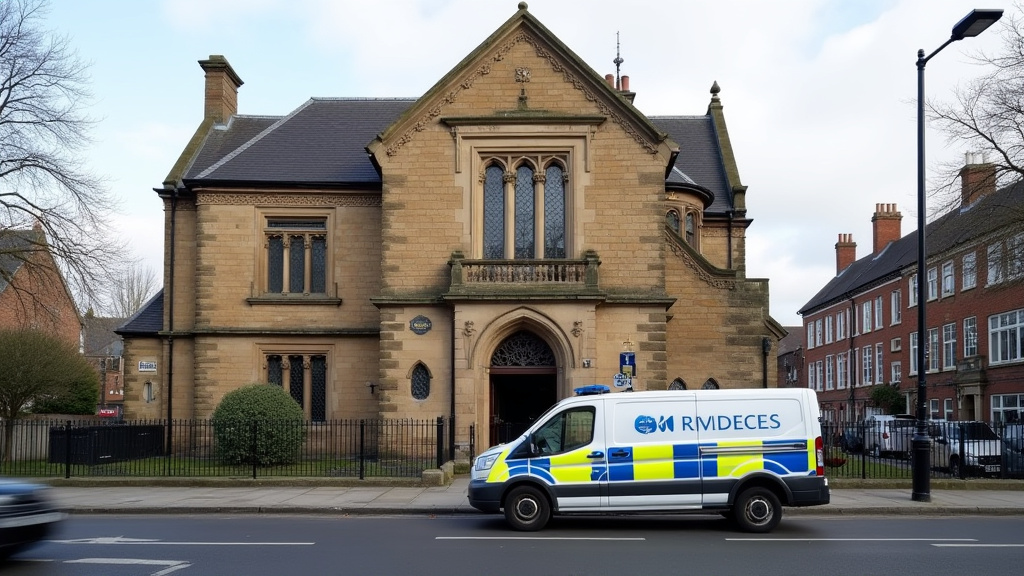
The Lauderdale Road Synagogue in Maida Vale has become the focal point of a security clampdown following a targeted antisemitic incident. During the celebration of Rosh Hashanah, the Jewish New Year, individuals launched fireworks at the synagogue, prompting immediate intervention from law enforcement and sparking concerns regarding the safety of Jewish communities across London.
Key Highlights
- Targeted Incident: Fireworks were launched at the historic Lauderdale Road Synagogue in Maida Vale during Rosh Hashanah, a critical religious observance period.
- Police Response: The Metropolitan Police have launched a formal hate crime investigation and significantly increased high-visibility patrols in the vicinity to reassure the local community.
- Heightened Security: Authorities and communal organizations are coordinating to prevent further escalation amid a broader rise in antisemitic reports in the UK.
The Escalation of Antisemitism and the Lauderdale Road Incident
The incident in Maida Vale is not an isolated event but rather a high-profile manifestation of a concerning trend. For a place of worship like the Lauderdale Road Synagogue, which has served as a cornerstone of the Sephardic Jewish community in London for over a century, the attack represents a direct assault on religious freedom and community safety. Witnesses reported that fireworks were aimed at the building, an action that intentionally causes fear and disruption during one of the most solemn and joyous times on the Jewish calendar.
This act of aggression occurred against the backdrop of an already strained atmosphere in London. Community leaders and local residents expressed deep shock, emphasizing that the synagogue is not just a building, but a sanctuary. The psychological impact of such an attack on the congregants, particularly during High Holy Days, is profound. By weaponizing fireworks, the perpetrators aimed to instill terror, a tactic that has been increasingly observed in hate-motivated incidents targeting religious institutions across the city.
Metropolitan Police Strategy and Hate Crime Protocols
Following the reports, the Metropolitan Police have moved swiftly to categorize the event as a hate crime. This classification triggers a specific set of investigative protocols designed to identify perpetrators who target individuals or organizations based on race, religion, or ethnicity.
Detective teams have been scouring CCTV footage from the Maida Vale area, looking for identifying features of the individuals involved. Simultaneously, the police have deployed additional neighborhood officers to the area. This “reassurance policing” strategy serves a dual purpose: it acts as a deterrent against further incidents and provides a visible presence of protection for congregants as they attend services. The Met Police have stated they are taking the matter with the utmost seriousness, acknowledging the heightened vulnerability of the Jewish community during religious festivals.
The Role of the CST and Community Resilience
The Community Security Trust (CST), a charity that protects British Jews from antisemitism and related threats, has been working in close tandem with the police regarding this incident. The CST plays a vital, non-governmental role in monitoring threats, providing security advice to synagogues, and acting as a bridge between the Jewish community and law enforcement.
In the wake of the Lauderdale Road incident, the CST issued renewed guidance to other synagogues across the capital, urging heightened vigilance. Their data often highlights that antisemitic incidents are frequently underreported; therefore, this high-profile attack serves as a stark reminder of the necessity for robust security infrastructure. The resilience of the Maida Vale community has been notable, with services continuing despite the intimidation, signaling a refusal to be cowed by acts of hate.
Broader Implications for London’s Religious Communities
This event has reignited debates regarding community cohesion and the resources allocated to protecting religious institutions. With hate crimes being a persistent issue in major urban centers, there is growing pressure on the Mayor’s Office and the Home Office to ensure that protective measures for faith-based sites—including synagogues, mosques, and churches—are funded and effective.
There is also a secondary angle regarding the changing nature of “low-level” hate crimes. The use of fireworks—often viewed as nuisance behavior—to target specific demographics shifts the classification from public disorder to targeted intimidation. Legal experts argue that treating such incidents as hate crimes is essential to accurate record-keeping and appropriate sentencing, which serves to warn potential offenders of the severe consequences of racially or religiously motivated aggression.
FAQ: People Also Ask
Q: Why was the Lauderdale Road Synagogue specifically targeted?
A: Investigations are ongoing, but authorities suggest the targeting of synagogues during religious holidays like Rosh Hashanah is often calculated to maximize intimidation and fear within the Jewish community.
Q: What is a hate crime in the UK legal context?
A: In the UK, a hate crime is any criminal offense which is perceived, by the victim or any other person, to be motivated by hostility or prejudice based on a person’s actual or perceived race, religion, sexual orientation, transgender identity, or disability.
Q: How does the community report antisemitic incidents?
A: In the UK, incidents are reported to the Metropolitan Police via 101 or 999 in emergencies, and specifically to the Community Security Trust (CST) to ensure data tracking and support for victims.