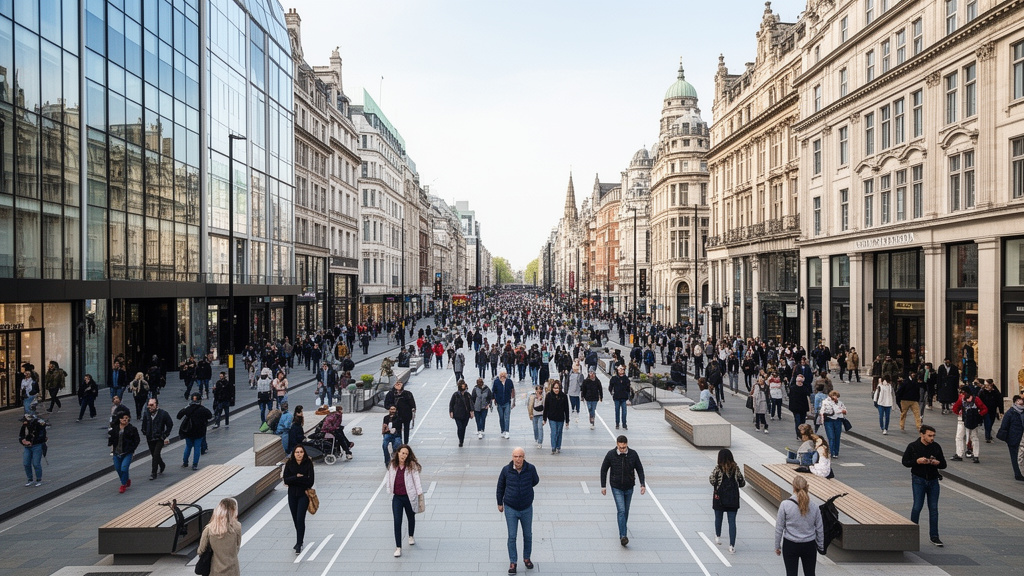
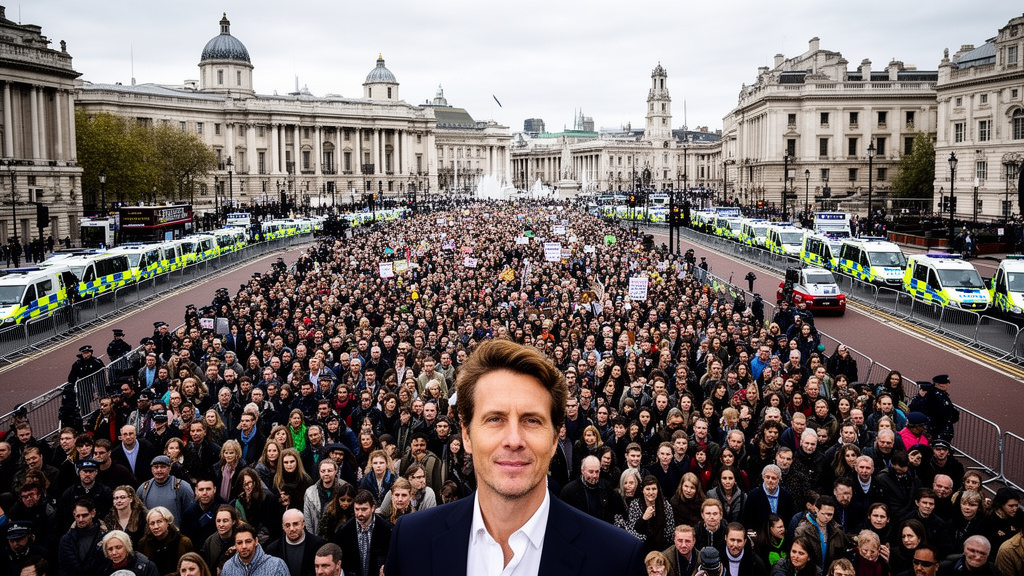
Up to 10,000 demonstrators participated in a large pro-Palestinian march through central London yesterday, creating a significant disruption to public activity. The route, which traced through key political arteries of the capital, culminated in a concentrated presence at Whitehall and Parliament Square. This demonstration, characterized by high-volume turnout, prompted a major operational response from the Metropolitan Police to maintain public order and manage the flow of traffic in the nation’s political heartland.
Key Highlights
- Scale of Participation: Official estimates indicate up to 10,000 demonstrators were present during the peak of the march.
- Strategic Route: The march utilized pre-designated routes, moving through the West End toward the high-security zones of Whitehall and Parliament Square.
- Public Order Response: A substantial Metropolitan Police operation was deployed, utilizing specific powers under the Public Order Act 1986 to manage the crowd and minimize disruption.
- Operational Impact: The event caused significant, localized traffic disruption, forcing authorities to implement temporary road closures and diversions across the Westminster district.
The Logistical Anatomy of the March
The scale of yesterday’s demonstration—totalling approximately 10,000 participants—required an unprecedented level of coordination between event organizers and city officials. The protest movement, which initiated in the early afternoon, followed a carefully managed path that effectively paralyzed major thoroughfares. For those observing the logistics of the day, the march was not merely a gathering of individuals, but a highly organized movement of people through some of London’s most sensitive infrastructure.
The Strategic Importance of Whitehall
By concentrating the protest on Whitehall and Parliament Square, organizers positioned the demonstration directly in the line of sight of the UK’s seat of power. Whitehall, which houses several key government departments, including the Cabinet Office, the Ministry of Defence, and the entrance to Downing Street, serves as the primary artery for government activity. The physical presence of 10,000 people in this area naturally shifts the dynamic from a public gathering to a significant political event. The security perimeter established around the Cenotaph and the gates of the Palace of Westminster remained the focal point for the Metropolitan Police, who were tasked with balancing the right to peaceful protest with the need to maintain access to critical national infrastructure.
The Metropolitan Police Strategy
The Metropolitan Police employed a multi-layered security strategy to manage the density of the crowds. Utilizing powers granted under Section 12 of the Public Order Act 1986, authorities imposed strict conditions on where the march could proceed and the duration of the assembly in Parliament Square. This strategy is designed to prevent the ‘gridlock’ scenario, where public transit and emergency vehicle access are completely severed. Throughout the day, police officers were visible in high numbers, not only to manage the crowd but to facilitate safe passage for residents and workers navigating the district during the disruption. The operational cost of such a deployment is substantial, involving not only standard patrols but specialized public order units tasked with de-escalating potential friction points along the route.
Socio-Economic Ripple Effects in Westminster
While the primary focus of the demonstration was political expression, the economic reality of such large-scale events in central London cannot be ignored. The City of Westminster acts as a major commercial hub, and the closure of key roads significantly impacts local businesses. Retail outlets, hospitality venues, and transport hubs often experience a dual effect: while foot traffic remains high, the ‘bottleneck’ nature of these protests can deter regular consumer traffic and complicate supply chain deliveries for local shops.
The Urban Infrastructure Challenge
London’s infrastructure is notoriously fragile when subjected to mass events. The sheer volume of 10,000 people moving through narrow, historic streets forces authorities to divert bus routes and limit traffic flow, which cascades into secondary delays across the wider Greater London area. This creates a friction point between the right to demonstrate and the public’s need for seamless transit. Urban planners and local government officials are increasingly forced to grapple with the reality that London’s historic street layout—designed centuries ago—is often ill-equipped to handle the sheer scale of modern 21st-century mass movements.
Historical Context: The Evolution of London Protests
The history of London is deeply intertwined with protest. From the Chartists in the 19th century to the anti-war demonstrations of the early 2000s, the path through Whitehall has been the traditional ‘stage’ for the British public to air grievances. However, the nature of these protests has evolved. Yesterday’s event highlights the speed at which such gatherings can materialize, largely driven by digital organization and rapid communication. Unlike protests of the past, which required weeks of physical leafleting, modern demonstrations can mobilize thousands in a matter of days, placing immense pressure on city authorities to adapt their policing and traffic management protocols in real-time.
Future Predictions: Policing and Public Order
As we look toward the future, it is highly probable that the Metropolitan Police will refine their ‘early intervention’ strategies. This likely involves more stringent pre-event agreements with organizers regarding route deviations and time limits. There is also an ongoing legislative discussion regarding the balance between the right to protest and the rights of the wider public to conduct their daily business without significant interruption. If the frequency of such marches continues, we may see the implementation of more permanent pedestrian-only zones in the Westminster area to better manage large groups while keeping the capital’s commercial and governmental arteries open.
FAQ: People Also Ask
1. What powers did the police use to manage the demonstration?
The Metropolitan Police utilized conditions under the Public Order Act 1986. These powers allowed them to impose specific restrictions on the route the march could take and where demonstrators were permitted to assemble, specifically to prevent serious disruption to the life of the community.
2. How does a march of this size impact London’s economy?
A march of 10,000 people causes significant logistical challenges, including road closures and public transport diversions. While hospitality businesses may see increased footfall, the overall disruption to travel and supply chains often results in a net economic strain on local Westminster retailers during the event hours.
3. Why is Whitehall a focal point for these protests?
Whitehall is the administrative heart of the UK government, housing major ministries and providing direct access to the Palace of Westminster. Protesters target this area specifically because it provides the highest visibility for their message to government officials and international media.
4. Were there any major security breaches reported?
Authorities focused heavily on perimeter management. By enforcing designated routes and maintaining a buffer around critical infrastructure, the Metropolitan Police successfully managed the crowd, and there were no reports of major breaches of security at government buildings during the event.