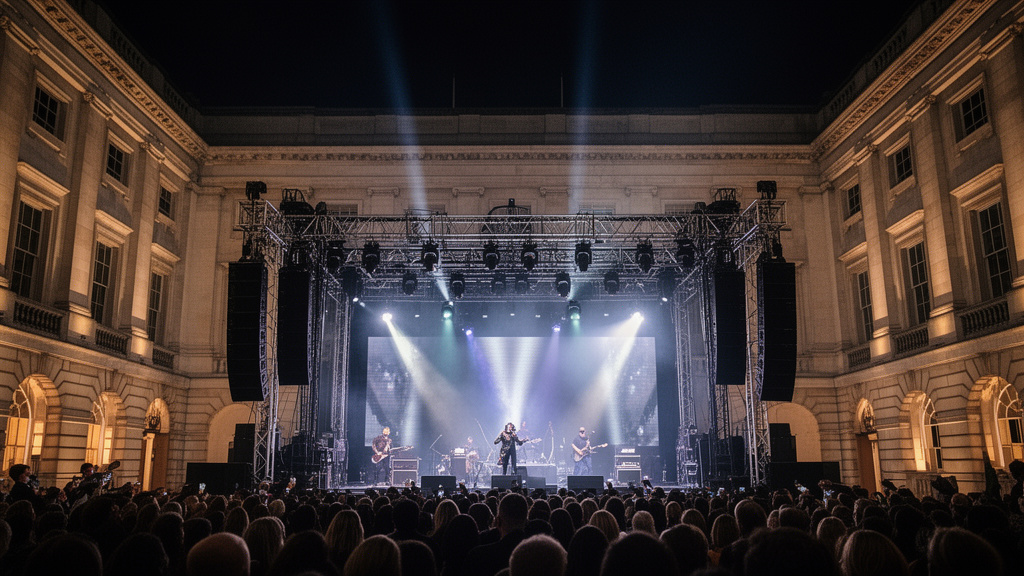
The Somerset House Summer Series, a staple of London’s cultural calendar featuring live performances in the venue’s iconic courtyard, concludes its 2026 run today, July 26. As the final notes reverberate through the historic neoclassical architecture of the Edmond J. Safra Fountain Court, the event marks the culmination of an eleven-day residency that has once again transformed a 18th-century administrative center into the city’s most vibrant musical epicenter.
Key Highlights
- Final Show Date: The 2026 series officially concludes tonight, July 26, after an eleven-day run.
- Iconic Venue: Performances take place in the Edmond J. Safra Fountain Court, a protected heritage site.
- Cultural Impact: The series is renowned for its eclectic, genre-spanning lineup, bridging the gap between mainstream chart-toppers and underground experimental artists.
- Logistical Triumph: The event represents a complex integration of modern sound engineering within a Grade I-listed building.
The Echoes of the Fountain Court
For over a decade, the Summer Series at Somerset House has functioned as a vital counterpoint to the traditional stadium-rock environment. By utilizing the unique acoustic properties of the Edmond J. Safra Fountain Court—historically the site of the Royal Academy of Arts—the series offers an intimate, atmospheric experience that is increasingly rare in the landscape of high-capacity music touring.
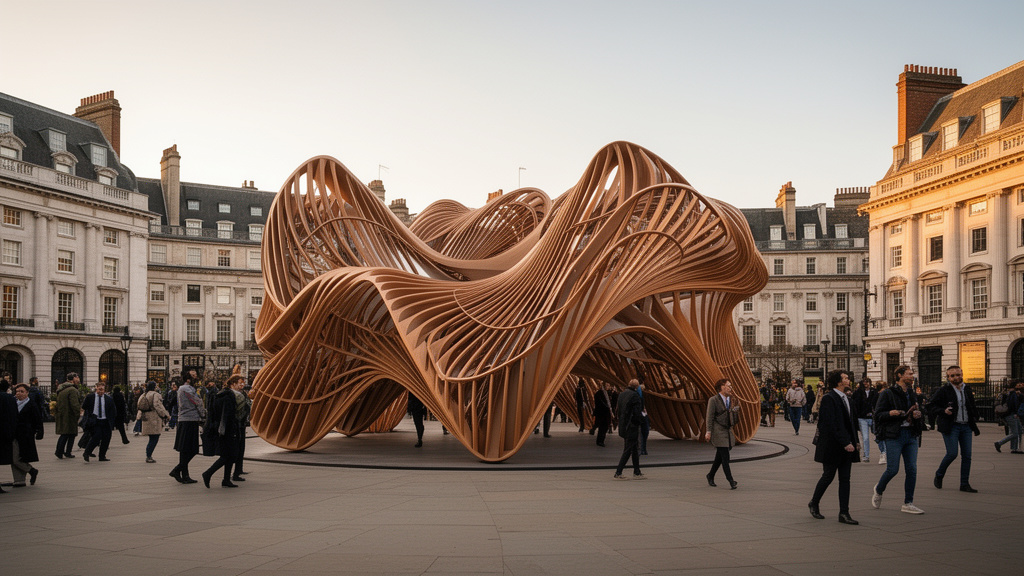
As the final day of the 2026 series arrives, industry analysts are noting that the event has maintained its status as a critical “brand-builder” for artists. The setting provides a visually striking, instantly recognizable aesthetic that dominates social media and editorial photography, arguably providing more marketing value to performers than a generic arena date. The juxtaposition of the 18th-century, limestone-clad facade against high-definition LED rigs and concert-grade PA systems creates a distinct visual language that has defined the London summer experience.
Engineering Within a Heritage Site
The logistical orchestration required to produce the Summer Series is substantial. Because the site is a Grade I-listed heritage location, production teams operate under rigorous constraints regarding noise pollution, light spill, and structural load-bearing limits.
Unlike temporary outdoor festival stages constructed on flat, open ground, the Fountain Court requires a bespoke approach. Sound engineers must calibrate arrays to minimize “bounce” against the hard, non-absorbent surfaces of the courtyard walls, ensuring that clarity is maintained without violating the strict noise ordinances of the City of Westminster. The successful conclusion of today’s events represents a victory for the production crews who have navigated these architectural challenges, ensuring that the integrity of the historical site remains intact while delivering a modern sonic experience.
The Economic and Cultural Pulse
The conclusion of the Summer Series also signals a minor shift in the local economic activity of the Strand and Temple area. Throughout the eleven-day residency, the venue serves as a hub for foot traffic, driving business to local hospitality, transport networks, and late-night amenities. Unlike decentralized festivals located on the urban periphery, the Somerset House series integrates directly into the city’s infrastructure, proving that high-density cultural events can thrive in the heart of a major metropolitan district.
Furthermore, the series plays a pivotal role in the “night-time economy” of London. By attracting thousands of ticket holders into the central city after typical office hours, the Summer Series provides a recurring boost to businesses that otherwise suffer from the decline in post-pandemic commuter footfall. It acts as a primary example of how arts-led regeneration and event management can sustain urban centers during challenging economic periods.
Heritage vs. Modernity: The Future Legacy
As we look beyond July 26, 2026, the Summer Series faces an evolving future. The rise of digital-first music consumption has placed a premium on “in-person” experiences, and the Summer Series is positioned perfectly to capitalize on this trend. However, the venue must balance its role as a premier music destination with its ongoing responsibilities as a museum, gallery space, and administrative hub.
Experts suggest that the future of the series will likely lean further into sustainable production technologies, such as battery-powered stage infrastructure and low-energy lighting rigs, to align with London’s broader climate goals. Moreover, as the demand for unique, photogenic venues continues to grow in the age of content creation, the brand value of Somerset House as a “destination venue” will only increase, potentially leading to a more competitive booking schedule in the coming years.
As the lights go down tonight, the event leaves behind not just a temporary stage, but a reinforced reputation for the venue as a cornerstone of London’s cultural identity.
FAQ: People Also Ask
Q: What is the significance of the Somerset House Summer Series?
A: The series is significant for its unique combination of world-class, multi-genre musical performances held within a historically preserved, Grade I-listed 18th-century courtyard, creating a rare “intimate-arena” atmosphere.
Q: Where exactly does the event take place?
A: The event is hosted in the Edmond J. Safra Fountain Court at Somerset House, situated on the Strand in central London.
Q: How many days does the event typically last?
A: The 2026 Somerset House Summer Series followed the traditional format, spanning eleven days of consecutive performances, concluding on July 26.
Q: Is the Somerset House Summer Series considered a traditional music festival?
A: No, it differs from traditional greenfield festivals. It is a curated series of individual concert dates, focusing on high-production values and genre-diversity rather than the camping and multi-stage format of rural festivals.