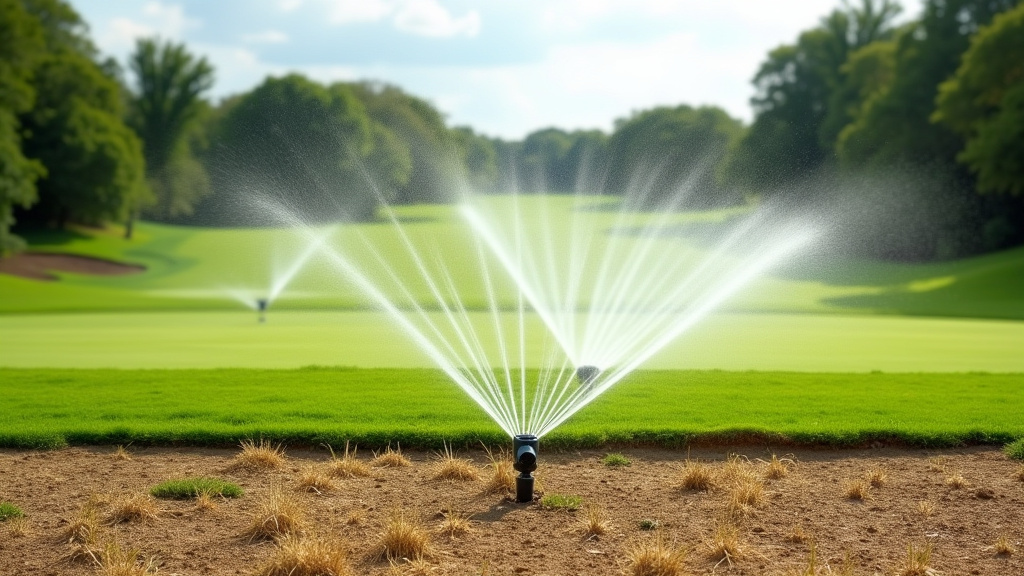
The perception of water austerity in England has taken a divisive turn as residents under strict hosepipe bans watch, often with frustration, as private schools, luxury golf clubs, and sports facilities maintain pristine, emerald-green grounds. As climate change pushes the UK into more frequent and severe drought conditions, the disparity between residential water usage limitations and commercial exemptions has ignited a debate over fairness, environmental responsibility, and the efficacy of current water management policies. While Thames Water and other utility providers mandate that residents refrain from using hosepipes to water gardens or wash vehicles, the legal framework governing commercial usage tells a different, more complex story.
Key Highlights
- Legal Thresholds: Under the Flood and Water Management Act 2010, businesses can claim ‘essential use’ exemptions for maintaining high-value sports turf, often exempting them from standard residential hosepipe bans.
- The Economic Defense: Golf clubs and private schools argue that the upkeep of their facilities is not merely aesthetic but critical for operational viability and contractual obligations.
- Public Perception Gap: The disparity has fueled criticism regarding the ‘social contract’ of water conservation, with many citizens feeling that the burden of climate adaptation is placed unequally on households.
- Regulatory Scrutiny: Environmental watchdogs and public pressure are mounting for the Department for Environment, Food & Rural Affairs (Defra) to review the definitions of ‘essential’ water use in a warming climate.
The Anatomy of the Exemption: Why the Grass Stays Green
The central tension in this issue lies in the interpretation of the ‘Temporary Use Ban’ (TUB). When utility companies, such as Thames Water, implement a hosepipe ban, they are exercising powers granted under the Flood and Water Management Act 2010. Crucially, these bans are primarily targeted at domestic consumers. Businesses, including golf courses, private schools, and commercial nurseries, operate under a different legal umbrella.
The ‘Essential Use’ Argument
Many private sports facilities categorize the maintenance of their pitches—cricket squares, bowling greens, or specific golf putting surfaces—as ‘essential.’ For a golf course, the grass is the primary product; allowing it to die due to a lack of irrigation would result in significant, potentially irreparable, financial loss. Similarly, private schools often cite the health and safety of pupils, arguing that well-maintained sports pitches are required for the rigorous physical education curricula and external sports tournaments they are contractually obligated to host.
Regulatory Loopholes and Commercial Priorities
Critics argue that the definition of ‘essential’ has become too broad. While a public park might be allowed to brown to conserve water, a private entity with a commercial interest can often justify continued irrigation through sophisticated water management plans or by citing the preservation of assets that would cost thousands of pounds to replace. This creates a two-tier system: the general public is asked to preserve water for the ‘greater good’ of the reservoir levels, while private entities continue to draw from the same supply to preserve private interests.
Socioeconomic Tensions and the Climate Crisis
The visual contrast of a dry, brown residential lawn adjacent to a vibrant, irrigated private sports pitch provides a potent symbol of modern inequality. This goes beyond simple jealousy; it touches on the fundamental question of who owns the water. In the UK, water is a finite resource managed by private companies (like Thames Water), yet it is a public necessity.
The Social Contract of Conservation
Water conservation strategies rely heavily on community compliance. When residents see high-water-usage institutions seemingly exempt from the pain of drought, compliance rates can plummet. If households feel that their sacrifices (such as taking shorter showers or letting gardens dry out) are not being matched by the private sector, they are less likely to cooperate with future restrictions. This ‘conservation fatigue’ is a significant risk for utility companies planning long-term water security strategies.
Climate Resilience vs. Aesthetic Standards
Beyond the social aspect, there is the environmental argument. Golf courses and private schools are increasingly being asked to justify their water footprints. Some institutions have begun investing in grey-water recycling, drought-resistant turf grasses, and advanced irrigation technology that targets roots rather than spraying foliage. However, critics point out that these measures are often voluntary and slow to implement. As the UK faces more volatile weather patterns, including the prolonged dry spells witnessed in recent years, the pressure is on the government to mandate stricter, more uniform standards that do not favor private interests over public resilience.
Future Policy: Moving Toward Equity
There is a growing consensus that the 2010 Act requires an update to better reflect the realities of the climate crisis. Experts suggest a move toward ‘water neutrality’—a concept where new developments or high-water-usage businesses must prove they are not increasing the total demand on the local water network.
Potential Policy Shifts
1. Stricter Categorization: Updating the definition of ‘essential use’ to exclude ornamental or non-competitive sports grounds during extreme drought declarations.
2. Tiered Restrictions: Introducing mandatory water-efficiency ratings for businesses, similar to energy performance certificates, to incentivize infrastructure upgrades.
3. Public Transparency: Requiring utility companies to publish detailed data on commercial exemptions during bans, allowing for public oversight and accountability.
As England looks toward an uncertain climatic future, the ‘hosepipe ban’ will likely become a regular, rather than exceptional, event. The current controversy serves as a litmus test for how the nation will manage its resources: will it continue to protect the status quo of elite institutions, or will it forge a more equitable path that balances commercial needs with the reality of a changing, drier environment?
FAQ: People Also Ask
1. Are golf courses legally allowed to use hosepipes during a ban?
Generally, yes. Golf courses and other sports facilities can often use ‘irrigation systems’ (which are distinct from simple garden hosepipes in regulation) to maintain high-value turf under specific business exemptions, provided they are not using water for non-essential purposes.
2. Do private schools face the same water restrictions as residents?
No. In most cases, private schools are classified as commercial or institutional entities. They are not subjected to the same ‘Temporary Use Bans’ that prevent households from using hosepipes, though they are still encouraged to follow best practices for water conservation.
3. Who regulates these exemptions?
Water utility companies (like Thames Water) are responsible for enforcing bans, but they operate within the legal framework of the Flood and Water Management Act 2010. Defra provides the overarching policy guidance, but local water authorities decide the specifics of implementation.
4. Is it fair to ban households but allow businesses to use water?
This is a matter of intense public debate. While businesses argue that their activities support jobs and local economies, critics argue that the environmental cost is too high and that the system unfairly places the conservation burden on the residential population.