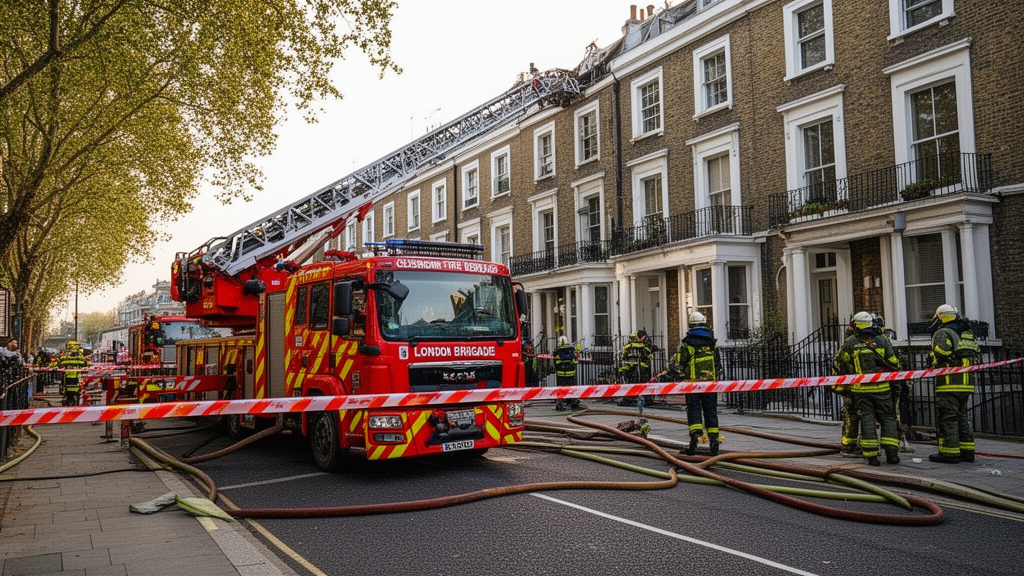
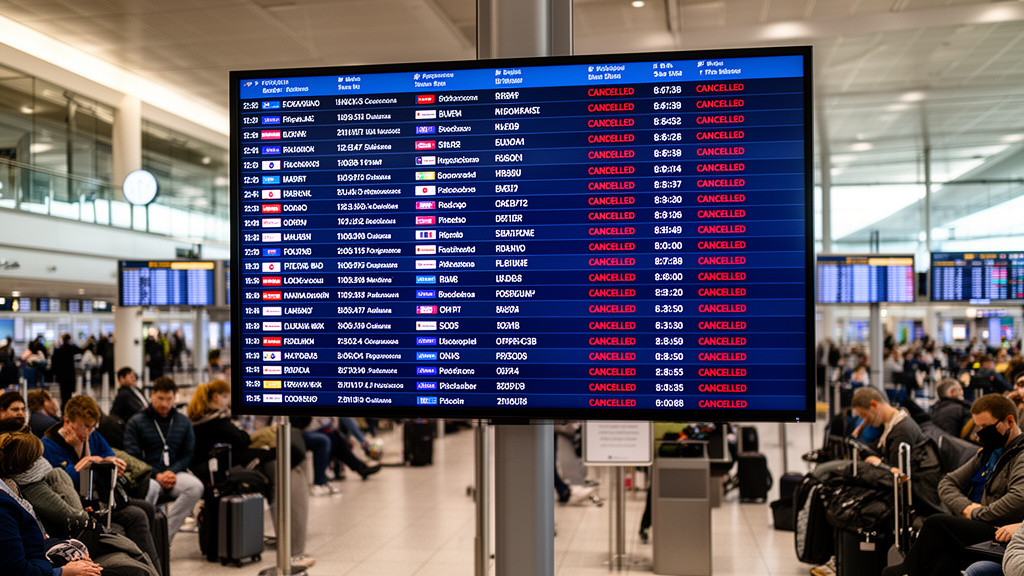
On August 28, 2023, the United Kingdom’s aviation sector experienced one of its most severe operational disruptions in recent history. A technical malfunction within the National Air Traffic Services (NATS) flight planning system crippled the nation’s airspace during the peak of the late summer Bank Holiday, resulting in over 2,000 flight cancellations and widespread delays that affected hundreds of thousands of travelers. This event was not merely a localized issue; it was a systemic collapse that halted traffic at major hubs, including London Heathrow and London Gatwick, leaving passengers stranded for days and highlighting the precarious reliance of global travel on aging digital infrastructure.
Key Highlights
- The Trigger: A specific, corrupted flight plan input caused a breakdown in the NATS Flight Data Processing (FDP) system, triggering an automatic safety fail-safe.
- The Scope: Over 2,000 flights were canceled on a single day, with ripple effects affecting international schedules for 48 to 72 hours post-incident.
- The Human Element: The failure forced controllers to switch to manual input systems, which significantly reduced the capacity of UK airspace, leading to the “gridlock” effect.
- Regulatory Fallout: The Civil Aviation Authority (CAA) launched an independent review, focusing on technical resilience, software update protocols, and disaster recovery preparedness.
Anatomy of an Aviation Blackout
The crisis began on the morning of Bank Holiday Monday, one of the busiest travel days of the year. The NATS system, responsible for managing the flow of aircraft through UK airspace, encountered a data anomaly. According to internal reports released post-incident, the flight planning software—designed to automatically process and validate flight plans—received an input that it could not reconcile with its safety parameters. Instead of ignoring the malformed data, the system triggered a “fail-safe” mode. In the interest of safety, the software locked down to prevent the dissemination of incorrect or “corrupted” flight data to controllers, which could have led to hazardous separation incidents between aircraft.
The Vulnerability of Automated Flight Planning
Modern aviation relies on highly complex, automated flight planning systems to manage the volume of traffic that human controllers could never process manually. When this automated layer goes dark, the industry is forced to regress to legacy operational modes. In this instance, NATS controllers were forced to manually input flight details into the system. This process is exponentially slower and requires significantly larger gaps between aircraft to ensure safety. The reduction in “throughput capacity” was catastrophic; where the system might typically manage hundreds of flights per hour, the manual backup could handle only a fraction. This capacity crunch meant that while aircraft were not falling out of the sky, they were effectively banned from entering or departing the congested airspace above London and the wider UK.
The Economic and Operational Fallout
The financial impact of the NATS failure was immediate and severe. Airlines bore the brunt of the operational chaos, facing millions of pounds in costs related to rebooking passengers, providing hotel accommodation, and dealing with the logistical nightmare of displaced aircraft and crew. Because the disruption occurred during a holiday weekend, the availability of alternative flights was virtually non-existent, exacerbating the distress of stranded passengers.
Beyond the immediate cost, the event raised serious questions regarding the resilience of “critical national infrastructure.” The incident demonstrated that despite advancements in AI and automated traffic control, the system remains a “single point of failure” architecture. If the central processing system fails, the entire national network loses its ability to function safely at scale, a realization that has prompted a reassessment of secondary and tertiary backup systems across European aviation providers.
Lessons for Global Aviation Infrastructure
This disruption served as a wake-up call for aviation authorities worldwide. The primary lesson learned was the necessity of “software agility”—the ability to isolate corrupted data packets without taking down the entire processing node.
Furthermore, the recovery phase proved that airline schedules are a finely tuned “jigsaw puzzle.” When the system went down, the disruption did not reset at midnight; rather, the imbalance of aircraft and crews meant that the chaos effectively cascaded for several days. Airlines struggled to reposition aircraft to their home bases, meaning that even after the NATS system was fully operational, the cancellation cycle continued due to crew hour limits and missing assets.
Future-Proofing the Skies
Post-mortem analyses conducted by the CAA emphasized that while the safety fail-safe performed as designed (i.e., it did not allow unsafe information to propagate), the speed of recovery was hampered by outdated hardware interdependencies. Future iterations of air traffic control software are now being designed with modular “containment zones,” where a failure in one flight planning module does not result in the total seizure of airspace management. This incident remains a case study in why digital resilience, rather than just raw processing speed, is the most critical metric for the future of commercial aviation.
FAQ: People Also Ask
Q: Was the NATS failure caused by a cyberattack?
A: No. Investigations by the NATS and the UK government confirmed that the disruption was caused by a technical anomaly within the flight planning software itself, triggered by an unusually formatted flight plan, rather than a malicious external act or cyberattack.
Q: Why couldn’t they just switch to a backup system immediately?
A: The backup system is designed to replicate the primary system. Because the input was inherently flawed, both the primary and the backup systems identified the same error and shut down to prevent the spread of bad data. It was not a hardware failure, but a logical data conflict.
Q: How does this affect passenger compensation rights?
A: Because the incident was deemed an “extraordinary circumstance” caused by an external technical issue with the air traffic control service (which is outside the airlines’ direct control), many airlines argued that they were not liable for the standard delay compensation under UK261 regulations. However, they were still required to provide care and assistance, such as food, accommodation, and rebooking options.