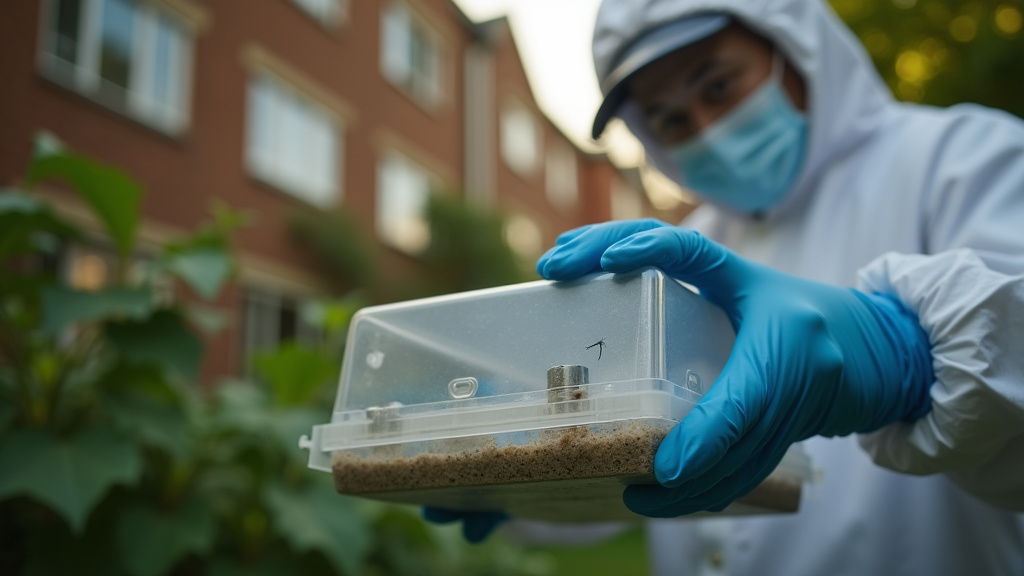
The UK Health Security Agency (UKHSA) has initiated enhanced surveillance and control measures following the first-ever detection of invasive Aedes aegypti mosquitoes breeding at residential properties in east London. This unprecedented finding has alerted public health officials to the potential establishment of a vector known globally for its ability to transmit serious pathogens including dengue, Zika, and chikungunya, marking a significant shift in the UK’s entomological landscape.
Key Highlights
- Unprecedented Detection: First-ever identified breeding colony of Aedes aegypti in the United Kingdom.
- UKHSA Response: Immediate activation of enhanced surveillance, contact tracing, and vector control protocols in East London residential zones.
- Public Health Alert: Residents are being cautioned to eliminate standing water sources and report potential sightings to local authorities.
- Environmental Shift: Experts are investigating whether changing climatic patterns are facilitating the establishment of tropical insect species in urban UK environments.
The Biological Breach: Tracking the Aedes aegypti Incursion
The identification of Aedes aegypti—a species historically endemic to tropical and subtropical regions—in an East London residential context is a watershed moment for UK public health. Unlike native British mosquito species, which are generally considered nuisance biters rather than significant disease vectors, Aedes aegypti is a highly efficient carrier of arboviruses. The presence of a breeding population suggests that the insects have survived long enough to complete a reproductive cycle, potentially finding micro-habitats that mimic their tropical origins.
Understanding the Vector Profile
Aedes aegypti is distinct from the common house mosquito (Culex pipiens) found in the UK. They are highly anthropophilic, meaning they prefer to feed on human hosts and live in close proximity to human habitation. This behavioral trait makes them notoriously difficult to eradicate once a foothold is established in urban areas. The females lay eggs in small, stagnant water containers—flower pots, discarded plastic, birdbaths, and blocked gutters—which allows them to thrive in densely populated residential streets where small pockets of water are easily overlooked.
The UKHSA Containment Strategy
The UK Health Security Agency (UKHSA) has moved swiftly to contain the threat. Current protocols involve intensive entomological monitoring to map the extent of the infestation. This includes the deployment of ovitraps, which mimic the preferred breeding sites of the mosquito, allowing scientists to monitor egg density and larvae presence. Concurrently, public health teams are conducting door-to-door surveys to educate residents on source reduction—the process of physically emptying, scrubbing, or covering any object that holds standing water.
Climate Shift: Why the UK is Changing
A secondary angle of grave concern is the role of climate change in facilitating this incursion. Historically, the UK climate was too temperate to sustain tropical mosquito populations. However, rising average temperatures and milder, wetter winters are altering the survival threshold for invasive species. While the current detection is contained within a localized area, climatologists and epidemiologists are debating whether this is an isolated incident or the beginning of a broader trend where the UK’s urban environment becomes increasingly hospitable to heat-loving vectors.
Urban Micro-Habitats: The Hidden Threat
The specific detection in residential properties highlights the concept of ‘urban micro-habitats.’ The Urban Heat Island (UHI) effect, which keeps cities warmer than the surrounding countryside, combined with the abundance of artificial water containers, creates a perfect storm for species like Aedes aegypti. The research community is now focused on whether urban architecture and waste management practices in London are inadvertently providing the necessary conditions for these mosquitoes to overwinter and propagate, a phenomenon previously reserved for Mediterranean climates.
The Economic and Healthcare Burden
Beyond the immediate physical health risks, the establishment of a disease-carrying mosquito population presents a significant long-term economic challenge for the National Health Service (NHS). Managing an endemic vector would require year-round surveillance programs, public health advertising campaigns, and potential updates to diagnostic protocols for clinicians who might need to start screening for tropical diseases that were previously deemed ‘imported’ and rare. The financial cost of sustained vector control is substantial, and if not managed effectively, the long-term impact on public health resources could be considerable.
FAQ: People Also Ask
Q: How dangerous are the Aedes aegypti mosquitoes found in London?
A: While the species is a known vector for dengue, Zika, and chikungunya, these diseases are not currently endemic to the UK. The presence of the mosquito increases the risk of transmission only if a pathogen is introduced to the local population via travel. The current risk to the general public remains low, but the UKHSA is taking the threat seriously to prevent establishment.
Q: Should residents in East London be concerned about their health?
A: There is no cause for panic. The primary goal of the UKHSA surveillance is to eradicate the population before it can establish a foothold. Residents are advised to follow official guidance: empty standing water, keep gardens tidy, and use screens on windows if possible.
Q: Are these mosquitoes different from the ones I see in my garden?
A: Yes. Aedes aegypti are distinct, often characterized by white ‘lyre’ markings on their thorax. They are typically day-biting insects, unlike many native British mosquitoes that are most active at dusk and dawn.
Q: Will the winter kill them off?
A: Aedes aegypti are sensitive to cold, but their eggs can often remain dormant and survive in protected micro-habitats. The UKHSA is working to ensure that containment efforts are effective regardless of seasonal changes to prevent dormant eggs from hatching in the spring.