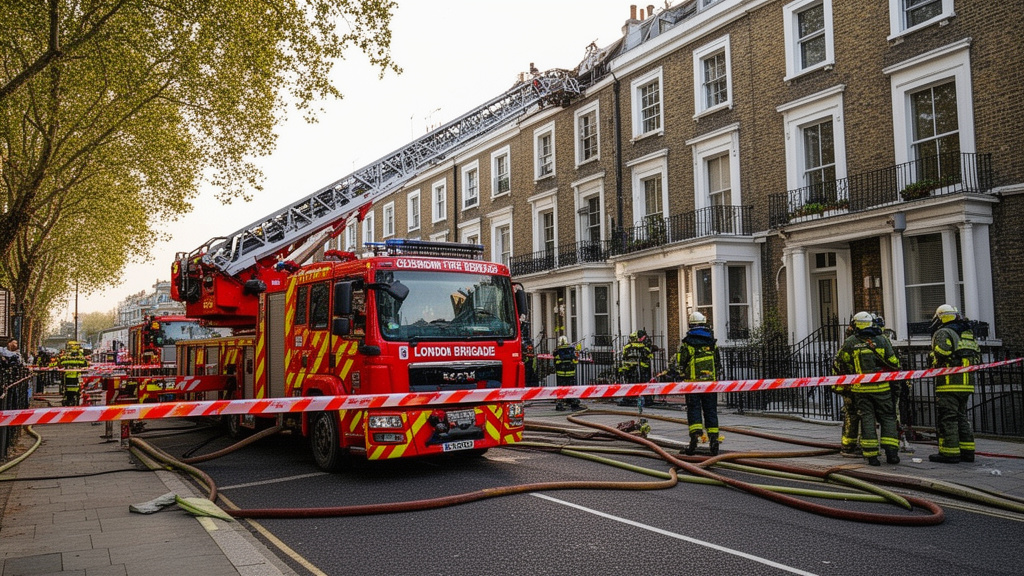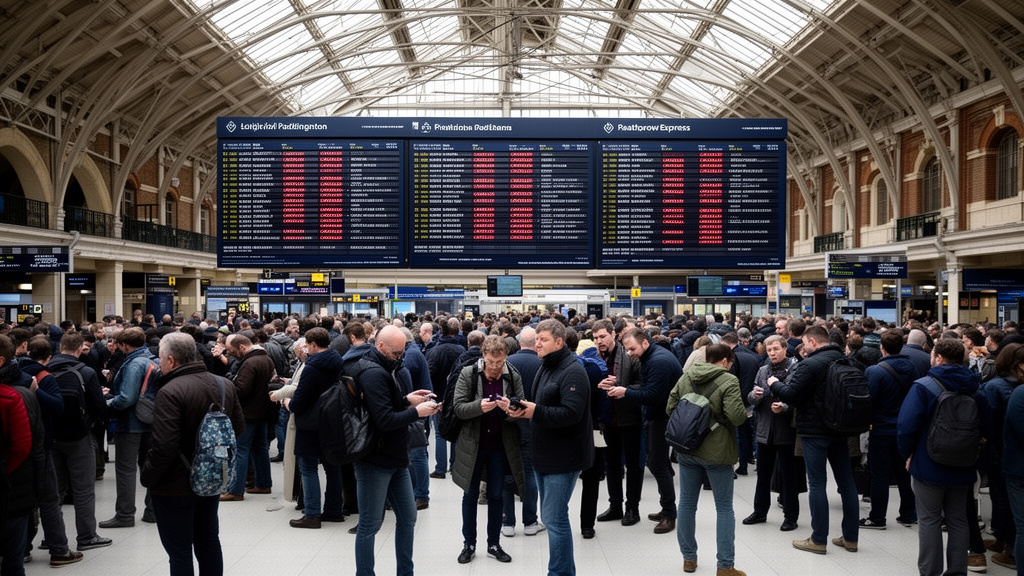
The transport arteries of West London suffered a severe ischemic event today as a fire in the vicinity of London Paddington station caused a critical failure in the electricity supply. The incident, which paralyzed movement into and out of one of the United Kingdom’s busiest rail hubs, triggered a cascade of cancellations, most notably impacting the Heathrow Express—the vital rail link connecting the capital to its primary international gateway. Commuters and international travelers alike faced hours of uncertainty as Network Rail scrambled to address the infrastructure damage, leading to significant disruption across the Great Western Railway (GWR) network.
Key Highlights
- Critical Infrastructure Damage: A fire adjacent to the railway line caused a major failure in the local electricity supply, disabling signaling and operational power.
- Heathrow Express Suspended: All services between London Paddington and Heathrow Airport were suspended, leaving travelers stranded.
- Widespread Disruption: GWR and Elizabeth Line services faced severe delays, cancellations, and station closures, affecting thousands of daily commuters.
- Traveler Advisory: Passengers were strongly urged to delay travel or seek alternative routes, with significant queues forming at nearby Tube stations.
The Anatomy of the Paddington Shutdown
The ripple effects of the fire near London Paddington have once again highlighted the fragile connectivity of the UK’s aging railway infrastructure. As authorities responded to the blaze, the immediate loss of electricity supply effectively blinded the signaling system and immobilized electric trains operating out of the terminus. For the thousands who rely on Paddington as their gateway to the West of England, Wales, and the airport, the morning commute transformed into a logistical nightmare within minutes.
The Impact on Heathrow Express and International Travel
The cancellation of the Heathrow Express is perhaps the most acute outcome of the incident. This service acts as the premier link for international passengers arriving in London. When this line goes down, it creates a localized economic friction that reverberates throughout the city’s tourism and business sectors. Passengers who arrived expecting a 15-minute transfer to the city center were instead met with gridlocked platforms and non-functioning trains, forcing a scramble for taxis, buses, and the Elizabeth Line, which, while resilient, was not equipped to handle the sudden, massive influx of displaced passengers.
The Network Rail Response and Operational Challenges
Network Rail, responsible for the infrastructure, faced a complex recovery operation. Unlike a simple signaling fault, a fire-induced power failure often requires physical inspection of trackside cabling and electrical substations before the lines can be safely re-energized. This is not a task that can be automated; it requires ground teams to clear debris, assess thermal damage, and test circuits, which inherently creates a significant lag between the event and the restoration of service. The sheer density of traffic at Paddington means that even a two-hour delay creates a backlog that takes the remainder of the day to clear.
Secondary Angles: Systemic Fragility and the Future of Rail
1. The Infrastructure Vulnerability: This incident underscores the precarious nature of rail hubs situated in high-density urban areas. As London expands, the risk of external incidents—such as fires or localized utility failures—impacting critical rail corridors increases. There is a growing conversation among transport analysts regarding the need for better compartmentalization of power systems to prevent a single point of failure from shutting down an entire terminal.
2. The Economic Cost of ‘Last Mile’ Disruption: The Heathrow Express is a high-value asset. Its shutdown forces international business travelers and tourists onto alternate transit modes, which are often less reliable or already at capacity. This creates a hidden cost to the UK economy, impacting the perception of London’s connectivity and efficiency for high-net-worth travelers.
3. Modernizing the Commuter Experience: The reliance on real-time data for passenger routing was tested severely. While apps and platforms provided updates, the ‘ground truth’ was a scene of chaos. This event suggests that London’s transport network needs more sophisticated ‘incident response’ protocols that can rapidly reroute high-volume traffic in real-time without relying on the hub-and-spoke model that becomes a bottleneck during such failures.
FAQ: People Also Ask
Q: How do I claim compensation for my cancelled Heathrow Express ticket?
A: Passengers affected by the cancellation are entitled to a full refund. You must retain your ticket or digital booking reference and apply via the Heathrow Express website’s ‘Delay Repay’ or refund portal within 28 days of the incident.
Q: Why does a fire near the track shut down the whole station?
A: Railways rely on a complex network of electrical signals and power lines running alongside the tracks. If a fire damages these power supplies or signaling equipment, safety protocols mandate that trains must stop to prevent collisions or stranding in non-powered sections.
Q: Are there alternative routes to Heathrow Airport from London?
A: Yes, travelers can use the Elizabeth Line, the London Underground (Piccadilly Line), or various bus services. However, during major incidents at Paddington, these alternatives often become extremely crowded, leading to further delays.
Q: When will services return to normal at London Paddington?
A: Service restoration depends on the completion of safety checks and repairs. Passengers are advised to check the National Rail Enquiries website or the GWR social media channels for the latest, real-time updates before departing for the station.