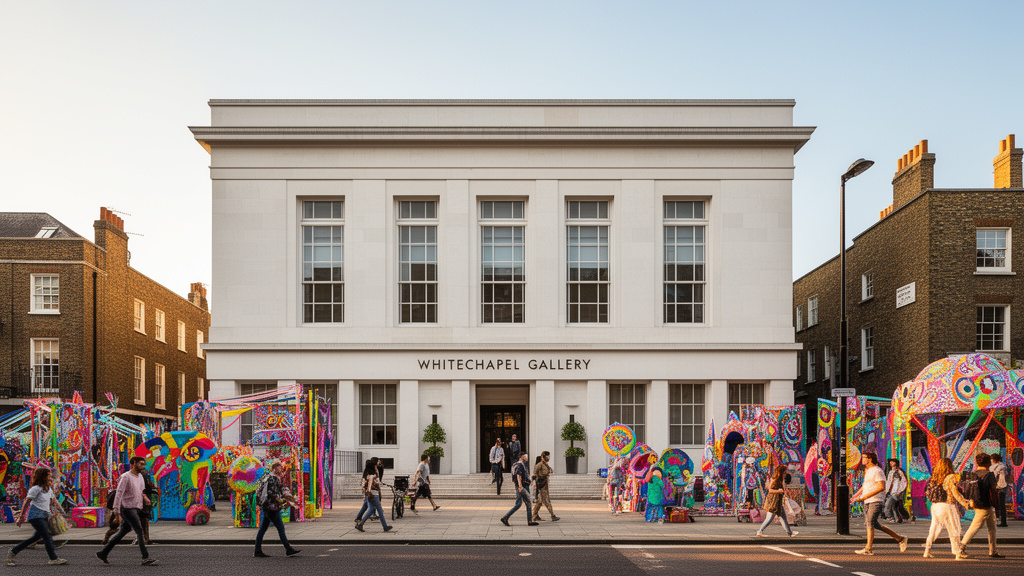
As the traditional summer exodus clears out the city, London undergoes a fascinating transformation every August. While tourists flock to the usual landmarks, the capital’s most discerning residents have begun to recognize that the city’s true pulse beats strongest when the frantic pace of the professional season slows. This year, the argument for staying put is stronger than ever, anchored by a massive, eight-week cultural festival centered in East London that promises to redefine the local art scene.
Key Highlights
- The August 8th Anchor: The Whitechapel Gallery hosts a pivotal neighbourhood party celebrating its 125th anniversary, a focal point for the month’s cultural activities.
- An Eight-Week Festival: An expansive program involving 40 distinct partners, ranging from local studios to community centers, has transformed the East London landscape.
- The Staycation Shift: August in London offers unique access to galleries and events, characterized by shorter queues and a more community-focused atmosphere compared to the peak tourist seasons of May or June.
- Community Impact: The collaboration between the gallery and its 40 partners represents a deliberate effort to blend institutional heritage with grassroots artistic growth.
The East London Cultural Renaissance
The narrative that one must leave London in August to experience ‘real’ culture is rapidly becoming obsolete. For those who choose to remain, the month offers a rare opportunity to engage with the city’s institutions without the dense crowds that typically obscure the experience. At the center of this movement is the Whitechapel Gallery, which is not merely celebrating a milestone—its 125th anniversary—but is actively leveraging it to catalyze an eight-week-long festival that permeates the surrounding neighborhood.
The Anatomy of the Eight-Week Festival
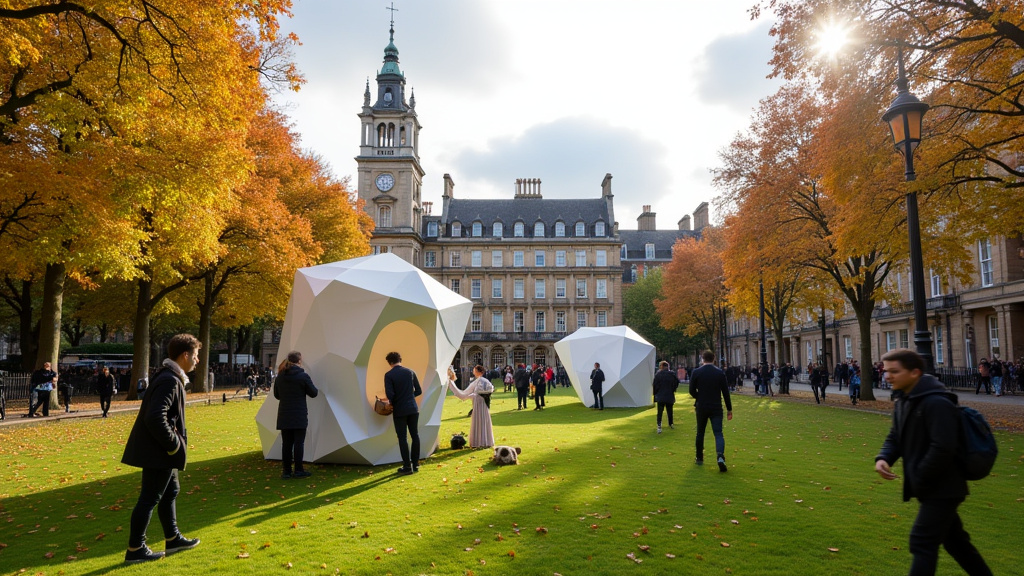
This is not a singular event; it is an infrastructure-building project disguised as a celebration. By coordinating with 40 partners across East London, the gallery has created a diverse tapestry of programming. This network includes local independent businesses, grassroots artist collectives, and auxiliary educational spaces. The brilliance of this format lies in its decentralization. Instead of concentrating all visitors into a single building, the festival spreads the cultural ‘weight’ across the borough, encouraging visitors to walk, cycle, and engage with the streets themselves. This integration of the gallery into the urban fabric is a hallmark of modern curatorial practice, moving away from the ‘ivory tower’ model toward a more symbiotic relationship with the local community.
Why August 8th is the Critical Date
While the festival runs for the duration of the summer, the August 8th party stands out as the temporal anchor. Historically, August can be a stagnant month for large-scale institutional programming, but the Whitechapel Gallery has flipped this logic on its head. This event serves as the festival’s heartbeat, drawing together the 40 partners in a public-facing celebration that acts as both a commemorative event for the gallery’s 125-year history and a launchpad for the latter half of the summer season. It is an inflection point where the local arts community and the general public intersect.
Historical Context and Institutional Evolution
Founded in 1901, the Whitechapel Gallery has long been a radical space for art, famously hosting the first exhibition of Picasso’s ‘Guernica’ in Britain in 1939. This 125th-anniversary celebration is, therefore, not just a party but a reflection of the gallery’s ongoing mission to bridge the gap between world-class art and the local East End community. By involving 40 partners—many of whom are small, independent entities—the gallery is acknowledging that its own survival and relevance are tied to the health of the neighborhood’s broader ecosystem. This shift towards hyper-local engagement is a strategic response to the changing landscape of London tourism, where authentic, community-rooted experiences are increasingly valued over generic sightseeing.
Future Predictions: The New Urban Model
If this experiment succeeds, we can expect to see other major cultural institutions follow suit. The model of ‘institutional anchoring’—where a large gallery uses its anniversary or a significant milestone to pull 30 to 50 local partners into a cohesive, district-wide program—is highly scalable. It shifts the burden of programming from a single entity to a collective, mitigating the risk of fatigue and increasing the stickiness of the neighborhood as a destination. For the London resident, this suggests that the ‘August lull’ is disappearing, replaced by a strategic, multi-venue festival structure that makes local exploration just as exciting as international travel.
FAQ: People Also Ask
Q: What is the significance of the Whitechapel Gallery’s 125th anniversary?
A: It marks over a century of avant-garde exhibition and community engagement in East London. The anniversary is being used as a platform to foster deeper collaboration with 40 local partners through a massive eight-week festival.
Q: Is the August 8th event open to the public?
A: Yes, the neighbourhood party scheduled for August 8th is a key public engagement event designed to bring together the local community and visitors to celebrate the gallery’s longevity.
Q: How does this festival change the typical London August experience?
A: Typically, August is seen as a ‘quiet’ month. This festival challenges that by providing a high-density, multi-venue cultural program that encourages exploring East London’s independent art scene beyond just the main gallery spaces.
Q: Are there other partners involved besides the Whitechapel Gallery?
A: Yes, the festival involves a network of 40 partners, including local independent studios, businesses, and community organizations, all contributing to an eight-week schedule of events.