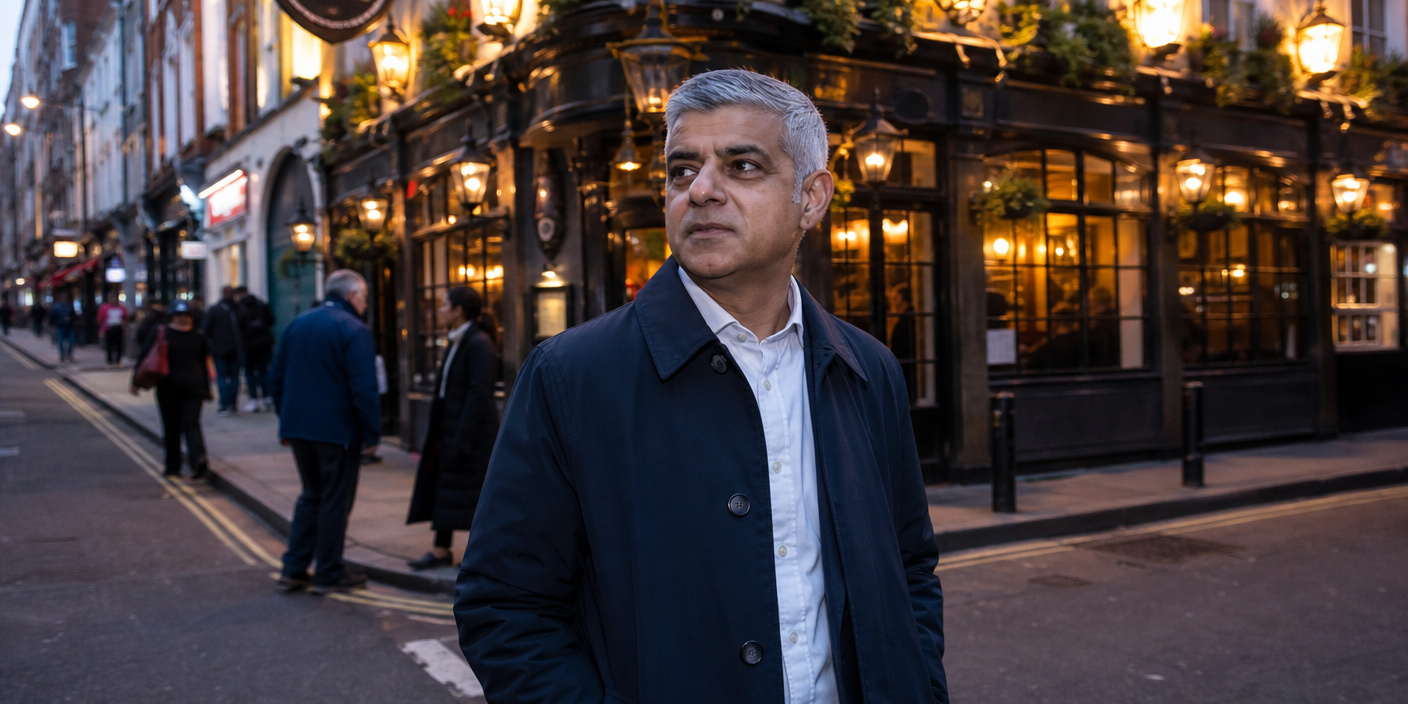
In a decisive intervention that signals a shift in the capital’s urban planning priorities, Mayor Sadiq Khan has effectively blocked Westminster Council from enforcing a restrictive policy that would have curtailed the growth and operation of new pubs and bars in the iconic Soho and West End districts. This move, executed under the Mayor’s strategic planning powers, halts a controversial framework that industry experts warned would have strangled London’s world-renowned nightlife sector. By exercising his authority to direct the council to abandon these specific draft measures, Khan has reinforced the status of the West End not merely as a residential or commercial zone, but as a vital pillar of the global cultural economy.
Key Highlights
- Direct Intervention: Mayor Sadiq Khan used his strategic powers to override Westminster Council’s draft planning policy.
- Policy Reversal: The council’s proposed restrictions—including bans on standing while drinking and mandated early closing times—have been ordered to be dropped.
- Economic Preservation: The intervention aims to protect the hospitality industry, a cornerstone of London’s tax revenue and cultural appeal.
- Strategic Shift: This marks a significant moment in the tug-of-war between local council regulatory power and the Mayor’s broader vision for a 24-hour city.
Safeguarding the Soul of London’s Night-Time Economy
The clash between Westminster City Council and City Hall highlights a growing tension in modern urban governance: the balance between residential amenity and the economic necessity of a thriving hospitality sector. For months, Soho business owners and industry advocacy groups expressed mounting alarm over draft clauses within Westminster’s local licensing policy. The proposed rules were framed under the guise of noise reduction and public order, but critics argued they were an existential threat to the commercial model of the city’s most famous entertainment district.
The Anatomy of the Blocked Restrictions
At the center of the dispute were two specific mandates that had drawn the ire of hospitality operators: a strict prohibition on customers drinking while standing, and the imposition of premature closing times for new venues. Historically, the ‘vertical drinking’ ban is a restrictive planning tool often used in suburban areas to control unruly crowds, but its application in the heart of the West End—a place defined by its fluid, transient, and high-energy social dynamic—was viewed by operators as a death knell for business viability.
By forcing patrons to be seated, venues would have been forced to reduce their capacity by significant margins, often rendering them economically unviable in an area where commercial rents are among the highest in the world. Furthermore, the early closing times threatened to displace the post-theatre and late-night crowds, pushing activity out of the controlled, licensed environment of Soho and into unregulated spaces, thereby potentially exacerbating the very public order issues the council claimed to be solving.
Mayoral Intervention: Why Now?
The Mayor’s intervention is rooted in the ‘London Plan,’ the statutory framework that governs development across the capital. Mayor Khan’s administration has consistently campaigned on the importance of the ‘night-time economy,’ a sector that accounts for a substantial portion of London’s GDP and employs hundreds of thousands of residents.
Legal experts suggest that Khan’s intervention was not just about saving specific businesses, but about setting a legal precedent. By directing Westminster to drop these clauses, the Mayor has signaled that local authorities cannot unilaterally impose planning conditions that contradict the strategic objective of maintaining London as a 24-hour global city. This intervention serves as a check on local bureaucracy, ensuring that ‘nimbyism’ or overly restrictive planning does not degrade the unique cultural ecosystem that attracts millions of international tourists annually.
Economic Impacts and Long-Term Viability
Beyond the headlines of pubs and bars, the economic implications are profound. Soho is not just a collection of venues; it is an economic engine. The hospitality industry in the West End supports a complex supply chain, from local breweries and food suppliers to security firms and marketing agencies. When a venue is prevented from opening, or its operating model is constrained to the point of failure, the ripple effect is felt across the wider economy.
Business owners have breathed a sigh of relief, viewing the Mayor’s decision as a rare victory for common sense in planning. However, the conflict underscores a deeper issue: the need for a modern, cohesive strategy for central London that respects the needs of residents without silencing the vitality of the nightlife industry. The challenge ahead for both Westminster Council and City Hall will be to craft a licensing framework that balances these competing interests without resorting to blanket bans that threaten the character of the city.
The Precedent for Future Licensing
What this intervention means for future licensing applications is significant. It suggests that if a local council attempts to introduce policies that are overtly restrictive to the hospitality sector without robust, empirical evidence of need, the Mayor now has a clear mandate and a proven track record of stepping in. It shifts the burden of proof onto the councils to justify why they are curbing commercial activity, rather than assuming that restriction is the default position for managing urban space. For now, the neon signs of Soho can stay lit, and the industry can continue to operate within the established norms of a vibrant, late-night city.
FAQ: People Also Ask
1. Why did the Mayor have the power to intervene in a local council decision?
Under the Town and Country Planning Act and the Mayor of London’s strategic planning powers (The London Plan), the Mayor has the authority to intervene in local planning policy if the council’s draft rules conflict with the strategic development goals of Greater London.
2. Why were the restrictions on ‘standing while drinking’ considered so controversial?
These restrictions would have artificially capped the capacity of venues. In high-density, high-rent areas like Soho, profitability often relies on the ability to accommodate a flow of customers. Removing standing room would have rendered many business models financially impossible.
3. Will this change anything for existing bars, or only new ones?
The policy specifically targeted ‘new’ pubs and bars. However, industry representatives feared that if the policy had been adopted, it could have been used as a lever to force existing venues to adhere to stricter conditions upon the renewal of their licenses, effectively changing the character of the entire district over time.