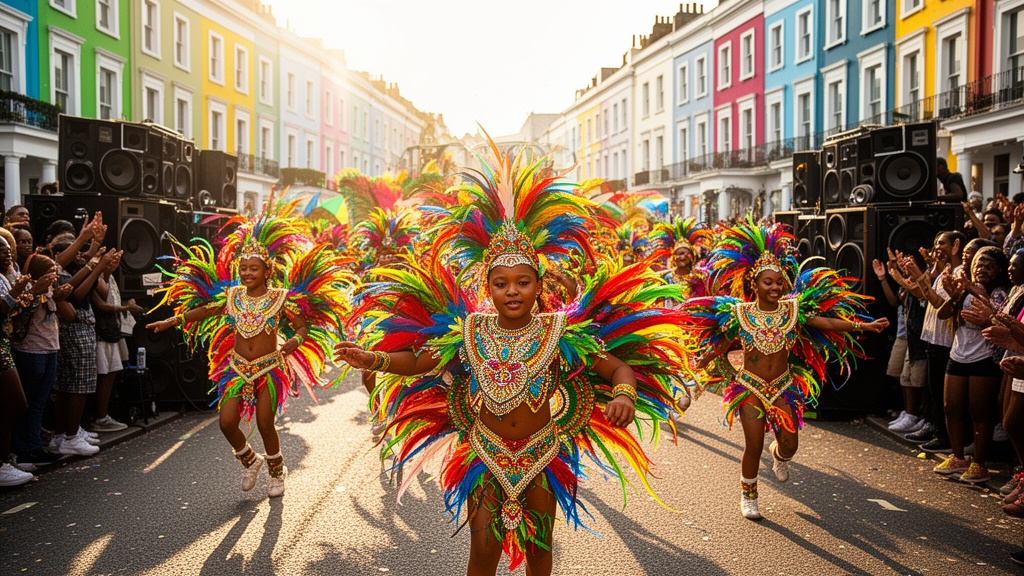
The streets of West London have erupted into a kaleidoscope of color, sound, and history as the Notting Hill Carnival 2026 officially returns today, August 30. As Europe’s largest street party, the festival marks a significant cultural milestone, drawing millions of visitors from across the globe to celebrate the profound influence and legacy of Caribbean culture in the United Kingdom.
Key Highlights:
- Official Start Date: August 30, 2026, commencing with the traditional Children’s Day opening.
- Grand Finale: The festivities continue through tomorrow, August 31, 2026.
- Location: The heart of West London, encompassing the iconic Notting Hill neighborhood.
- Cultural Focus: A celebration of Caribbean heritage through sound systems, elaborate costumes, steel pan music, and traditional displays.
A Kaleidoscope of Caribbean Heritage in West London
The air in West London is thick with the scent of jerk chicken and the rhythmic pulse of soca and calypso, signaling that the Notting Hill Carnival 2026 has officially begun. Today, August 30, serves as the vibrant opening of the festival, historically dedicated to Children’s Day. This initial phase of the carnival is designed to foster the next generation of cultural custodians, showcasing the incredible artistry of young masqueraders who navigate the parade route with the same passion and precision as their adult counterparts. As the sun beats down on the streets of Notting Hill, the event reinforces its status as a vital pillar of British-Caribbean history.
The Historical Roots of the Carnival
To understand the magnitude of the 2026 festivities, one must look back at the origins of the event. Conceived in the late 1950s as a response to the racial tensions of the time, the carnival was championed by figures such as Claudia Jones, who sought to unite the Caribbean community through celebration and art. What began as an indoor event has blossomed into a global phenomenon. In 2026, the spirit of those early organizers remains the heartbeat of the parade. The evolution from a local gathering to Europe’s most attended street party is a testament to the resilience and enduring influence of the Windrush generation and their descendants. This year’s carnival serves as both a party and a living museum, preserving oral histories and artistic traditions that might otherwise fade.
The Economic and Social Pulse
The economic footprint of the Notting Hill Carnival is staggering. Beyond the immediate joy of the music, the two-day event generates millions of pounds for the London economy, bolstering tourism, local businesses, and hospitality sectors. The 2026 edition has seen strategic investments in crowd management and local infrastructure, ensuring that the sheer scale of the event—which sees millions of attendees fill the streets—is balanced with safety and accessibility. For local business owners, the carnival is a period of peak activity, transforming quiet residential streets into bustling commercial corridors. It is an economic engine that thrives on community participation, proving that cultural heritage is a powerful driver of contemporary urban economics.
Logistics, Sustainability, and the Future
As the festival navigates the complexities of the 21st century, the 2026 organizers have placed a renewed focus on sustainability and modern logistics. Managing the sound systems—the pulsing veins of the carnival—requires intricate coordination to ensure that the iconic music reaches the masses while respecting the needs of local residents. The “Green Carnival” initiative is in full effect this year, with efforts to reduce plastic waste and optimize transport logistics for the millions of visitors arriving via London’s transit network. Looking ahead, the challenge for the Notting Hill Carnival is to maintain its grassroots, spontaneous energy while evolving into a model of a modern, sustainable urban festival. The seamless integration of traditional sound systems with state-of-the-art public safety measures highlights the adaptive nature of this historic celebration, ensuring that it remains relevant for years to come.
FAQ: People Also Ask
Q: What are the exact dates for the Notting Hill Carnival 2026?
A: The carnival takes place from August 30, 2026, to August 31, 2026, in West London.
Q: What is the significance of the first day, August 30?
A: August 30 is designated as Children’s Day, focusing on family-friendly activities, youth performances, and the younger generation of masqueraders.
Q: Where exactly does the Carnival take place?
A: The event is centered in the Notting Hill district of West London, covering a vast area through the surrounding streets that host the parade and various sound systems.
Q: Is the Notting Hill Carnival the largest street party in Europe?
A: Yes, it holds the title of Europe’s largest street party, consistently drawing millions of attendees over the August bank holiday weekend.