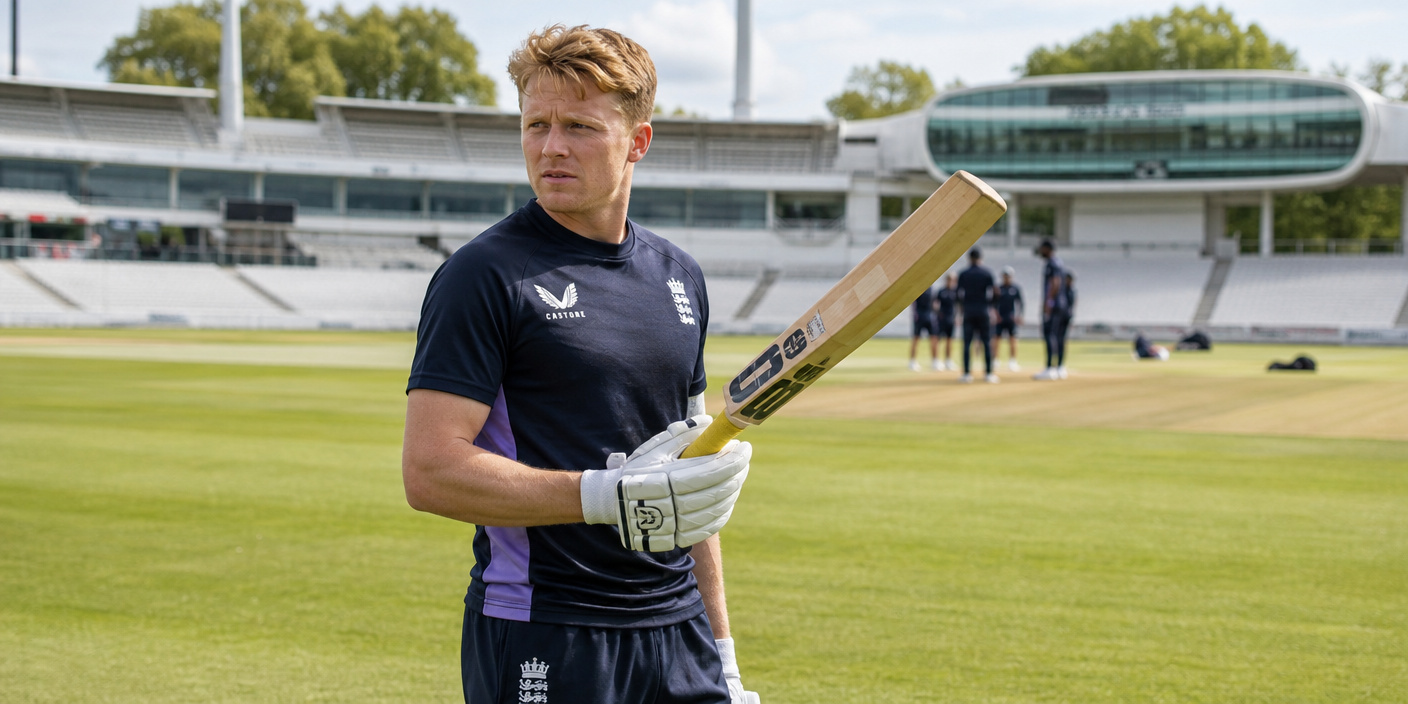
England batter Ollie Pope has officially withdrawn his name from the inaugural Afghanistan Premier League draft, marking a significant act of athlete activism that underscores the growing tension between international cricket and the Taliban-led administration. Pope’s decision to remove himself from the competition is explicitly grounded in his refusal to engage with a regime that has implemented severe, restrictive policies against women and girls, effectively dismantling their access to education, sport, and public life since the Taliban’s return to power in August 2021. By stepping away from the draft, Pope has forced a renewed conversation regarding the moral responsibilities of professional athletes in the face of human rights abuses, placing the spotlight firmly on the cricket world’s uneasy relationship with the Afghanistan Cricket Board (ACB).
Key Highlights
- Ollie Pope has withdrawn from the Afghanistan Premier League draft citing the Taliban’s restrictive policies on women’s rights.
- The move highlights the broader conflict between international sporting governance and the systemic human rights violations occurring in Afghanistan.
- Pope’s decision adds pressure on the ICC and other international bodies to define clear ethical standards for playing in or against nations that violate human rights.
- The withdrawal reflects a growing trend of athlete-led diplomacy, where individual players choose to prioritize social impact over professional opportunities.
The Ethical Line: Athletes, Activism, and Human Rights
The decision by Ollie Pope to decline a spot in the Afghanistan Premier League (APL) is far more than a simple contract negotiation; it is a profound ethical statement. In the modern era of sports, the lines between athletic participation and political neutrality have become increasingly blurred. For elite athletes, the choice of where to play is no longer just about geography or financial compensation—it is increasingly about values. Pope’s withdrawal serves as a benchmark for how cricketers might navigate the complex geopolitical landscape, especially when engaging with nations where regimes have institutionalized discrimination.
The Taliban’s Curfew on Women’s Sport
Since regaining control in 2021, the Taliban have systematically eroded the rights of Afghan women. One of the most visible victims of this policy has been sport. In a country where cricket had previously been a beacon of hope and national unity, the current administration has made it virtually impossible for women to participate. Despite the Afghanistan Cricket Board’s occasional efforts to maintain an image of normality to satisfy the International Cricket Council’s (ICC) membership requirements, the reality on the ground remains stark. Women are barred from gyms, stadiums, and, crucially, from playing organized sports. Pope’s stance is a direct response to this exclusion. By refusing to participate in a league that represents the state apparatus of such a regime, he is signaling that the normalization of these policies is not acceptable in the international cricket community.
The Economic and Cultural Impact on Afghanistan Cricket
While Pope’s withdrawal is an individual action, it carries significant economic and symbolic weight. The Afghanistan Premier League was designed to bolster the domestic economy and provide a platform for local talent to compete alongside international stars. International players provide not just talent, but also credibility and revenue. When high-profile players like Pope boycott the league, the international appeal of the tournament diminishes. This leaves the ACB in a difficult position: they must balance the desire to remain a part of the global cricket fraternity against the reality of their domestic political environment. The financial repercussions of such boycotts could, in theory, force the board to advocate more strongly for the inclusion of women in sports, as they struggle to justify their policies to an international community that is increasingly unwilling to ignore the plight of Afghan women.
The Role of Governing Bodies: ICC and ECB
Pope’s decision inevitably shifts the focus onto the International Cricket Council (ICC) and the England and Wales Cricket Board (ECB). The ICC has often been criticized for its hands-off approach to the political situations within its member nations. While the organization maintains that it is a sporting body, not a political one, the exclusion of women from cricket in Afghanistan places the country in direct violation of the fundamental tenets of the game, which emphasize inclusivity and diversity. Pope’s actions provide a roadmap for other players to follow, potentially forcing the ICC to adopt a more proactive stance on human rights. The ECB, for its part, has traditionally supported player autonomy in these matters, but as more players take similar stands, the organization may need to formalize a policy regarding international leagues in nations where systemic human rights abuses are documented. This could lead to a more codified framework for athlete engagement, potentially changing the landscape of international cricket drafts forever.
Looking Ahead: The Future of Athlete Diplomacy
As we look to the future, it is likely that we will see more athletes following in the footsteps of those who prioritize ethical considerations. This is not the first time a cricketer has taken a stance, but it is one of the most high-profile instances in recent years. The global reach of social media means that players are more aware of the issues facing the countries where they play. When they choose to step away, they bring global attention to these issues, ensuring that the Taliban’s treatment of women cannot be relegated to a footnote in international news. The hope, for many, is that this pressure will eventually lead to a shift in policy, restoring the rights of women and girls in Afghanistan to participate in all aspects of life, including sports.
FAQ: People Also Ask
1. Why did Ollie Pope withdraw from the Afghanistan Premier League draft?
Ollie Pope withdrew due to ethical concerns regarding the Taliban’s restrictive policies against women and girls, which include the prohibition of women from participating in sports and public life.
2. Is this the first time a cricketer has boycotted a league due to human rights concerns?
While individual player decisions are often private, this incident is significant because it explicitly links a player’s choice to the systematic human rights violations under the Taliban, highlighting a growing trend of athlete-led activism in cricket.
3. How does this affect the Afghanistan Cricket Board (ACB)?
Boycotts by high-profile international players like Pope can diminish the appeal of the Afghanistan Premier League, potentially causing financial and reputational damage to the ACB, which may pressure them to advocate for broader inclusivity in their domestic sports policies.
4. What is the ICC’s stance on Afghanistan’s exclusion of women?
The ICC has faced ongoing pressure to address the ACB’s failure to promote women’s cricket. While the ICC continues to work within the framework of its membership rules, the growing international outcry from players and human rights groups is making it increasingly difficult for the council to maintain its current position of non-interference.