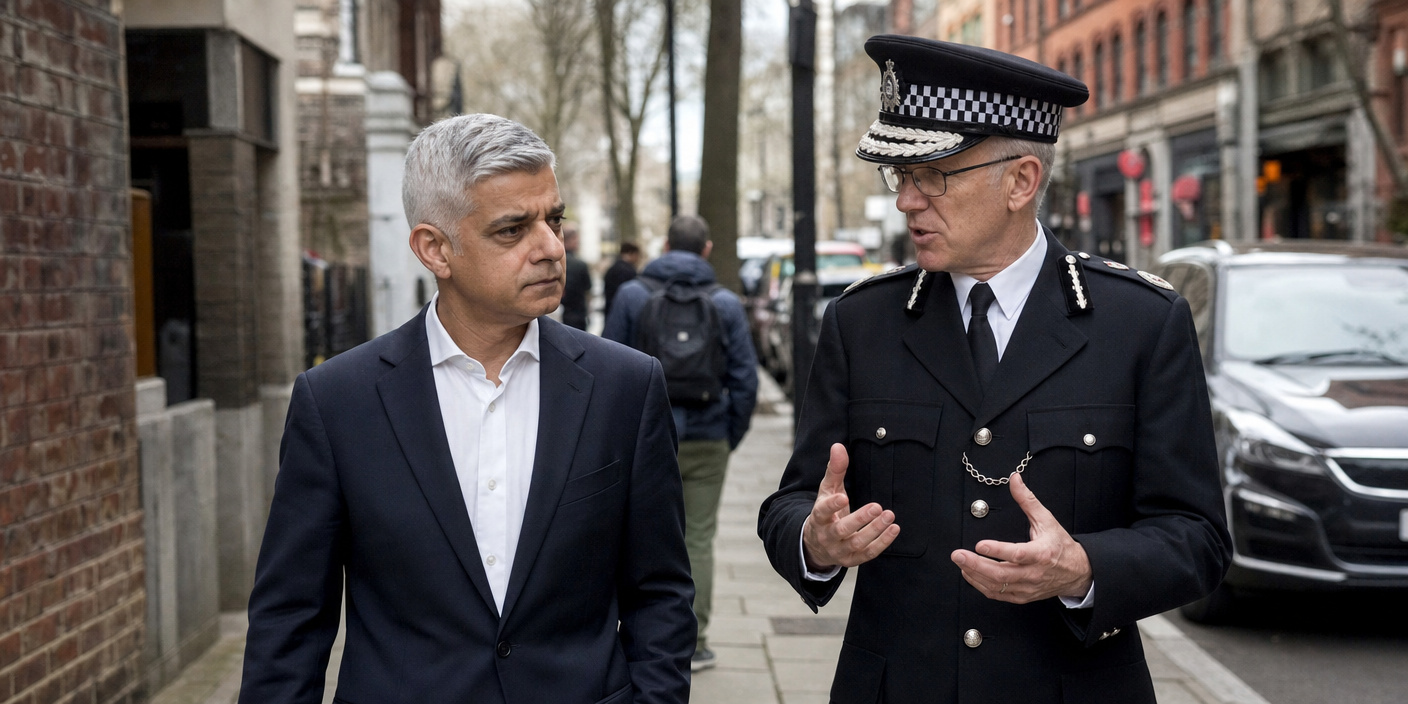
Mayor Sadiq Khan and Metropolitan Police Commissioner Sir Mark Rowley gathered recently in Camden to address the widening chasm between social media-driven perceptions of London’s safety and the empirical reality of the capital’s current crime trajectory. Standing against a backdrop of ongoing efforts to modernize policing, the officials presented a robust defense of the city’s security, underpinned by specific, verifiable data that contradicts the sensationalist narratives often dominating digital platforms. By contextualizing the 14% reduction in neighborhood crime, Khan and Rowley sought to reassure both residents and visitors that while challenges remain, the structural approach to public safety is yielding measurable, positive results.
The Clash of Perception vs. Reality
The contemporary digital landscape, often characterized by fragmented, viral video clips and algorithm-driven fear-mongering, has created a significant hurdle for city administrators. In this environment, a single isolated incident can be amplified, stripped of context, and reshared to create an impression of systemic breakdown. During the press engagement in Camden, both the Mayor and the Commissioner addressed this phenomenon directly. They argued that these narratives, while emotionally resonant, fundamentally misrepresent the broader security environment of a massive global metropolis like London.
The Anatomy of Misinformation
Social media platforms, by their very design, prioritize engagement, which frequently favors high-arousal content like fear, anger, or shock. When these platforms aggregate negative imagery from London, they can inadvertently create a ‘feedback loop’ of anxiety, even when the underlying data shows improvements. Khan emphasized that the duty of public officials is to cut through this noise with transparent, authoritative statistics. The goal is not to dismiss public concern, but to redirect that energy toward constructive dialogue about safety and community resources.
Validating the Statistical Baseline
The core of the officials’ argument rests on the Metropolitan Police Service’s own data streams. A 14% reduction in ‘neighborhood crime’—a specific classification that includes high-impact offenses such as burglary, robbery, theft from a person, and theft of motor vehicles—serves as the primary indicator of improved safety. This is not a marginal trend but a substantial shift that impacts the daily lives of Londoners. By focusing on these specific metrics, the authorities aim to provide a more stable foundation for public policy discussions, distancing themselves from the volatility of anecdotal social media evidence.
Community Policing: The Engine of Change
The reduction in crime rates is not coincidental; it is the direct outcome of a strategic shift in how the Metropolitan Police engage with local communities. Sir Mark Rowley, who has emphasized the importance of ‘more bobbies on the beat’ and data-driven deployment, explained that the drop in crime is the result of tactical, intelligence-led interventions.
Precision Policing Models
Modern policing in London has moved toward a more targeted approach. By utilizing data to map crime hotspots and patterns, the police can allocate resources more efficiently. This means that instead of generic patrols, officers are deployed where they are most needed and at the times when crime is most likely to occur. This ‘precision policing’ model is credited with the double-digit percentage drops in neighborhood offenses, as it allows for proactive intervention rather than reactive investigation.
Rebuilding Public Trust
Beyond the raw numbers, the partnership between City Hall and the Met is focused on rebuilding public trust. Rowley acknowledged that trust is the bedrock of policing. Without the cooperation of the community, police efforts are significantly hampered. By holding joint press events and engaging with local residents, officials are attempting to bridge the gap between the institution of the police and the citizens they serve, effectively dismantling the ‘us versus them’ mentality that sometimes permeates online discourse.
The Economic and Social Stakes
The conversation in Camden also highlighted the broader implications of safety perceptions on London’s economic health. As a global hub for tourism, finance, and culture, London relies on its reputation as a safe, open city. When the narrative of ‘lawlessness’ gains traction, it can have tangible consequences for tourism revenues, consumer spending, and international investment.
Safeguarding the Visitor Economy
Tourists and business travelers are particularly susceptible to the ‘negative perception’ trap. For a city like London, sustaining a positive brand image is a vital economic component. By countering fear-based narratives, Khan is effectively protecting the city’s economic engines. If residents and visitors feel unsafe, the ‘vibrancy’ of a city—its late-night economy, its public transport usage, and its street life—can decline, potentially creating a self-fulfilling prophecy of decay. The officials’ intervention was, in part, an effort to prevent this downward spiral.
Future-Proofing the Metropolis
Looking ahead, the strategy is to institutionalize these improvements. The 14% decrease is viewed as a baseline to be improved upon, not a ceiling. Future initiatives are expected to focus on integrating new technologies into police work, such as advanced data analytics and improved digital investigative tools, while simultaneously doubling down on the human element: community engagement officers who know the neighborhoods and the individuals they serve. The objective is to create a resilient, adaptive safety infrastructure that can withstand the pressures of a growing, evolving population.
FAQ: People Also Ask
What is ‘Neighborhood Crime’ as defined by the Met Police?
Neighborhood crime is a specific category of offenses that directly impact the daily lives and sense of security of residents. It typically includes residential burglary, robbery, theft from a person (like pickpocketing), and theft of motor vehicles.
Why are online reports often different from official statistics?
Online reports on social media are frequently based on individual experiences or single, dramatic events that go viral due to the platform’s engagement algorithms. Official statistics provide an aggregate, time-based view of all incidents, offering a more comprehensive—albeit less dramatic—picture of city-wide trends.
What role does Sadiq Khan play in Met Police operations?
While the Met Police is operationally independent, the Mayor of London is responsible for setting the strategic direction for policing in the capital through the Mayor’s Office for Policing and Crime (MOPAC). Khan’s role involves securing funding, setting priorities, and holding the Commissioner to account on behalf of Londoners.
How does community policing contribute to the 14% drop?
Community policing builds relationships between officers and residents. This increases the flow of information from the public to the police, helping officers identify crime trends early, prevent incidents before they escalate, and gain the trust required to effectively investigate and solve crimes when they do occur.
Is London safe for tourists currently?
According to official statistics provided by the Metropolitan Police, there has been a positive trend in neighborhood safety, with a 14% reduction in key neighborhood offenses over the past year. Authorities maintain that London remains a safe, global city, though they advise standard caution typical of any major metropolitan area.