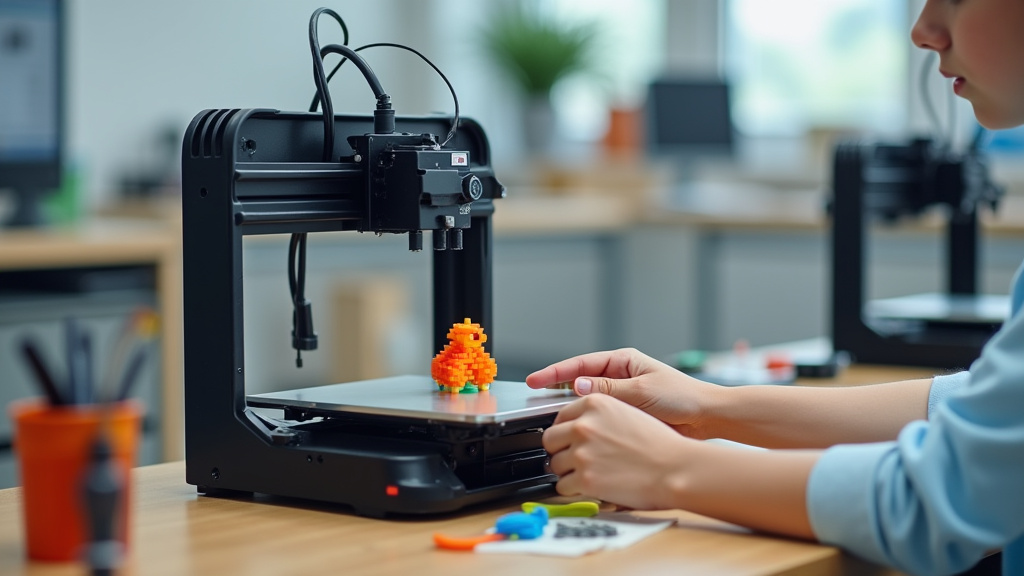
At 13 years old, Andy Barrett has redefined the role of school technology, proving that the tools found in the modern classroom—specifically, the 3D printer—are not merely for academic prototypes but are viable instruments for real-world commerce and social change. The UK student has successfully converted his school’s additive manufacturing resources into a thriving micro-enterprise, resulting in the production and sale of 150 fidget toys, with all generated revenue dedicated to supporting epilepsy awareness initiatives.
Key Highlights
- Micro-Entrepreneurship: Andy Barrett, aged 13, leveraged school infrastructure to launch a commercial 3D printing venture.
- Sales Milestone: The project achieved a significant local impact, with 150 fidget toys manufactured and sold.
- Social Impact: All proceeds are being donated to epilepsy awareness, merging business education with charitable contribution.
- Tech Literacy: The venture highlights the growing proficiency of youth in using CAD software and additive manufacturing workflows.
From Classroom Innovation to Local Enterprise
The trajectory of Andy Barrett’s project serves as a compelling case study in the power of ‘Maker Education.’ For years, educational institutions have integrated STEM (Science, Technology, Engineering, and Mathematics) equipment into their facilities with the primary goal of teaching basic design principles. However, Barrett’s initiative represents a shift from passive learning to active entrepreneurship. By identifying a demand—specifically for fidget toys, which remain popular among students for their tactile, stress-relieving properties—Barrett utilized his school’s additive manufacturing capabilities to fulfill a specific market niche.
The Technical and Economic Process
Additive manufacturing, or 3D printing, allows for rapid prototyping and low-volume production that was previously inaccessible to teenagers. Barrett’s process required not only the operation of the hardware but the design or modification of 3D models using Computer-Aided Design (CAD) software. This creates a technical barrier to entry that, once breached, allows for extreme scalability. By printing 150 units, Barrett demonstrated an understanding of production cycles, material management (likely using PLA or PETG filaments), and the complexities of quality control.
From an economic standpoint, his venture highlights the viability of ‘micro-manufacturing.’ Unlike traditional retail, which requires inventory overhead and shipping logistics, Barrett’s model relies on ‘print-on-demand’ or ‘batch-printing’ capabilities. This approach minimizes waste—a key sustainability metric—while maximizing the utility of the hardware. The funds raised are not just a donation; they represent a quantitative success of a business model that transforms raw plastic filament into liquid capital for a charitable cause.
The Power of Youth-Led Philanthropy
Perhaps the most notable aspect of this story is the intersection of business and altruism. By selecting epilepsy awareness as the beneficiary of his sales, Barrett has elevated his project from a simple school hobby to a mission-driven endeavor. Epilepsy, a neurological disorder characterized by recurrent seizures, affects millions globally, and awareness efforts are chronically underfunded. By tying the success of his fidget toy sales to this cause, Barrett has introduced a social layer to the transaction, encouraging community members to participate in a purchase that carries a moral, as well as a functional, value.
The Future of Maker Education in the UK
Barrett’s success serves as a clarion call for further investment in UK schools. As the digital economy evolves, the ability to manufacture physical goods from digital files becomes an essential skill. Educators often debate the efficacy of classroom technology; however, stories like Barrett’s provide tangible proof that access to high-end equipment, combined with entrepreneurial encouragement, can produce real-world leaders. We are likely to see an increase in ‘student-led enterprises’ as more youth recognize that the desktop printer is not just an appliance, but a potential engine for their personal and social influence.
FAQ: People Also Ask
Q: How did a 13-year-old manage the legal and safety aspects of a business?
A: While specific legal structures for minors vary, most youth-led initiatives at this level operate as ‘hobby businesses’ under parental guidance, focusing on local community sales. The emphasis remains on educational value and philanthropy rather than complex corporate registration.
Q: Why are 3D-printed fidget toys in such high demand?
A: Fidget toys remain popular due to their ability to help users maintain focus and manage anxiety. 3D printing allows for custom shapes, colors, and mechanisms that mass-produced plastic toys often lack, giving them a ‘bespoke’ quality that appeals to consumers.
Q: Does this project represent a sustainable model for charity?
A: Yes, it is highly sustainable. It combines a low-cost production method (3D printing) with a high-demand product (fidget toys) and a clear, emotionally resonant charitable goal, creating a ‘virtuous cycle’ of fundraising.
Q: Can other students replicate this business model?
A: Absolutely. With access to open-source design repositories and entry-level 3D printers, students are increasingly capable of launching similar micro-businesses. Success requires a mix of technical design skills, marketing basics, and a genuine interest in solving a problem or meeting a demand.