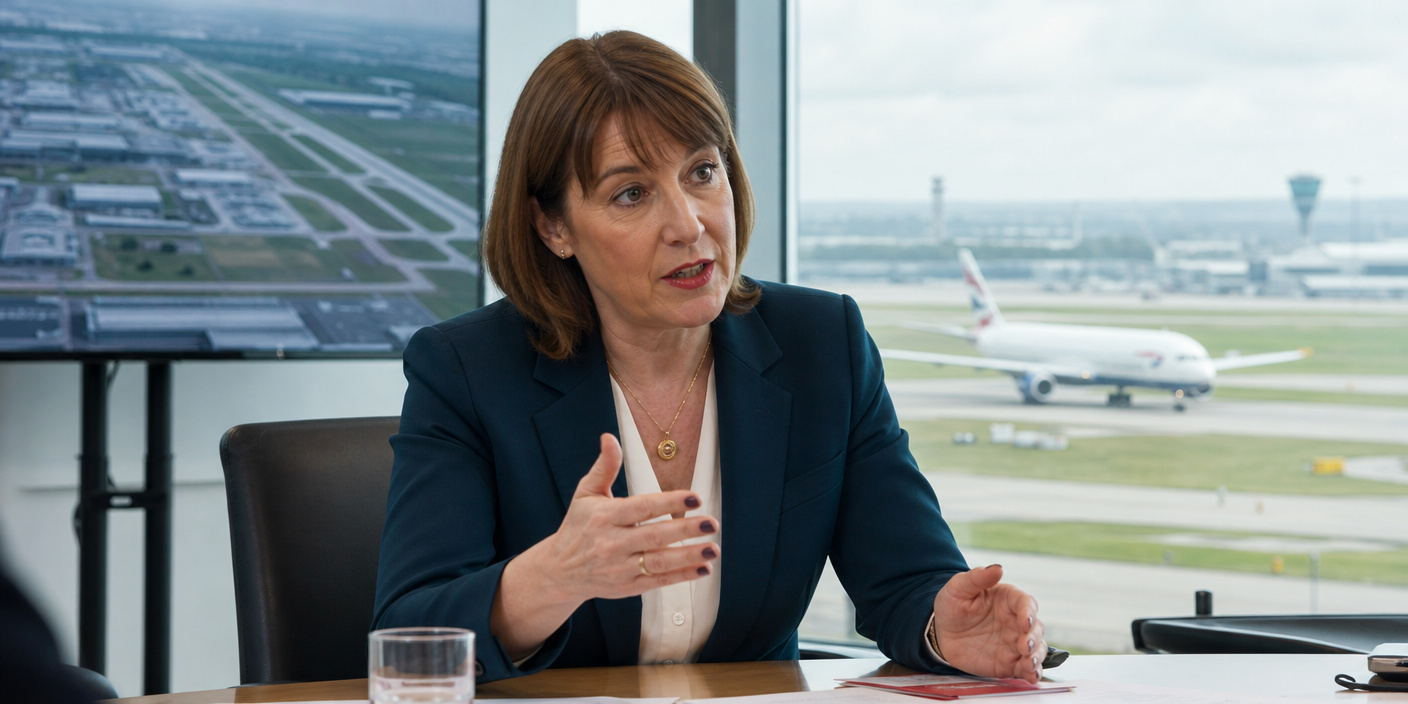
Chancellor Healey has made a decisive intervention in the UK’s most contentious infrastructure debate, explicitly backing the development of a third runway at Heathrow Airport. The move is framed by the Chancellor as an essential engine for national economic recovery and job creation, positioning the Treasury firmly in the pro-growth camp. However, this endorsement has laid bare a striking political divergence, as Prime Minister Andy Burnham continues to avoid articulating a clear stance on the long-debated expansion, leaving questions about the government’s collective strategy hanging in the balance.
The Strategic Split: Infrastructure and Economic Ambition
For months, the question of whether to proceed with the Heathrow third runway has remained a litmus test for the current administration’s commitment to major capital projects. Chancellor Healey’s intervention effectively forces the issue into the spotlight, moving it from the quiet, bureaucratic halls of the Department for Transport into the urgent arena of national politics. By emphasizing that the expansion is a prerequisite for long-term prosperity, Healey is signaling a prioritization of physical infrastructure investment over political caution.
This is not merely a debate over concrete and tarmac; it is a fundamental disagreement over the nation’s post-recession identity. Supporters of the runway argue that the project is vital for maintaining London’s status as a premier global aviation hub, particularly in the face of stiff competition from European rivals like Paris and Amsterdam. Proponents often cite the potential for thousands of new skilled jobs and billions in GDP growth, arguments that Healey has effectively co-opted to anchor his economic platform.
Conversely, the Prime Minister’s reticence speaks to a different kind of calculation. Prime Minister Andy Burnham, known for a more cautious, consensus-building approach, appears wary of inflaming internal opposition or alienating environmental stakeholders. By “ducking” the issue, as critics suggest, the Prime Minister is attempting to buy time, perhaps waiting for the results of the comprehensive review of public consultation responses before committing the government to a path that carries immense political risk.
The Economic Case for Connectivity
At the heart of the Chancellor’s argument is the undeniable reality of capacity constraints. Heathrow has operated at near-maximum capacity for years, a limitation that hampers the ability to open new trade routes and accommodate increased cargo traffic. The economic modeling provided by industry experts suggests that a third runway could yield significant dividends. Estimates often range from £100 billion to £200 billion in long-term economic benefits, driven by improved connectivity to emerging markets in Asia and South America.
Furthermore, the aviation sector remains a significant employer. The expansion promises not only direct construction roles but also a long-term boost to the logistics, tourism, and hospitality sectors. For the Treasury, this is a compelling narrative of growth that is difficult to ignore, especially when the Chancellor is tasked with balancing the books and finding new sources of revenue. However, the economic benefits must be weighed against the significant capital expenditure required and the potential for cost overruns, a common feature in projects of this magnitude.
The Political Dilemma of Consultation
The government is currently in the delicate phase of reviewing public consultation responses, a process that acts as a vital safety valve for democratic oversight. Thousands of stakeholders—ranging from local residents concerned about noise pollution and air quality to major business groups—have submitted their views. The sheer volume and complexity of this feedback make the Prime Minister’s avoidance of the topic particularly notable.
In political terms, silence can be interpreted as a lack of confidence. By failing to echo the Chancellor’s support, the Prime Minister risks appearing out of sync with his own cabinet. This creates a vacuum that opponents of the project are more than happy to fill, framing the government as divided and indecisive. The longer this lack of alignment persists, the more the project becomes a symbol of the administration’s inability to deliver on large-scale national ambitions.
Environmental and Community Hurdles
The path to a third runway has historically been paved with legal and environmental obstacles. Any government approval will almost certainly face a barrage of judicial reviews and challenges from environmental groups and local councils concerned about the impact on climate targets and local quality of life. The Chancellor’s public backing is a necessary first step, but it does not account for the regulatory battles ahead. The government must reconcile its expansionist economic goals with its legal obligations regarding net-zero carbon targets, a balance that remains one of the most difficult challenges for any modern administration. The upcoming review of consultation responses will likely highlight these tensions, forcing the Prime Minister to move from his position of ambiguity into a definitive decision.
FAQ: People Also Ask
1. Why is the Heathrow third runway so controversial?
The expansion is a flashpoint because it pits the need for economic growth and global connectivity against significant environmental and local community concerns, including noise pollution, air quality, and national carbon emission targets.
2. What does it mean that the government is reviewing public consultation responses?
This is a standard, yet critical, procedural step where the government evaluates feedback from the public, business leaders, local authorities, and environmental experts before making a final decision on whether to proceed with a major infrastructure project.
3. Why would the Prime Minister avoid taking a position?
Politicians often avoid taking clear stances on divisive infrastructure projects to prevent alienating core constituencies or to wait for more data. In this case, Prime Minister Burnham’s silence suggests a strategic hesitation to fully endorse a project that remains legally and socially contentious.
4. What are the primary economic arguments for the third runway?
Proponents argue that it will create thousands of jobs, significantly boost GDP by opening new trade routes to emerging markets, and ensure the UK remains a competitive aviation hub in the global economy.