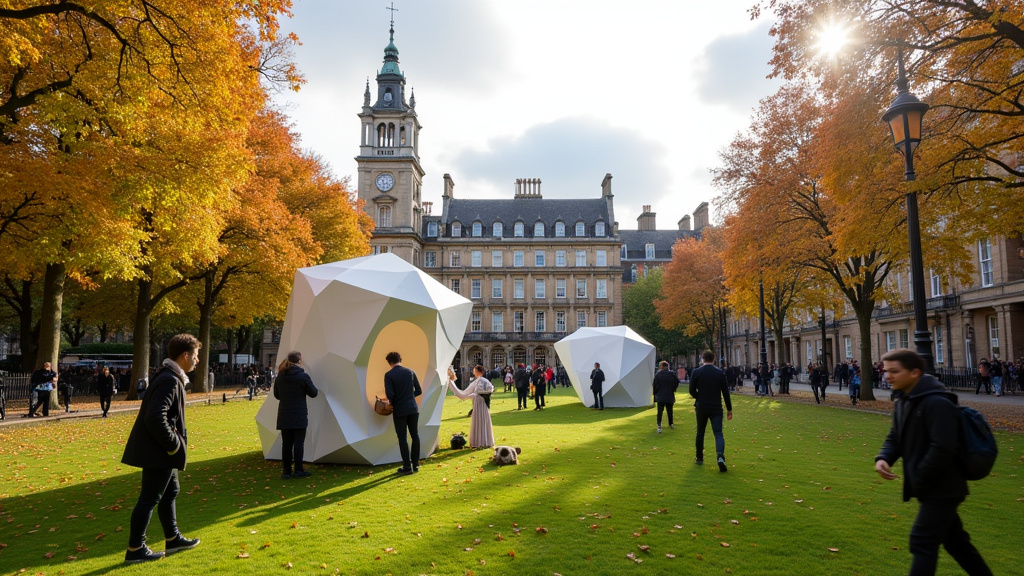
As London settles into the latter half of October, the 20th anniversary of the Bloomsbury Festival remains the focal point for culture seekers, transforming the historic neighborhood into a sprawling laboratory of creativity. Spanning the entire month, the 2026 edition of the festival marks two decades of bringing together residents and visitors for a curated program of over 150 arts, science, and community events, cementing Bloomsbury’s status as the quintessential intellectual hub of the capital.
Key Highlights
- 20th Anniversary Milestone: Commemorating two decades since the festival’s 2006 inception, the 2026 program features special retrospective exhibitions and collaborative performances.
- Cross-Disciplinary Programming: Over 150 events integrated across the district, blending cutting-edge scientific research with traditional literary and artistic expressions.
- London Knowledge Quarter Integration: Deep collaboration with local academic powerhouses, including University College London (UCL) and the British Museum, to host public discussions and interactive workshops.
- Accessible Urban Culture: A mix of free and ticketed events aimed at fostering neighborhood cohesion, utilizing iconic spaces like Senate House and Russell Square.
Evolution of the Intellectual Quarter
For two decades, the Bloomsbury Festival has served as a mirror to the changing nature of London’s intellectual identity. While the area is historically synonymous with the Bloomsbury Group—Virginia Woolf, John Maynard Keynes, and E.M. Forster—the modern iteration of the festival represents a significant pivot toward the “London Knowledge Quarter” concept. This concept recognizes the district not just as a repository of historical literature, but as one of the densest concentrations of knowledge-based institutions in the world.
The Intersection of Art and Science
One of the most notable shifts in the 2026 programming is the deliberate blurring of lines between the humanities and hard sciences. This year, organizers have curated events that challenge the traditional dichotomy between a literary festival and a science fair. Attendees can witness performances where neuroscientists collaborate with contemporary dancers to visualize cognitive function, or participate in public health forums held in the historic libraries that once hosted the radical thinkers of the early 20th century.
This synthesis is not accidental. It is a direct response to the area’s unique topography, where world-leading medical research centers and archaeological institutions sit adjacent to independent bookshops and cafes. By utilizing spaces like the Senate House or the hidden courtyards of Russell Square, the festival leverages the architectural weight of the neighborhood to provide a gravity to these modern intellectual inquiries.
Curating a Neighborhood-Scale Event
The logistical challenge of maintaining 150+ events throughout October requires a decentralized approach. Unlike festivals that rely on a single marquee venue, the Bloomsbury Festival 2026 operates as an interconnected ecosystem. This year, the “Discovery Trail” has been expanded, encouraging visitors to walk between venues that include university lecture halls, public parks, and specialized research facilities. This structure encourages a “slow-culture” experience, where the act of traversing the district becomes as much a part of the festival as the events themselves.
Economic data from previous iterations suggests that this localized approach provides a significant uplift to the district’s independent retail and hospitality sectors. By pulling foot traffic away from the typical tourist thoroughfares of the West End and into the quieter, residential-academic mix of Bloomsbury, the festival reinforces the local economy while simultaneously preserving the character of the neighborhood.
A Legacy of Community Engagement
Beyond the headline performances and academic debates, the 2026 festival places a renewed emphasis on community-led workshops. This includes initiatives designed to engage local youth in STEM education through the arts, a cornerstone of the festival’s mission to remain relevant to the changing demographics of central London. The inclusion of diverse voices—from refugee storytelling circles to local history preservation groups—ensures that the festival remains grounded in the realities of the contemporary Bloomsbury community, rather than functioning merely as an external tourist draw.
Future-Proofing the Cultural Heart
Looking toward the next decade, the 2026 festival serves as a proof-of-concept for urban cultural planning. As London grapples with the pressures of gentrification and space management, the Bloomsbury model of utilizing existing “soft” assets—libraries, squares, and academic partnerships—rather than constructing new, costly infrastructure, offers a sustainable template. The success of this anniversary year indicates that the appetite for deep-dive, intellectually rigorous festival programming is growing, setting a high bar for cultural organizers across the city.
FAQ: People Also Ask
Q: What are the primary dates for the Bloomsbury Festival 2026?
A: The festival runs for the entire month of October 2026, with events scheduled daily across various locations in the Bloomsbury district.
Q: Are the festival events free to attend?
A: The festival features a hybrid model; a significant portion of the 150+ events are free to the public, though specific high-demand performances, workshops, and guided tours may require ticket bookings in advance via the official festival portal.
Q: How does the festival integrate with local London institutions?
A: The festival operates in partnership with the London Knowledge Quarter, actively involving institutions like UCL, Birkbeck, and the British Museum, which open their spaces for public lectures, exhibits, and interactive science demonstrations throughout the month.