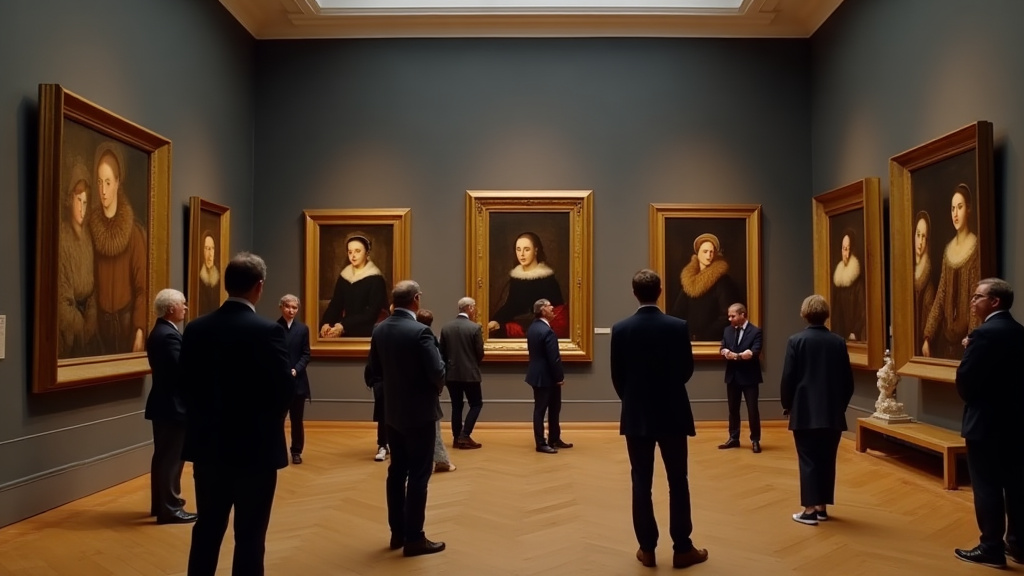
The National Gallery has officially opened its doors to ‘Van Eyck: The Portraits,’ a defining cultural event that establishes a new benchmark for the London winter art season. By gathering an unprecedented selection of Jan van Eyck’s painted portraits from prestigious international collections, the exhibition offers a rare, scholarly, and visually arresting examination of the 15th-century master who revolutionized the potential of oil painting. For art historians and enthusiasts alike, this display is not merely a collection of artworks; it is a profound exploration of human identity, capturing the transition from late medieval formality to the psychological depth of the early Renaissance.
Key Highlights
- Unprecedented Gathering: The exhibition unites iconic portraits by Jan van Eyck, many of which are rarely moved from their permanent homes in international galleries.
- Technical Mastery: Visitors gain insight into Van Eyck’s pioneering use of oil glazing, which allowed for the hyper-realistic textures and luminosity that defined his career.
- Cultural Significance: The show serves as the anchor for London’s winter cultural schedule, drawing significant interest from both the global art market and the general public.
- Human-Centric Art: The focus remains on the ‘gaze’ of the subjects, showcasing how Van Eyck captured the complexity of the human spirit in the 1400s.
The Master of the Northern Renaissance
Jan van Eyck holds a singular position in art history. As the most famous of the Early Netherlandish painters, his ability to manipulate oil paint—a medium that was still in its infancy in terms of wide-scale adoption—enabled him to achieve a level of detail previously thought impossible. The portraits displayed at the National Gallery are a testament to this technical brilliance. Each panel on view serves as a window into the 15th-century Burgundian court and the burgeoning merchant class of Bruges.
The Anatomy of a Masterpiece
One of the central themes of this exhibition is the scrutiny of Van Eyck’s technical process. By using thin, translucent glazes, the artist built up layers of pigment that allowed light to penetrate the surface and reflect back, creating the trademark luminosity found in works like the Arnolfini Portrait (a cornerstone of the National Gallery’s own permanent collection). In this exhibition, viewers can observe these techniques up close, analyzing the microscopic precision with which Van Eyck painted everything from the fur of a collar to the individual reflections in a subject’s eye.
Psychological Realism
Beyond the technical feats, ‘Van Eyck: The Portraits’ delves into the psychological depth of his sitters. Unlike the stiff, stylized portraiture common to the preceding Gothic era, Van Eyck’s subjects possess an uncanny, lifelike presence. They seem to occupy real space, reacting to the viewer with a sense of intimacy and awareness. This exhibition creates a conversation between the sitter and the visitor, bridging a 600-year gap through the power of paint.
Global Collaboration and Future Impact
The logistics of securing these loans from international institutions is a feat in itself. The exhibition represents a masterclass in museum diplomacy, requiring the temporary relocation of fragile, centuries-old wooden panels. For the London art scene, this event acts as a significant economic and cultural driver. As the city enters its colder months, the exhibition provides a critical indoor destination, further cementing London’s status as a primary hub for global art tourism.
Looking toward the future, this exhibition sets a precedent for how museums might curate ‘monographic’ shows. By narrowing the focus to portraiture—specifically that of one artist—the National Gallery creates a cohesive narrative that avoids the visual clutter of broader historical surveys. It invites a meditative, slow-looking experience, which is increasingly rare in the digital age.
FAQ: People Also Ask
Q: Why is Jan van Eyck considered a pioneer of oil painting?
A: While he did not ‘invent’ oil painting, Van Eyck was the first to perfect the technique of using oil-based glazes to achieve unprecedented realism, texture, and light, effectively transforming the medium from a craft into a sophisticated tool for fine art.
Q: What is the significance of the portraiture in this exhibition?
A: These works represent a pivotal shift in art history where the individual sitter becomes the primary focus, moving away from purely religious iconography to capture the status, personality, and human essence of the subject.
Q: How does this exhibition affect the National Gallery’s permanent collection?
A: The exhibition contextualizes the National Gallery’s own holding of Van Eyck’s masterpieces, allowing visitors to see the institution’s permanent works in direct dialogue with rare pieces on loan from around the world.
Q: How long will ‘Van Eyck: The Portraits’ be on display?
A: The exhibition is currently active as part of the National Gallery’s winter schedule. Visitors are encouraged to check the official National Gallery website for specific closing dates and to book tickets in advance, as high demand is expected.