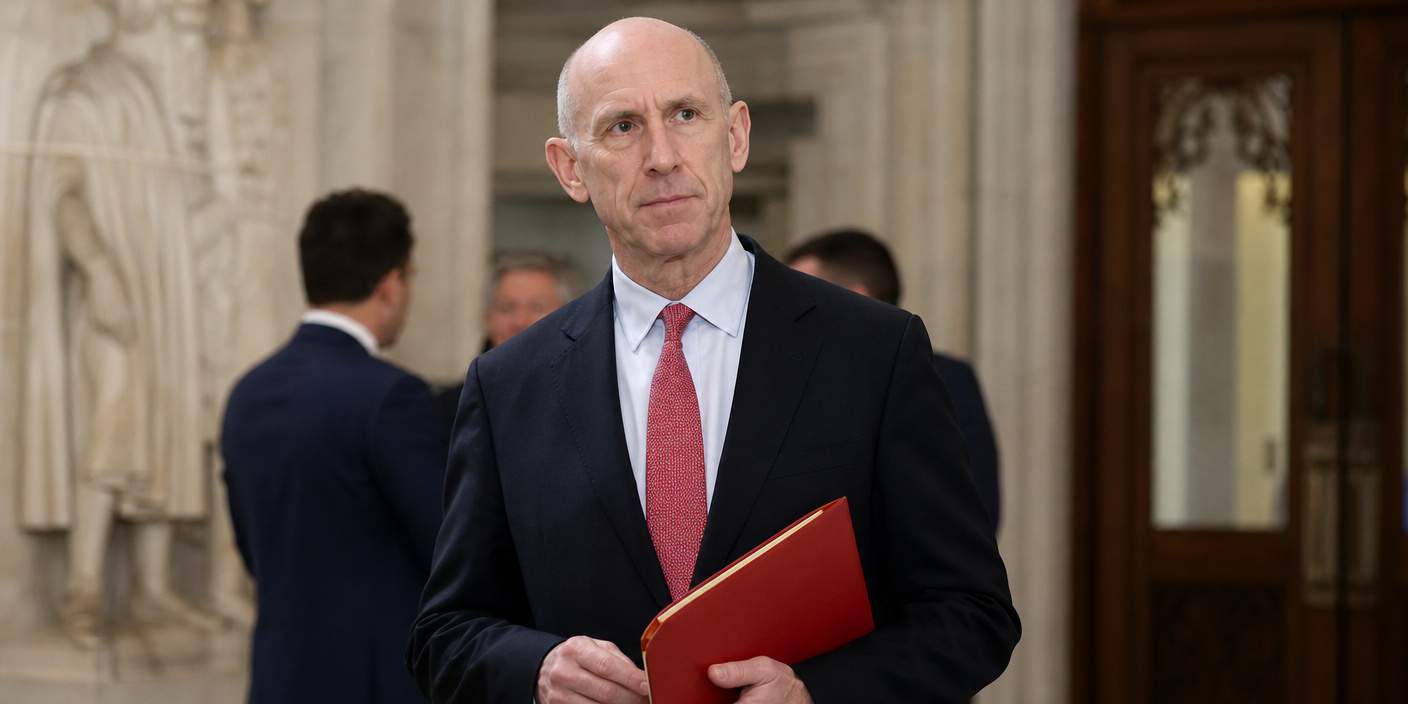

Bank of England (BOE) Chief Economist Huw Pill has issued a sobering outlook for the UK economy, signaling that monetary policy may need to remain in restrictive territory throughout 2027 to combat persistent inflationary pressures. In a recent detailed briefing with the Financial Times, Pill highlighted that while headlines may suggest a cooling of prices, the underlying structural drivers—particularly wage growth and unpredictable energy costs—remain stubborn barriers to returning to the central bank’s 2% inflation target.
Key Highlights
- Prolonged Tightening: Bank of England Chief Economist Huw Pill indicates that interest rate increases will likely be necessary throughout 2027.
- Structural Risks: Wage growth and energy costs are identified as the primary threats to the BOE’s 2% inflation mandate.
- Persistence is Key: The central bank is focusing on the “second-round effects” of inflation rather than short-term headline figures.
Navigating the Inflationary Horizon: Why 2027 Remains a Battleground
The narrative surrounding the Bank of England’s interest rate policy has shifted from a question of ‘if’ to a question of ‘for how long.’ As the UK attempts to navigate a complex macroeconomic landscape, the Monetary Policy Committee (MPC) finds itself in an increasingly precarious position. Huw Pill’s assessment provides a crucial window into the internal thinking of the central bank, suggesting that the era of ‘cheap money’ is effectively behind us for the foreseeable future.
The Wage Growth Conundrum: Persistent Pressures
The most significant concern flagged by the BOE is the resilience of wage growth. In an economy where labor markets remain tight, the feedback loop between inflation and wages—often referred to as the wage-price spiral—creates a persistent upward pressure on the Consumer Price Index (CPI). When employees demand higher wages to compensate for the cost of living, firms pass these costs onto consumers, effectively cementing inflation at higher levels.
Pill noted that the current trajectory of wage growth in the UK remains inconsistent with the 2% inflation target. For the MPC, this necessitates a deliberate approach to interest rates, acting as a brake on an economy that is otherwise prone to overheating. The challenge here is delicate: the central bank must tighten policy enough to dampen wage expectations without triggering a severe recessionary contraction. This balancing act is exactly why Pill anticipates that interest rates may need to move higher, or remain elevated, through 2027.
Energy Volatility and Global Supply Shocks
Beyond the domestic labor market, energy costs continue to be a wild card. While global oil and gas prices have stabilized relative to their 2022 peaks, the sensitivity of the UK energy market remains high. Global supply shocks—whether driven by geopolitical instability or sudden shifts in international energy policy—can derail even the most carefully constructed inflation forecasts.
For the Bank of England, energy inflation is particularly difficult to manage because it is largely exogenous. However, by maintaining higher interest rates, the BOE aims to suppress overall demand, which in turn reduces the economy’s vulnerability to these external shocks. Pill’s comments to the FT underscore a ‘wait and see’ attitude regarding these costs; until global supply chains reach a more predictable equilibrium, the central bank is unlikely to pivot to a policy of aggressive rate cuts.
The 2% Target: A Moving Goalpost?
The 2% inflation target is not merely an arbitrary number; it is the anchor of the Bank of England’s credibility. However, achieving this target in an era of deglobalization and shifting demographics is proving to be a Herculean task. Skeptics argue that aiming for 2% in the current global climate may be overly ambitious, potentially causing unnecessary economic pain.
Despite these critiques, the BOE appears steadfast. The institutional commitment to 2% is viewed as the bedrock of price stability. Pill’s commentary reinforces the idea that the central bank is willing to endure the political and social pressure of higher borrowing costs to prevent inflation from becoming entrenched. This policy of ‘higher for longer’ is designed to send a clear signal to markets: the central bank will not sacrifice its mandate for short-term economic growth.
Implications for the UK Economy and Mortgage Holders
The reality of elevated interest rates through 2027 has profound implications for every facet of the UK economy. For households, this translates to sustained pressure on mortgage affordability. Those rolling off fixed-rate deals will face a significantly different lending environment than they did a few years ago. Banks have already adjusted their lending criteria, and the prospect of continued rate hikes or sustained peaks will likely keep mortgage rates at multi-year highs.
For businesses, the cost of capital remains a primary headwind. Companies looking to expand or invest are finding that the hurdle rate for projects has risen. This, in turn, impacts capital expenditure, R&D, and ultimately, national productivity. The BOE is cognizant of these trade-offs, yet they view the containment of inflation as the necessary precondition for sustainable, long-term economic growth. In this view, pain in the short term—manifested as higher borrowing costs—is the price paid for stability in the years to come.
FAQ: People Also Ask
1. Why is the Bank of England focusing on 2027?
It represents a medium-term horizon where the MPC expects the impacts of current monetary policy to fully filter through the economy. Huw Pill’s focus on this date highlights the bank’s belief that inflationary pressures will not simply vanish in the short term.
2. What is the biggest risk mentioned by Huw Pill?
The primary risk is the ‘sticky’ nature of inflation, specifically driven by wage growth and energy costs, which could force the central bank to keep interest rates higher than investors currently anticipate.
3. How does this affect mortgage rates?
Generally, if the Bank of England signals that interest rates must stay higher for longer, it keeps upward pressure on the cost of borrowing. This makes it more expensive for lenders to offer mortgages, which typically results in higher fixed and variable rates for consumers.
4. Is the 2% inflation target changing?
No. Huw Pill’s statements emphasize that the 2% target remains the primary objective. The BOE is prioritizing this mandate over short-term economic stimulation.