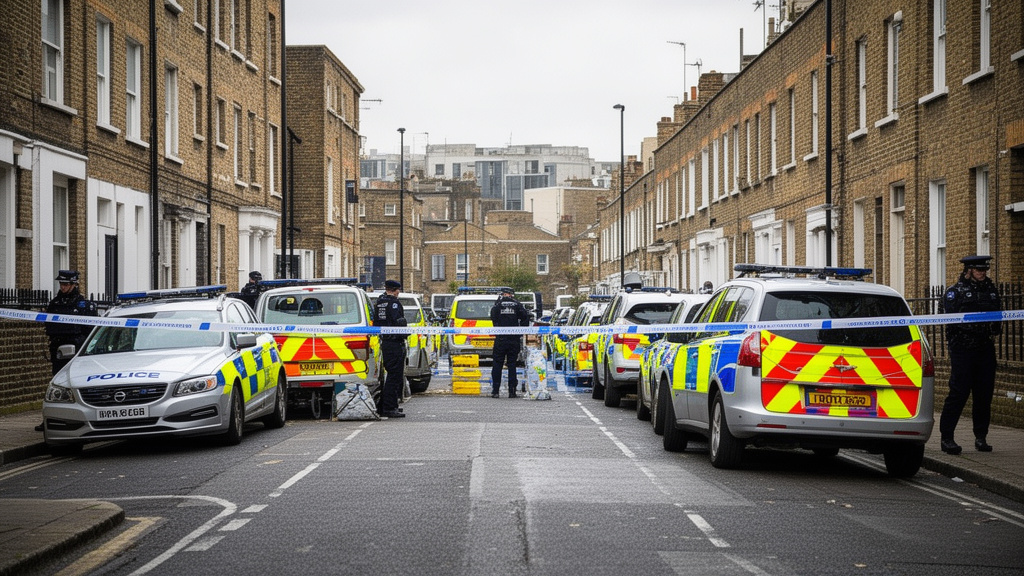

The Metropolitan Police have initiated a formal investigation into allegations of non-recent sexual offences involving high-profile comedian, actor, and children’s author David Walliams. This development follows extensive media reporting, most notably by ITV News and The Guardian, which brought historical allegations of misconduct into the public eye. The investigation marks a significant escalation in the scrutiny surrounding the entertainer, placing his professional conduct under the direct oversight of law enforcement agencies.
Key Highlights
- Investigation Confirmed: The Metropolitan Police have launched a formal inquiry regarding allegations of non-recent sexual offences involving David Walliams.
- Origins of Allegations: The probe follows journalistic investigations by ITV News and The Guardian that documented historical claims against the entertainer.
- Legal Denial: David Walliams, through his legal representatives, has consistently and robustly denied the allegations made against him.
- Nature of the Case: The term “non-recent” signifies that the alleged incidents date back several years, a classification that requires specific forensic and investigative techniques within the UK legal framework.
The Gravity of Non-Recent Investigation
When the Metropolitan Police launch an investigation into “non-recent” sexual offences, it initiates a complex, resource-intensive legal process distinct from active or immediate reporting. In the UK legal system, historical cases present unique challenges for the Crown Prosecution Service (CPS) and investigators. Unlike incidents reported immediately, non-recent investigations often rely heavily on witness recollection, preserved digital footprints, and corroborated third-party accounts rather than forensic physical evidence from the scene of the alleged incidents.
The Investigative Methodology
For an investigation of this nature, the Met Police’s Specialist Crime Command typically adopts a strategy of establishing a timeline of events. This involves deep-dive background checks, interviews with complainants, and the cross-referencing of allegations with public and private records from the time the alleged incidents occurred. Because the allegations involve a high-profile figure, the pressure on the investigation to be both thorough and impartial is immense. The process is designed to protect the integrity of potential evidence while ensuring the rights of the accused are upheld during what is often a lengthy fact-finding phase.
The Role of Media Reports
Journalistic efforts by ITV News and The Guardian acted as a catalyst for this police inquiry. News outlets often function as the first point of contact for individuals who may feel unable to approach authorities directly. In this specific case, the collaborative investigative work provided a structured narrative that, when verified or deemed credible by legal authorities, provides the “reasonable suspicion” required to move from media reporting to a formal police investigation. This transition highlights the symbiotic, albeit tense, relationship between investigative journalism and the British police force.
David Walliams: Reputation and Response
David Walliams, known for his work on Little Britain, his long-standing role as a judge on Britain’s Got Talent, and his prolific career as a children’s author, has built a brand predicated on humor and family entertainment. The emergence of these allegations has forced a re-examination of that public persona.
The Defense Strategy
In response to the allegations, Walliams’s legal team has issued formal denials. In legal contexts, a denial is a critical maneuver that shifts the burden of proof entirely onto the state and the complainants. The defense will likely focus on the credibility of the evidence, the potential for witness memory degradation over time, and the lack of contemporaneous reporting. This strategy is standard in historical sexual offence cases, where the defense often highlights the difficulty of mounting a fair trial for events that purportedly occurred many years in the past.
Impact on the Entertainment Industry
Beyond the individual, this investigation has sent ripples through the UK entertainment industry. High-profile figures facing such probes often see an immediate “cooling off” period regarding commercial partnerships, broadcasting deals, and public appearances. The industry operates under a “wait and see” approach, where organizations are hesitant to align with individuals under active police investigation, regardless of the presumption of innocence. This economic and professional impact is a secondary but significant consequence of the Metropolitan Police’s involvement.
The Broader Context of Accountability
The UK has seen a distinct shift in how historical sexual offences are handled in the public sphere. The #MeToo movement and broader societal changes have lowered the barriers for complainants to come forward with stories that might have been suppressed or ignored in decades past. Law enforcement agencies are now better equipped—and arguably more pressured—to investigate claims that would have previously been dismissed due to the lapse in time. This cultural shift creates a environment where the reputation of powerful public figures is increasingly scrutinized through the lens of historical accountability.
As the investigation continues, the focus will remain on the Metropolitan Police’s findings. The timeline for such inquiries is often measured in months or even years, given the complexity of historical data collection. For the public and the media, the challenge will be to balance the pursuit of truth with the fundamental principle of “innocent until proven guilty”—a balance that remains the cornerstone of the British judicial system.
FAQ: People Also Ask
What does “non-recent” sexual offence mean?
In British law, a “non-recent” or historical sexual offence refers to an allegation of a sexual crime that occurred years or decades in the past, rather than recently. These cases are treated with the same seriousness as active cases but require different investigative techniques, such as reliance on witness testimony rather than fresh physical evidence.
Does this investigation mean David Walliams has been charged?
No. A police investigation is not a criminal charge. The Metropolitan Police are currently in the fact-finding stage to determine if there is sufficient evidence to refer the case to the Crown Prosecution Service (CPS), which would then decide whether to bring formal charges.
What is the typical timeframe for such an investigation?
There is no set timeframe for police investigations into non-recent offences. Because these cases require meticulous gathering of evidence from the past, they can take months, and in some complex scenarios, years, to conclude.
How has David Walliams responded to the allegations?
David Walliams has formally denied the allegations. His legal team has maintained this position since the reports first emerged in the media, asserting that the claims are without merit.