As the autumn chill sets in across the capital, London’s art scene remains a vibrant counterpoint to the shortening days. For those seeking cultural engagement this November 2026, the guidance of art critic Tabish Khan offers a vital roadmap through the city’s complex gallery landscape. Khan’s curated selection highlights a shift away from traditional, static displays, favoring instead the immersive and the provocative—works that demand not just viewing, but active participation and intellectual interrogation. This month’s itinerary forces us to look beyond the major museums, directing our attention to venues that challenge the architecture of the exhibition space itself, such as the storied halls of Swedenborg House and the cutting-edge aesthetic of Ab-Anbar. Whether you are a seasoned collector or a curious cultural observer, this selection defines the current pulse of London’s independent and gallery-led art market.
The Curator’s Philosophy
Tabish Khan’s curation is not merely a list of locations; it is a commentary on how art is consumed in a post-digital age. His selection for November emphasizes accessibility, venue-specificity, and thematic gravity. By choosing locations like the Swedenborg House—a site steeped in its own mystical and philosophical history—Khan suggests that the setting of an artwork is inextricably linked to its meaning. In this climate, where digital fatigue is high, the return to physical, tactile, and spatially challenging environments is more than a trend; it is a necessary evolution of the gallery experience.
The Swedenborg House Transformation
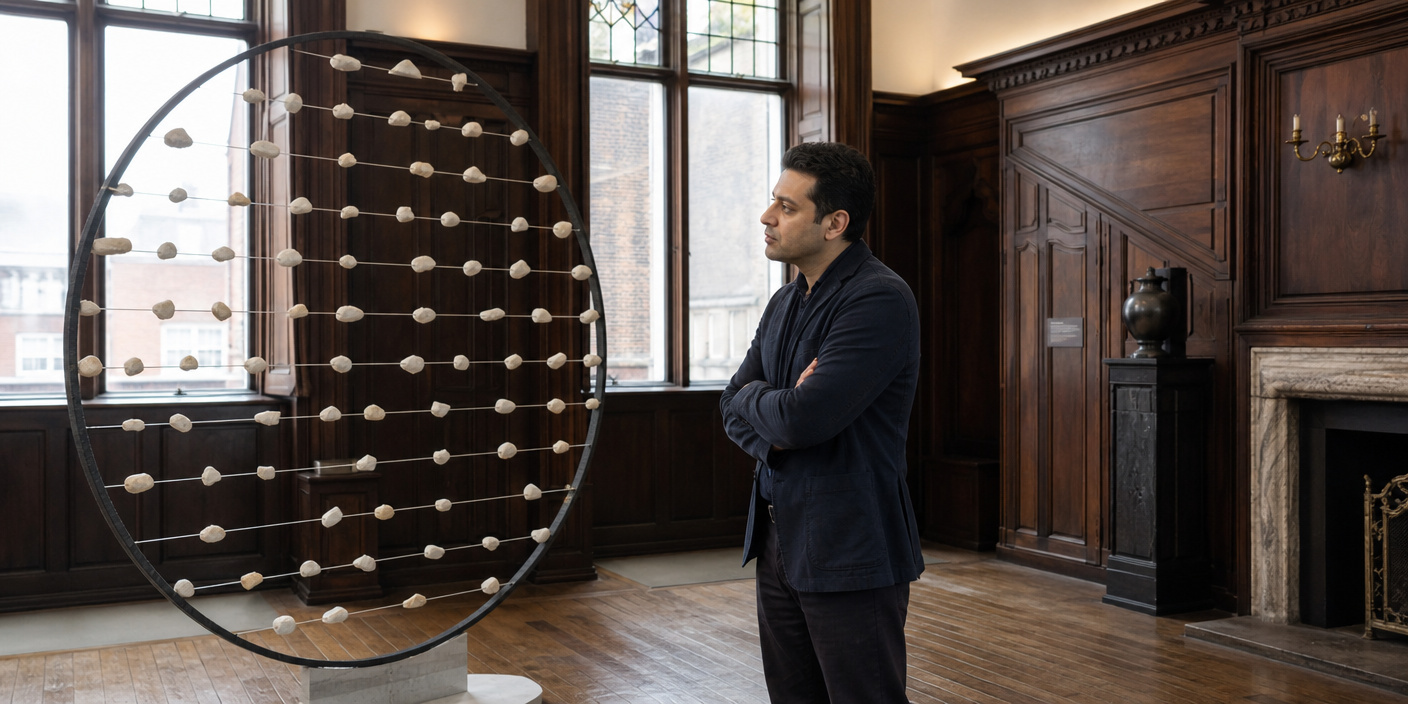
Perhaps the most striking inclusion in this month’s guide is the Swedenborg House. Traditionally known as a venue of intellectual and historical interest, its adaptation for contemporary art exhibitions is a masterclass in spatial repurposing. When an art installation occupies a space designed for contemplation of Swedenborg’s complex theological and scientific writings, the interaction creates a unique dialogue. Visitors are not just viewing an object; they are navigating a narrative that spans centuries. This venue serves as a microcosm for London’s broader trend: the reclaiming of historic spaces to house the provocative, often ephemeral, nature of contemporary installation art.
Ab-Anbar and the Contemporary Lens
In contrast to the historical weight of Swedenborg House, the focus on Ab-Anbar represents the vibrant, internationalist energy of London’s current gallery scene. Ab-Anbar has consistently distinguished itself by bringing a global perspective to London, and its November programming is no exception. By focusing on works that push boundaries—both culturally and medium-wise—the gallery serves as a critical node in the semantic web of London’s art ecosystem. For the art critic, these exhibitions are essential because they do not shy away from political or social provocation. They force the visitor to confront difficult questions, using the gallery space as a neutral ground for intense, often uncomfortable, artistic engagement.
Immersive Narratives: Beyond the Frame
Modern art consumption in London is increasingly defined by ‘immersion.’ This term, often diluted by commercial ‘experience’ exhibitions, is reclaimed here in the sense of intellectual immersion. Khan’s selections prioritize exhibitions where the viewer is surrounded by the concept. It is not about the photo opportunity; it is about the structural and sensory environment. When moving between these five selected exhibitions, visitors will notice a recurring theme: the dissolution of the boundary between the viewer and the viewed. From the way light is manipulated at Ab-Anbar to the architectural interventions at the Swedenborg House, these shows demand time. They require a departure from the ‘scroll-and-swipe’ culture, asking instead for the slow, methodical observation that defined the classical gallery experience, now applied to cutting-edge contemporary mediums.
Secondary Angles: The Future of the London Art Market
1. The Adaptive Reuse Trend: There is an observable shift in London where traditional or non-art venues are becoming the preferred locations for high-impact exhibitions. This provides unique economic opportunities for cultural preservation, allowing historic sites to sustain themselves through curated partnerships, though it poses challenges for logistics and climate control in delicate spaces.
2. The Economics of Curation: Tabish Khan’s guide functions as a market signal. In an oversaturated market, curated guides act as a filter, directing capital and foot traffic toward independent galleries like Ab-Anbar. This highlights the growing power of independent critics in an era where institutional marketing can often overshadow the quality of the art itself.
3. The Long-Term Impact of ‘Provocative’ Art: As galleries pivot toward more challenging, socially-conscious content, we are seeing a shift in audience demographics. The November season in London reflects a move toward younger, more intellectually engaged collectors who prioritize the ‘story’ and ‘provocation’ of a piece over purely aesthetic or investment value. This shift could redefine how art is valued in the next decade.
FAQ: People Also Ask
Q: Why is Tabish Khan’s selection for November 2026 considered definitive?
A: Tabish Khan is widely recognized for his rigorous approach to critique, focusing on the quality and thematic coherence of exhibitions rather than institutional prestige. His guide is seen as the ‘curator’s choice’ for those who want to see art that pushes boundaries.
Q: What makes Swedenborg House a unique location for art?
A: Swedenborg House offers a historic, philosophical atmosphere that contrasts sharply with the white-cube aesthetic of standard galleries. Using this space forces artists to engage with the building’s intellectual history, creating a unique site-specific narrative that is rarely found in traditional gallery spaces.
Q: Are these exhibitions suitable for all ages?
A: While generally accessible, these exhibitions are curated for a sophisticated, adult audience interested in provocative and contemporary themes. It is recommended to check specific gallery advisories, especially for installations that may involve intense sensory experiences or challenging concepts.
Q: Is advanced booking required for these exhibitions?
A: Given the curated nature of these shows and the specific venues like Ab-Anbar, it is highly recommended to check individual gallery websites for booking requirements, as capacity in smaller, independent venues can be limited.