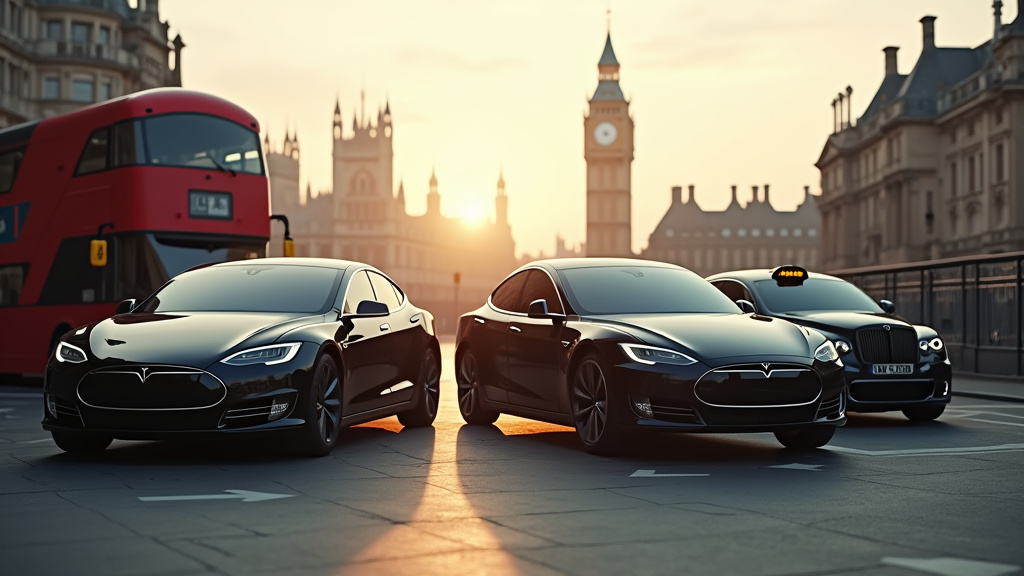
London Mayor Sadiq Khan is reportedly considering relinquishing his armored ministerial car as part of a broader initiative to curb the use of Sports Utility Vehicles (SUVs) within the city. This potential move signals a significant shift in official transport policy and reflects growing concerns over vehicle emissions and road space.
Key Highlights:
- Sadiq Khan may give up his armored car.
- The move is linked to a clampdown on SUVs in London.
- It aims to reduce emissions and congestion.
- Details of the full clampdown are yet to be revealed.
London’s SUV Scrutiny: Khan’s Potential U-Turn on Official Transport
The potential decision by Sadiq Khan to forgo his armored vehicle is a powerful symbolic gesture, aligning with his administration’s stated commitment to environmental sustainability and public health in the capital. While the specific armored vehicle used by the Mayor is not publicly detailed, such cars are typically large, heavy, and less fuel-efficient than standard sedans. Their use, especially if perceived as non-essential, can draw criticism in a city actively promoting greener transport options.
The Environmental Imperative
London, like many global cities, faces significant challenges from air pollution, largely attributed to vehicle emissions. SUVs, due to their size and engine capacity, often contribute more to this problem than smaller, more efficient cars. The Mayor’s office has been a vocal advocate for policies that reduce the number of polluting vehicles on the road, including the expansion of the Ultra Low Emission Zone (ULEZ) and measures to discourage the use of the most polluting private vehicles. Khan giving up his own armored car, if it occurs, would serve as a strong endorsement of these policies, demonstrating leadership by example.
Road Space and Congestion
Beyond emissions, the sheer size of SUVs also plays a role in urban congestion and road safety. Larger vehicles take up more space, contributing to traffic jams and potentially posing greater risks to pedestrians and cyclists. Proposals to restrict SUVs, whether through outright bans in certain zones, increased parking charges, or other disincentives, are part of a wider conversation about how to optimize limited road space in a densely populated city. Khan’s potential personal sacrifice could be a precursor to more stringent measures affecting all SUV drivers in London.
Political and Public Perception
The move also carries significant political weight. By potentially giving up a symbol of official privilege, Khan could bolster his image as a leader who is in touch with the concerns of ordinary Londoners struggling with the cost of living and the environmental impact of daily commutes. Conversely, the decision might face scrutiny regarding security implications, although the Mayor’s office would undoubtedly ensure that any changes do not compromise essential safety protocols. The broader clampdown on SUVs, when fully detailed, will likely involve a complex balancing act between environmental goals, public health, and the practicalities of urban living.
Entities and Governance
This initiative operates within the broader framework of the Greater London Authority (GLA) and Transport for London (TfL), bodies responsible for the city’s transport infrastructure and policy. The push against SUVs aligns with national and international climate targets, and potentially involves collaboration with the Department for Environment, Food & Rural Affairs (DEFRA) and the Department for Transport (DfT) regarding vehicle standards and urban planning. The Mayor’s office, led by Sadiq Khan, is a key player in implementing these environmental and urban mobility strategies.
FAQ: People Also Ask
What is the Mayor of London’s current vehicle policy regarding SUVs?
While specific details about the Mayor’s current vehicle are not always public, the administration has been actively promoting policies to reduce emissions and congestion, which implicitly include measures against larger, more polluting vehicles like many SUVs. The consideration to give up an armored car suggests a potential shift towards more sustainable transport, even for official duties.
Why are SUVs being targeted in London?
SUVs are being targeted due to their higher contribution to air pollution, greater fuel consumption, and larger physical footprint, which exacerbates congestion and road safety issues in urban environments. London’s efforts to meet air quality targets and create a more sustainable city are driving these policy considerations.
What are the potential security implications of the Mayor giving up an armored car?
Armored cars are designed to provide enhanced protection. Giving up such a vehicle would require a thorough security assessment by the Mayor’s protection detail to ensure that alternative arrangements adequately maintain the Mayor’s safety without compromising essential security requirements.
When will the full clampdown on SUVs be announced?
Details regarding the full scope and timeline of the clampdown on SUVs in London have not yet been officially announced. The Mayor’s office is expected to release further information as policies are finalized and implemented.
What alternatives are being considered for official transport?
While not explicitly detailed, alternatives could include smaller, more fuel-efficient vehicles, electric vehicles, or enhanced use of public transport for official duties where security and time permit. The focus would be on aligning official transport with the city’s broader environmental and transport objectives.