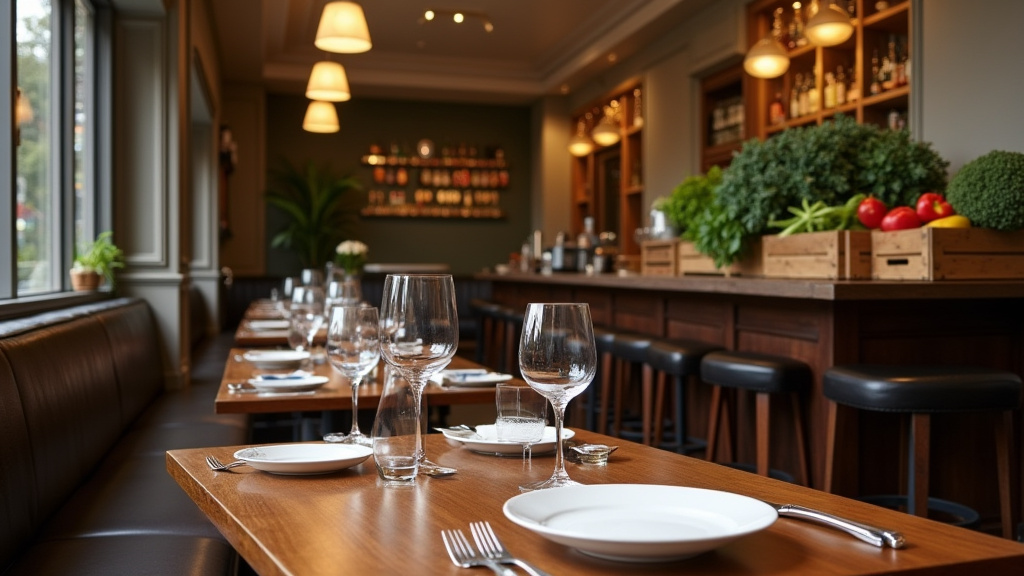
The Michelin Guide has officially expanded its global footprint for August 2026, unveiling 22 new restaurant additions that redefine the boundaries of modern gastronomy. These selections, ranging from innovative bistros to refined neighborhood staples, reflect a significant push toward accessibility without compromising the rigorous standards of excellence the guide is known for. Among the most anticipated inclusions is The Fat Badger in London’s Notting Hill, an establishment that has garnered attention for its commitment to hyper-local sourcing and a sophisticated, yet welcoming, dining atmosphere.
Key Highlights
- Global Expansion: A total of 22 new restaurants have been curated into the August 2026 Michelin Guide, representing a diverse array of culinary cultures and techniques.
- Notting Hill Inclusion: The Fat Badger serves as a primary highlight for the London dining scene, solidifying the neighborhood’s reputation as a growing culinary destination.
- Standardized Excellence: Each of the 22 additions underwent rigorous inspection, meeting the guide’s evolving criteria for culinary skill, ingredient quality, and value.
The 2026 Culinary Evolution: Analyzing the New Additions
The August 2026 update to the Michelin Guide is not merely a list of restaurants; it is a snapshot of how the industry is pivoting toward resilience and authenticity. By incorporating 22 new venues, the Michelin inspectors have signaled a clear endorsement of establishments that blend technical precision with community-focused dining models. This cycle, the focus has shifted perceptibly toward restaurants that manage to serve both the casual diner and the seasoned gastronome.
The inclusion of these 22 venues marks a deliberate strategy to broaden the guide’s accessibility. Historically, the Michelin Guide was synonymous with stiff, white-tablecloth fine dining. However, the 2026 additions demonstrate a sophisticated appreciation for the ‘elevated bistro’ concept, where the focus remains strictly on the plate, but the environment invites a more relaxed, conversational experience. This is a crucial evolution for the Michelin entity, ensuring that the guide remains relevant in a post-inflationary, experience-driven economy.
Spotlighting The Fat Badger: Notting Hill’s New Culinary Landmark
Among the list of 22, the inclusion of The Fat Badger in Notting Hill, London, stands out as a case study in modern success. Notting Hill, while historically famous for its architecture and market, has recently struggled to maintain a consistent ‘fine dining’ identity that isn’t purely tourist-oriented. The Fat Badger bridges this gap by prioritizing the ‘farm-to-fork’ ethos that has become the hallmark of successful 2026 restaurateurs.
What the inspectors likely identified in The Fat Badger is a mastery of ingredient-led cooking. In an era where supply chain transparency is no longer a luxury but a requirement, The Fat Badger’s commitment to regional produce offers a blueprint for sustainable success. For Notting Hill, this recognition is a validation of its ongoing culinary revitalization, positioning the district as a genuine destination for food tourists who prioritize high-quality sourcing over purely experimental, avant-garde techniques.
The Economic Multiplier of a Michelin Nod
It is impossible to discuss these 22 additions without addressing the ‘Michelin Effect.’ For an establishment like The Fat Badger, the recognition is an economic multiplier. Research consistently shows that a Michelin mention—or the coveted star itself—can boost a restaurant’s revenue by as much as 20% to 30% in the immediate 12-month period following the announcement. This is driven by an influx of culinary tourists and a stabilization of local patronage.
However, the economic impact extends beyond the individual venue. The inclusion of new restaurants in the guide often leads to a rise in property values and business activity in the surrounding micro-neighborhoods. In London, particularly, this influx of attention toward Notting Hill acts as a catalyst for other small-scale hospitality businesses, creating a positive feedback loop of investment and culinary competition.
Sustaining Excellence: The Farm-to-Table Integration
The 22 restaurants selected this August share a common thread: sustainability as an active practice rather than a marketing buzzword. As Michelin inspectors have noted in their preliminary reports for 2026, the era of ‘wasteful luxury’ is over. The new class of additions prioritizes minimizing food miles and maximizing the utility of every ingredient. This shift is not just ethical; it is practical. With rising costs in the culinary sector, the restaurants that excel are those that utilize every part of the ingredient, reducing overheads while increasing flavor intensity.
For the diner, this means dishes that are more flavorful and authentic. When a chef is forced to be creative with seasonal, local produce, the resulting menu is often more expressive of the local terroir than a menu dependent on globally imported, out-of-season luxury items. This trend is visible in the way these 22 restaurants have crafted their 2026 menus.
Future-Proofing Fine Dining: Where Michelin Goes Next
As we look beyond August 2026, the question remains: what does the future hold for the Michelin Guide? The move to expand the guide with smaller, more nimble additions suggests that the organization is moving toward a more decentralized model. By identifying excellence in smaller neighborhood hubs, the Michelin Guide is effectively democratizing the concept of fine dining.
We anticipate that future updates will continue to favor ‘hyper-local’ establishments. The age of the destination restaurant, which requires a three-hour drive and a three-month waiting list, is being challenged by the ‘destination neighborhood,’ where patrons can find multiple Michelin-recognized venues within walking distance. This trend toward high-density culinary excellence is a welcome development for the industry, promising a future where high-quality dining is a consistent part of the urban experience rather than a rare, once-in-a-lifetime occasion.
FAQ: People Also Ask
1. What does it mean to be a ‘new addition’ to the Michelin Guide?
Being a new addition means the restaurant has been vetted by Michelin inspectors and found to meet the global standard of culinary quality, ingredient freshness, and technique. It is the first step toward potential star recognition in future cycles.
2. How does The Fat Badger fit the current Michelin criteria?
The Fat Badger aligns with the 2026 focus on sustainable, ingredient-led cooking. Its ability to marry high-level technique with local produce sourcing—specifically within the Notting Hill community—fits the current trend of accessible, high-quality dining.
3. Will these 22 restaurants automatically receive stars?
No. The 22 additions are listed as ‘recommended’ or ‘newly added.’ While they are now on the inspectors’ radar for potential star rating in the next review period, they have not been awarded a star (1, 2, or 3) until officially designated as such in a future guide update.
4. Why is the Michelin Guide focusing on Notting Hill?
Notting Hill has experienced a resurgence in high-quality, independent dining. Michelin’s focus on the area reflects an ongoing trend of recognizing neighborhoods that foster high culinary innovation without relying on traditional, legacy fine-dining structures.