
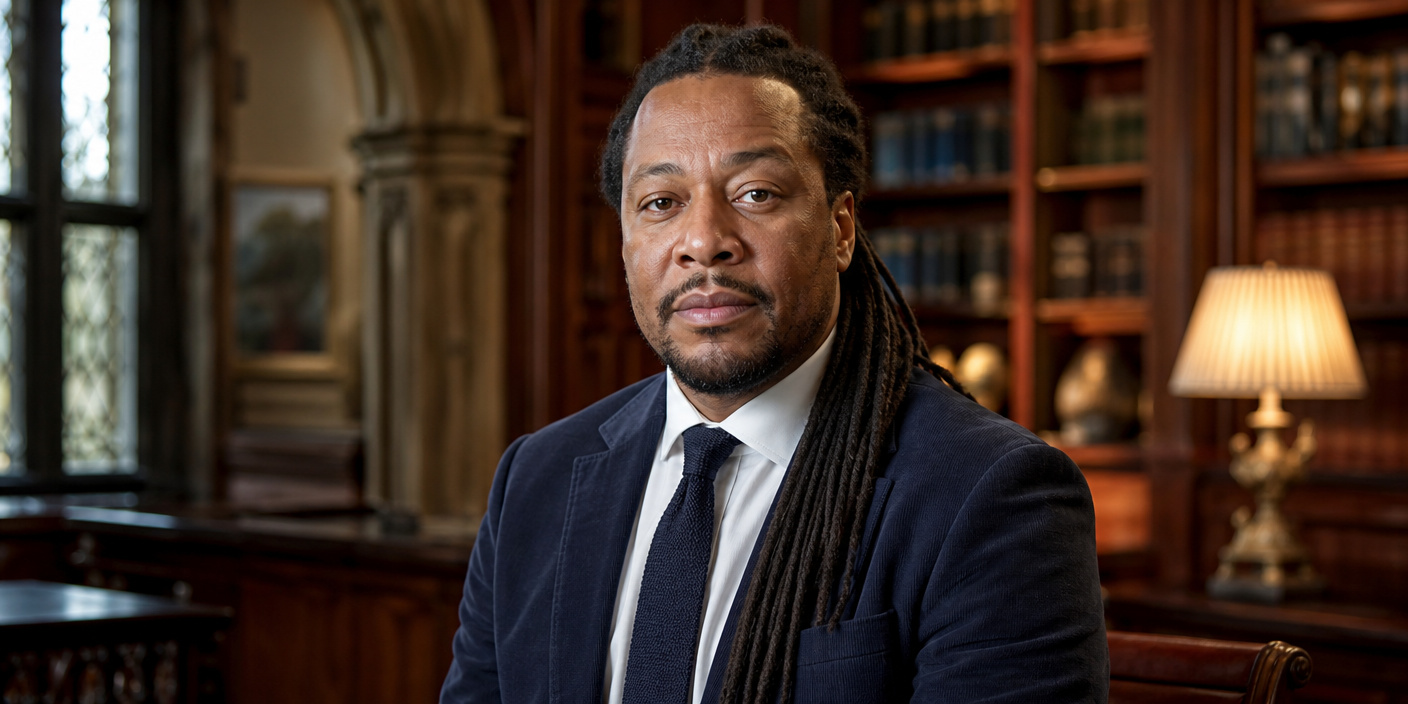
Today marks a significant moment in the UK literary and academic landscape with the official publication of ‘Great and Unfortunate Things,’ the memoir of the late University of Cambridge professor Jason Arday. The release provides a long-awaited, deeply personal account of his remarkable rise as a young Black academic, hitting shelves at a time when the public discourse surrounding his legacy remains complex, charged, and deeply significant. As readers finally gain access to Arday’s own words, the memoir serves as both a testament to his resilience and a final chapter to a career that challenged the rigid boundaries of elite higher education.
Key Highlights
- Posthumous Release: ‘Great and Unfortunate Things’ is available in the UK starting today, offering a primary-source perspective on Arday’s life and struggles.
- Overcoming Adversity: The memoir details his early life, including a diagnosis of autism and global development delay, and his struggle to learn to read and write until his late teens.
- Academic Barrier-Breaking: Arday achieved the historic status of becoming one of the youngest Black professors in the history of the University of Cambridge, a feat that defied traditional academic pathways.
- Context of Controversy: The book serves as a counter-narrative to the intense public controversy and debates that followed his rise to prominence, providing nuance to the skepticism he faced within his field.
Unveiling the Academic Pioneer
For many, Jason Arday represented the intersection of merit, institutional change, and the necessity for representation in British academia. ‘Great and Unfortunate Things’ is not merely an autobiography; it is an examination of systemic obstacles. Arday, who tragically passed away in July 2024, utilized his platform as a sociologist to critique the very structures that had historically excluded individuals from backgrounds like his.
Navigating Neurodivergence and Education
One of the most compelling aspects of the memoir is Arday’s honest recounting of his childhood. Long before he was a fixture at the University of Cambridge, he was a child who struggled with basic communication, literacy, and developmental hurdles. His journey from an early childhood diagnosis of autism and global development delay to becoming an influential voice in the sociology of education is a central theme. The memoir delves into the ‘hidden curriculum’ of academia—the unwritten rules of success that are often inaccessible to those who do not fit the traditional archetype of a scholar. Arday’s prose is reported to be unflinching, detailing the exhaustion of ‘code-switching’ and the psychological toll of existing in environments that were not designed for his success.
The Reality of Modern Academia
Arday’s professorship was met with both widespread acclaim and, notably, a period of intense public controversy regarding his legacy and the mechanics of his promotion. The discourse often centered on the perceived speed of his ascent and the nature of his academic output. In ‘Great and Unfortunate Things,’ Arday addresses these critiques head-on. By providing his own testimony, he challenges the reductive narratives that often frame marginalized success stories through the lens of either ‘tokenism’ or ‘exceptionalism.’ Instead, he portrays his career as a result of grit, intellectual curiosity, and a profound drive to make the University of Cambridge more inclusive for the next generation of students who look like him.
A Legacy of Institutional Change
Beyond the personal narrative, the memoir offers a sociological study of higher education itself. Arday explores how universities can shift from ivory towers into engines of social mobility. He positions himself as a case study, analyzing the moments where systemic support was crucial—and where it was woefully absent. This secondary angle is vital for readers interested in social policy and institutional DEI (Diversity, Equity, and Inclusion) efforts. Arday’s work suggests that academic diversity is not just about changing demographics; it is about changing the intellectual environment to accommodate diverse ways of thinking, teaching, and researching.
FAQ: People Also Ask
Who was Jason Arday?
Jason Arday was a prominent British sociologist and a professor at the University of Cambridge. He became widely known for his research on education, race, and social mobility, and for becoming one of the youngest Black professors in the university’s history. He passed away in July 2024.
What is ‘Great and Unfortunate Things’ about?
It is a memoir detailing Arday’s life, specifically focusing on his childhood struggles with autism and literacy, and his eventual climb to the upper echelons of academia. It addresses the barriers he faced and the philosophy behind his push for more inclusive educational systems.
Why is this memoir significant?
Coming shortly after his passing, the memoir allows the public to hear Arday’s voice directly. It provides context to the media narratives surrounding his career and offers a firsthand look at the obstacles faced by neurodivergent, Black academics in elite institutions.
Is the memoir critical of the University of Cambridge?
While Arday had a deep commitment to his institution, the memoir is known for being critical of structural inequities within higher education as a whole, including the barriers that exist within elite British universities.