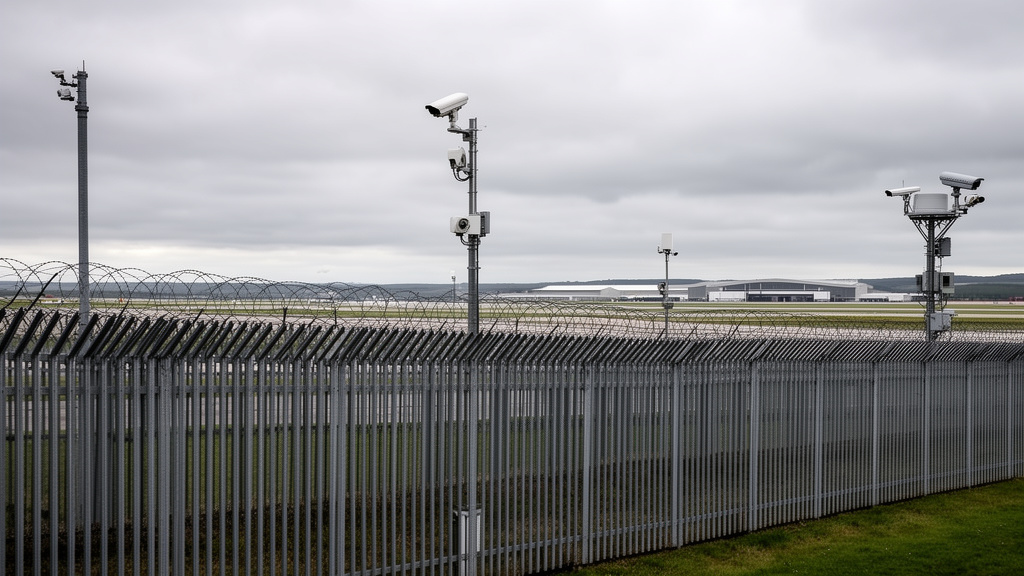
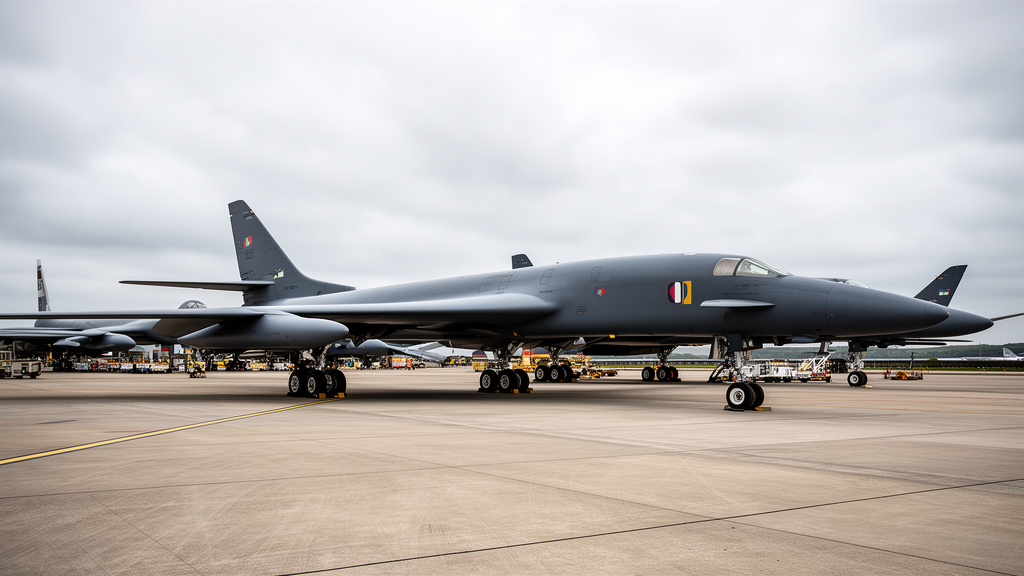
In a decisive move to protect key strategic assets, the United States Air Force has executed a rapid relocation of its Rockwell B-1B Lancer bomber fleet from RAF Fairford in Gloucestershire, United Kingdom. The decision comes after intelligence officials intercepted specific, credible threats indicating that Iranian-backed operatives were planning a complex drone attack targeting the airfield. This redeployment underscores the persistent volatility in the Middle East and highlights the growing reality that asymmetric warfare threats can rapidly evolve into global security concerns, even within the confines of NATO member states.
Key Highlights
- Immediate Relocation: Dozens of B-1B Lancer bombers were moved from RAF Fairford to undisclosed, high-security locations following the intelligence breakthrough.
- Specific Threat Vector: US intelligence identified a plan involving a swarm-style drone attack, a hallmark of Iranian proxy tactics, specifically calibrated to bypass traditional base defenses.
- Operational Security (OPSEC): The move is a classic example of force protection, prioritizing the safety of the Strategic Bomber Task Force (SBTF) over temporary tactical positioning.
- Geopolitical Sensitivity: This event marks a significant escalation in tensions, suggesting that Iranian hostile intent has extended its reach toward European-based US military infrastructure.
The Strategic Shift at RAF Fairford
RAF Fairford has long served as a vital, forward-deployed staging ground for the United States Air Force, particularly for the Strategic Bomber Task Force (SBTF). Its location in the United Kingdom provides a unique strategic advantage for training exercises and rapid-response capabilities across the European and African theaters. However, the recent relocation of the B-1B Lancer fleet highlights the delicate balance between maintaining a global forward posture and the necessity of ensuring force protection against unconventional, low-cost, high-impact weaponry.
The threat, characterized as a “complex drone attack,” represents a departure from traditional state-on-state military posturing. Iranian doctrine has increasingly relied on the use of Unmanned Aerial Vehicles (UAVs) to harass, target, and disrupt US and Allied operations. By utilizing mass-swarms or stealthier, autonomous drone designs, adversaries aim to saturate base air defenses, overwhelming radar and point-defense systems. The intelligence community’s decision to move the bombers indicates that the threat level was deemed sufficiently high to warrant this disruptive change in operations.
Intelligence, Surveillance, and Deterrence
The intelligence-sharing framework between the US and its Five Eyes partners proved critical in this incident. Monitoring Iranian communications and regional proxy activity allowed US commanders to make a proactive, rather than reactive, decision. Instead of risking the fleet to a potential “swarm” event, the Air Force chose the prudent path of dispersal—a core tenet of modern Agile Combat Employment (ACE) doctrine. This doctrine emphasizes operating from a variety of locations to complicate an adversary’s targeting cycle. By moving the assets, the US has effectively neutralized the Iranian plan before a single drone was launched, demonstrating the efficacy of modern signals intelligence and early warning systems.
The Rockwell B-1B Lancer: A High-Value Asset
The B-1B Lancer remains one of the most potent weapons in the US arsenal. Designed as a supersonic, swing-wing heavy bomber, it can carry the largest conventional payload of both guided and unguided weapons in the Air Force inventory. Its ability to penetrate deep into contested airspace at high speeds makes it an invaluable deterrent. Because of its limited numbers and specialized mission profile, protecting these aircraft is a matter of national security. Losing a B-1B on the tarmac due to a low-cost drone strike would not only be a significant military setback but also a massive psychological win for Iranian-backed forces.
Secondary Angles: Exploring the Wider Impact
1. The Evolution of Drone Warfare: The shift from battlefield drone usage to the targeting of overseas military bases signals a dangerous evolution in proxy warfare. We are entering an era where distance is no longer a guaranteed safety factor. Adversaries are actively looking for creative ways to exploit the “blind spots” in NATO security, moving away from conventional missile strikes toward drone swarms that are harder to detect and cheaper to deploy.
2. The Role of RAF Fairford in Modern Geopolitics: This incident has sparked a renewed debate about the security protocols at RAF Fairford. While the base is iconic, its role as a high-profile, static target makes it a magnet for intelligence gathering and potential sabotage. The US Air Force may need to consider more frequent, unpredictable rotations for the B-1B fleet to maintain the initiative against adversarial drone capabilities, moving away from relying on fixed installations for extended periods.
3. Future Deterrence and Escalation: The fact that the US moved its assets is a clear signal that the intelligence was taken seriously. However, it also reveals a vulnerability. Moving the bombers is a defensive win, but what happens when the next target is a civilian asset or a smaller, less defended facility? The US will likely increase its investment in anti-drone technology, specifically directed-energy weapons and electronic warfare suites, to harden all forward-deployed bases against the looming threat of the “drone swarm.”
FAQ: People Also Ask
Q: What is the primary purpose of the B-1B Lancer at RAF Fairford?
A: The B-1B Lancers at RAF Fairford are part of the Strategic Bomber Task Force. They are deployed to conduct long-range training exercises with NATO allies, demonstrate US commitment to European security, and maintain readiness for rapid global strike missions.
Q: How does a “complex drone attack” work?
A: A complex drone attack involves multiple unmanned aerial vehicles working in coordination. This can include a mix of low-cost, expendable drones used to saturate and overwhelm air defense sensors, followed by precision-strike drones aimed at vulnerable targets like fueling stations, command centers, or aircraft on the runway.
Q: Why is this incident concerning for NATO?
A: The attempt to target an airbase in the United Kingdom indicates an expansion of Iranian-backed hostile activities. If adversaries feel emboldened to attempt attacks on soil belonging to NATO members, it represents a significant shift in the rules of engagement and regional security architecture.
Q: Will the B-1B Lancers return to RAF Fairford?
A: While the US military does not comment on future operations, the redeployment is temporary. Once the threat intelligence is downgraded or countermeasures are fully implemented, the Air Force will likely resume utilizing RAF Fairford as a strategic node, provided the security environment allows for safe operations.