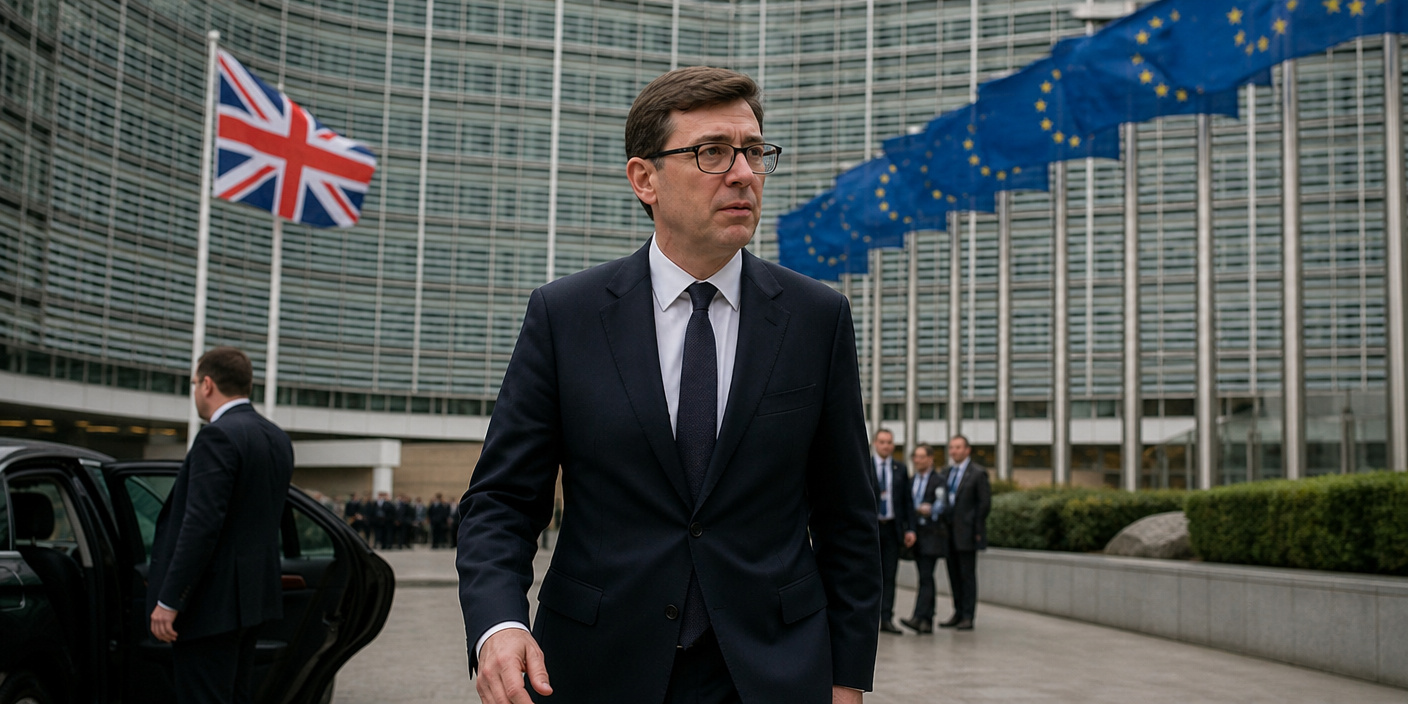
Prime Minister Andy Burnham has arrived in Brussels for a pivotal diplomatic summit, signaling a concerted effort by the UK government to thaw frozen relations with the European Union. Years after the UK’s formal departure from the bloc, this high-stakes meeting represents the most significant attempt to move beyond the “bitter divorce” era and establish a functional, forward-looking partnership. With both sides acknowledging that the current friction hampers economic stability and security, the summit is being framed as a necessary pivot point for future cooperation.
The Diplomatic Pivot: Moving Past the Divorce
For the better part of a decade, the relationship between London and Brussels has been defined by the mechanics of separation. From the initial withdrawal agreement to the subsequent friction regarding the Northern Ireland Protocol, communication has frequently centered on crisis management rather than strategic partnership. Prime Minister Burnham’s visit is designed to shift this narrative. By engaging directly with EU officials, the UK is signaling a desire to transition from an adversarial posture to one of “constructive pragmatism.”
At the core of the discussions is the Trade and Cooperation Agreement (TCA). While this serves as the legal bedrock of the current relationship, stakeholders on both sides of the English Channel have frequently cited its limitations. Regulatory divergence, while a sovereign right for the UK, has created significant non-tariff barriers that disproportionately impact Small and Medium-sized Enterprises (SMEs). Burnham’s administration is reportedly seeking targeted agreements to streamline customs processes and reduce the red tape that has stifled cross-border commerce since the transition period ended.
The Economic Imperative
Economic stagnation remains a pressing concern for both the UK and the European Union. With sluggish growth across the continent, the potential for mutually beneficial trade agreements is high. However, officials are keen to temper expectations; a full re-entry into the Single Market or Customs Union is not on the agenda. Instead, the focus remains on “friction reduction.” This includes mutual recognition of professional qualifications, cooperation on digital trade standards, and scientific collaboration programs that have been neglected in recent years.
Business leaders in London and European capitals are watching the summit closely. Many argue that a streamlined regulatory framework could unlock billions in lost trade volume. If Burnham can secure commitments to simplify sanitary and phytosanitary (SPS) checks—a major pain point for food and agricultural exporters—it could provide an immediate, tangible win for the UK economy. The challenge, however, lies in convincing EU negotiators that such concessions do not compromise the integrity of the Single Market.
Security and Geopolitical Realignment
Beyond economics, the summit is heavily focused on security. The conflict in Ukraine and broader regional instability have forced a reassessment of European defense architecture. The UK, maintaining one of the strongest military budgets in the region, remains an indispensable ally to EU member states. Burnham’s team is expected to propose a structured security dialogue that integrates the UK more closely with EU defense procurement projects, even as the UK remains outside the formal bloc. This “security-first” approach provides a bridge for diplomacy where trade negotiations might otherwise stall.
Furthermore, immigration and cross-border security remain central to the dialogue. Cooperation on asylum processing, combatting illegal human trafficking networks, and intelligence sharing on organized crime are top-tier agenda items. These are areas where domestic politics in the UK and several EU member states align, providing a strong incentive for a successful outcome.
Future Predictions and Constraints
Looking ahead, the success of this summit will be measured not by sweeping declarations, but by the establishment of working groups tasked with “de-escalating” trade friction. The political reality is that both the UK and the EU face internal pressures. Burnham must balance the need for closer ties with the EU against the expectations of his domestic base, some of whom remain wary of any “soft” Brexit moves. Similarly, the European Commission must ensure that any concessions granted to the UK do not encourage similar demands from other partners.
If this summit succeeds, it will likely mark the beginning of a phased re-engagement strategy. Rather than looking for a “quick fix” to the Brexit situation, the Burnham administration is playing a long game—building trust through incremental cooperation on security, energy policy, and environmental standards, hoping that stronger foundations today will lead to a more comprehensive trade partnership tomorrow.