
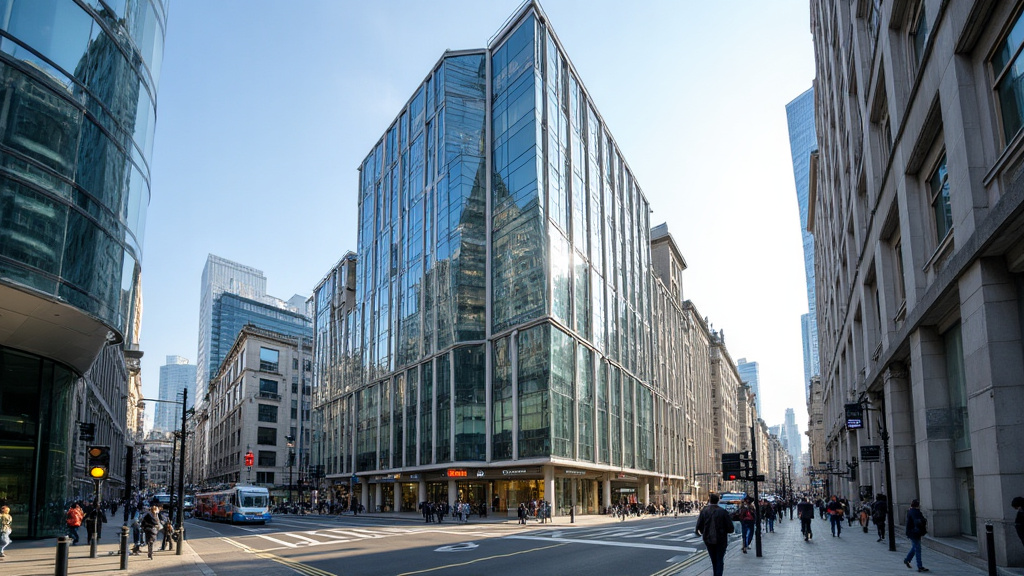
British Land has officially offloaded the 199 Bishopsgate office property, marking a significant step in the firm’s ongoing corporate strategy to pivot toward high-growth, mixed-use campus assets. This divestment, which sees the departure of a high-profile commercial building from the firm’s core portfolio, underscores a broader trend of capital recycling currently reshaping the City of London’s commercial real estate sector. By reducing its exposure to mature assets, British Land is positioning itself to reinvest in future-ready developments that align with the post-pandemic ‘flight to quality’ market demands.
Key Highlights
- Strategic Divestment: The sale of 199 Bishopsgate represents a calculated reduction in office asset exposure to fund future campus development.
- Portfolio Optimization: British Land continues its focus on ‘campus’ strategies, prioritizing assets with high ESG ratings and mixed-use flexibility.
- London Market Shift: The transaction highlights the current investor appetite for prime, well-located office space despite wider economic headwinds.
- Asset Context: 199 Bishopsgate remains a prominent fixture in the Broadgate complex, and this sale marks a notable turnover in a high-value real estate hub.
The Strategic Pivot: Why 199 Bishopsgate Matters
The sale of 199 Bishopsgate is not merely a transactional event; it is a manifestation of British Land’s long-term ‘Campus’ strategy. For years, the firm has sought to evolve its holdings from traditional, single-use office buildings into vibrant, multi-functional campuses. These campuses are designed to integrate retail, leisure, and state-of-the-art workspace, creating an ecosystem that supports tenant retention in an era where hybrid working has become the new baseline.
199 Bishopsgate, while historically a key asset, has reached a stage in its life cycle where its capital value is better served elsewhere. By divesting, British Land is effectively ‘recycling’ capital. The proceeds from this sale provide the firm with the liquidity necessary to fund capital expenditure on new, carbon-efficient developments elsewhere in its portfolio, particularly those that meet the increasingly stringent sustainability requirements of modern corporate tenants. The decision reflects a proactive approach to balance sheet management, ensuring that the firm remains agile in a high-interest-rate environment where the cost of borrowing has forced many developers to rethink their holdings.
The ‘Flight to Quality’ and Office Resilience
The London office market is currently characterized by a distinct ‘flight to quality.’ Tenants are no longer satisfied with generic, secondary-grade office space. They demand premium amenities, high-speed connectivity, and, crucially, high environmental performance—often referred to as ‘green premiums.’
Buildings like 199 Bishopsgate have long been successful, but as institutional investors and REITs evaluate their portfolios, they are looking at the potential cost of retrofitting older assets to meet net-zero carbon targets. Selling an asset like 199 Bishopsgate allows British Land to shift the burden of long-term capital expenditure—necessary to upgrade the building’s energy efficiency—to a new owner, while freeing up funds to focus on developments that are ‘born green.’ This trend is expected to continue throughout 2024 and 2025, as major commercial real estate firms look to shed assets that require significant capital outlay, favoring instead new builds that promise higher long-term yields.
Broadgate’s Evolving Identity
Broadgate, historically synonymous with 1980s and 90s finance and banking, has undergone a metamorphosis over the last decade. It has transitioned from a pure financial hub to a more diverse, community-focused quarter. The departure of 199 Bishopsgate from British Land’s direct ownership does not diminish the attractiveness of the broader complex; rather, it highlights the maturity of the asset class.
For investors, the acquisition of an asset within Broadgate—a 32-acre site in the heart of London—is still highly coveted. The complex remains a bastion of institutional-grade real estate. The divestment by British Land is a sign of a healthy, functioning market where assets change hands to optimize portfolios, rather than a sign of distress. It demonstrates that liquidity exists for prime assets in the City of London, even if the buyer pool is becoming more discerning regarding yields and long-term asset performance.
Economic Impact and Capital Recycling
The economic narrative here is about fiscal discipline. Real estate investment trusts (REITs) like British Land are under constant pressure from shareholders to maximize return on equity. By selling mature office assets at a time when London property remains a global safe haven for capital, the firm is reinforcing its commitment to its shareholders.
Furthermore, this move provides a blueprint for other commercial property companies. The industry is watching closely to see how British Land reallocates the capital generated by this sale. If the funds are poured into their ‘development pipeline’—specifically projects that incorporate more residential, lab-enabled space, or high-density, smart-enabled offices—it will validate the broader industry pivot. The divestment of 199 Bishopsgate serves as a reminder that in the world of high-stakes commercial real estate, no asset is permanent; the strategy is always fluid, and the goal is always to remain ahead of the curve in tenant demand.
FAQ: People Also Ask
1. Why is British Land selling 199 Bishopsgate now?
British Land is executing a capital recycling strategy. They are divesting mature assets to generate liquidity, which is then reinvested into higher-growth, sustainable, and mixed-use ‘campus’ projects that better align with modern tenant needs and ESG targets.
2. Does this sale affect the Broadgate complex’s status?
No. The Broadgate complex remains a premier London business destination. The sale is an asset-specific transaction and does not signal a decline in the area’s overall desirability or the continued dominance of the Broadgate site in the London office market.
3. What does ‘flight to quality’ mean in this context?
It refers to the market trend where corporate tenants are abandoning older, less efficient office buildings in favor of ‘Class A’ or premium properties that offer superior sustainability credentials, better amenities, and advanced technological infrastructure.
4. Is this move related to the current interest rate environment?
Yes, indirectly. High interest rates have increased the cost of capital, making it more expensive to carry debt or fund large-scale retrofits. By selling mature assets, British Land can reduce debt levels and optimize its balance sheet, insulating itself from the volatility of borrowing costs.