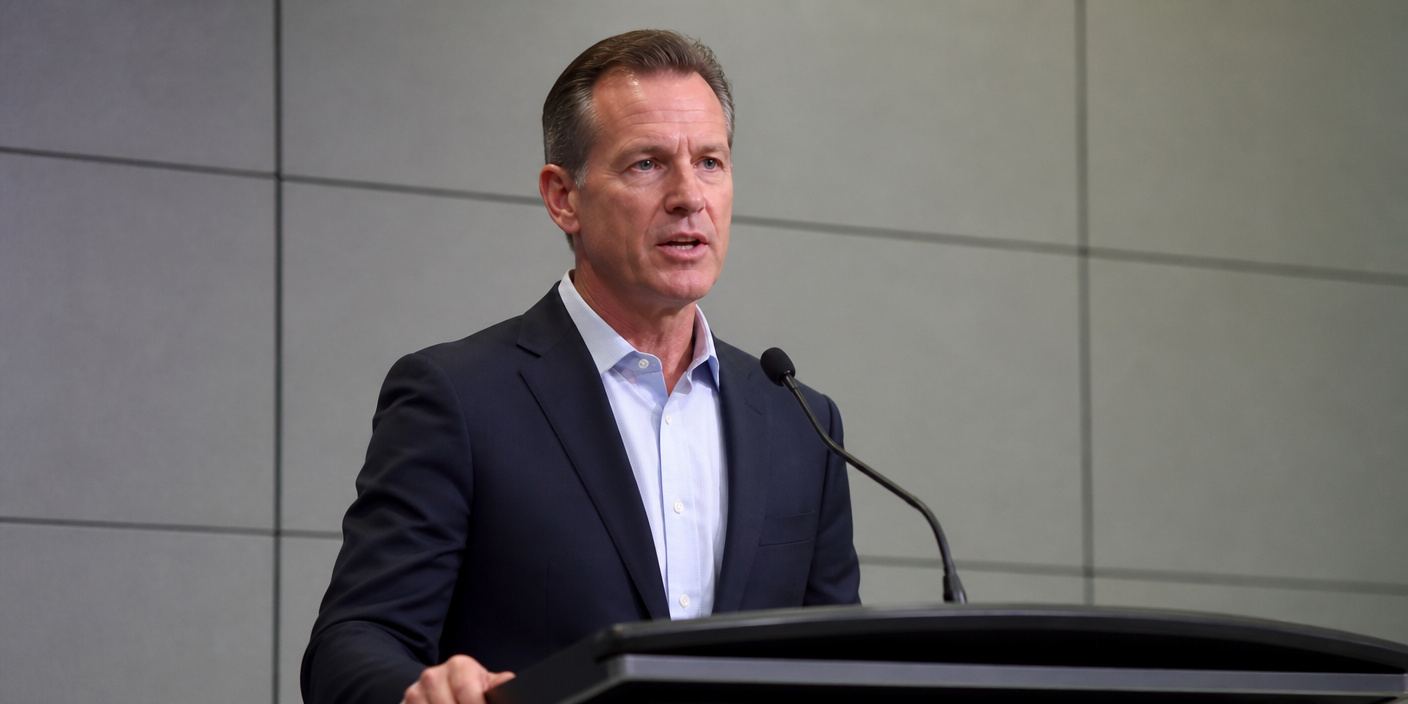
LIV Golf has officially pivoted toward long-term financial independence, with CEO Scott O’Neil confirming that the league has secured a lead investor to replace its exclusive reliance on Saudi Public Investment Fund (PIF) capital. This landmark shift ensures the breakaway tour’s viability well beyond the 2026 season and introduces a groundbreaking equity model for participating athletes, fundamentally altering the landscape of professional golf.
The Strategic Shift from Sovereign Wealth
For years, LIV Golf’s narrative has been defined by its origins as an entity funded by the Saudi Public Investment Fund (PIF). While this capital provided the initial thrust to challenge the established PGA Tour hierarchy, the model was often viewed as inherently unstable, dependent on the political and financial appetite of a sovereign state. Scott O’Neil’s confirmation of a new lead investor signals a maturation of the business. By diversifying the capital stack, LIV Golf is transitioning from a ‘start-up experiment’ to a commercially viable sporting asset that can stand on its own feet.
This investment is not merely about keeping the lights on; it is about valuation. By bringing in institutional or private equity investors, the league is inviting external scrutiny and market-based valuation metrics. This legitimizes the product to traditional sponsors, broadcasting partners, and international venues that may have previously been hesitant to align with a purely state-backed enterprise. The move suggests a long-term play for domestic profitability, targeting sustainable growth rather than simply spending to acquire market share.
Empowering Athletes: The Equity Model
The most radical component of this funding announcement is the integration of player equity. Historically, professional golfers operate as independent contractors—they win prize money, secure endorsements, and pay their own expenses. They are rarely stakeholders in the organization that hosts the event. LIV Golf’s decision to grant equity to its players is a transformative labor policy that effectively turns the participants into partners.
This move serves a dual purpose: retention and alignment. By giving players a “piece of the pie,” LIV Golf creates a profound incentive for its star roster to commit to the long-term vision of the league. It creates a psychological and financial barrier to defecting back to the PGA Tour or other circuits. When a player’s net worth is tied to the valuation of the league itself, their advocacy for the brand—in interviews, social media, and tournament play—becomes an act of protecting their own investment. This essentially turns every marquee player into a brand ambassador with “skin in the game.”
Market Implications and the 2026 Horizon
The 2026 season has long been circled on industry calendars as a potential inflection point for the golf world. With this new financial runway, LIV Golf is effectively neutralized as a threat of insolvency, a narrative that its detractors often leaned upon.
From a market perspective, this capital injection suggests that the private investment community sees a future for the “team golf” model. While traditionalists critique the 54-hole format and shotgun starts, private equity firms look at the demographics of the golf audience, the potential for digital expansion, and the untapped global markets. The lead investor is likely betting that the team-based structure—where fans might eventually root for a franchise rather than just an individual—is the key to unlocking new revenue streams in merchandising, streaming, and international licensing.
The Future of Competitive Golf
The implications for the broader professional golf world are significant. With LIV Golf now financially bolstered and independent of the PIF’s exclusive control, the leverage dynamics in the ongoing negotiations between the PGA Tour, the DP World Tour, and the PIF may shift. If LIV is no longer a “fixer-upper” project requiring constant Saudi cash injections, the cost of merging or integrating the circuits becomes much higher.
Furthermore, this development forces the PGA Tour to reconsider its own financial structural integrity. If LIV can offer equity stakes alongside massive purses, the PGA Tour must find ways to provide similar value to its top-tier talent. We are effectively entering an arms race not just of prize money, but of organizational ownership and corporate governance. For the fans, this means the sport is becoming more corporate, more professionalized, and arguably more volatile. For the industry, it means the era of the “traditional golf economy” is officially over, replaced by a new, equity-driven, private-capital model that looks more like Formula 1 than the country club culture of the past.
FAQ: People Also Ask
What does the new investment mean for the Saudi Public Investment Fund?
While the PIF was the initial financial engine for LIV Golf, the introduction of a new lead investor reduces the league’s reliance on Saudi capital. The PIF may remain a partner, but the transition suggests a move toward a more conventional ownership structure involving private equity and institutional investors.
How does the player equity model work?
Specific terms of the equity deals remain private, but generally, this structure gives players ownership shares in their specific teams or the league entity. This aligns the players’ financial interests with the success of the organization, providing them with potential long-term wealth beyond tournament prize money.
Will this impact the LIV Golf vs. PGA Tour merger talks?
Yes. By securing independent funding, LIV Golf has significantly strengthened its position. It is no longer a struggling entity needing a lifeline, which changes the bargaining power and valuation in any potential future merger or unification discussions with the PGA Tour.
Why is the 2026 season significant?
2026 was widely perceived as the horizon for the original funding cycle of LIV Golf. By securing new investment, the league has ensured that it does not face a financial cliff at the end of that period, allowing for longer-term planning, venue contracts, and broadcasting deals.