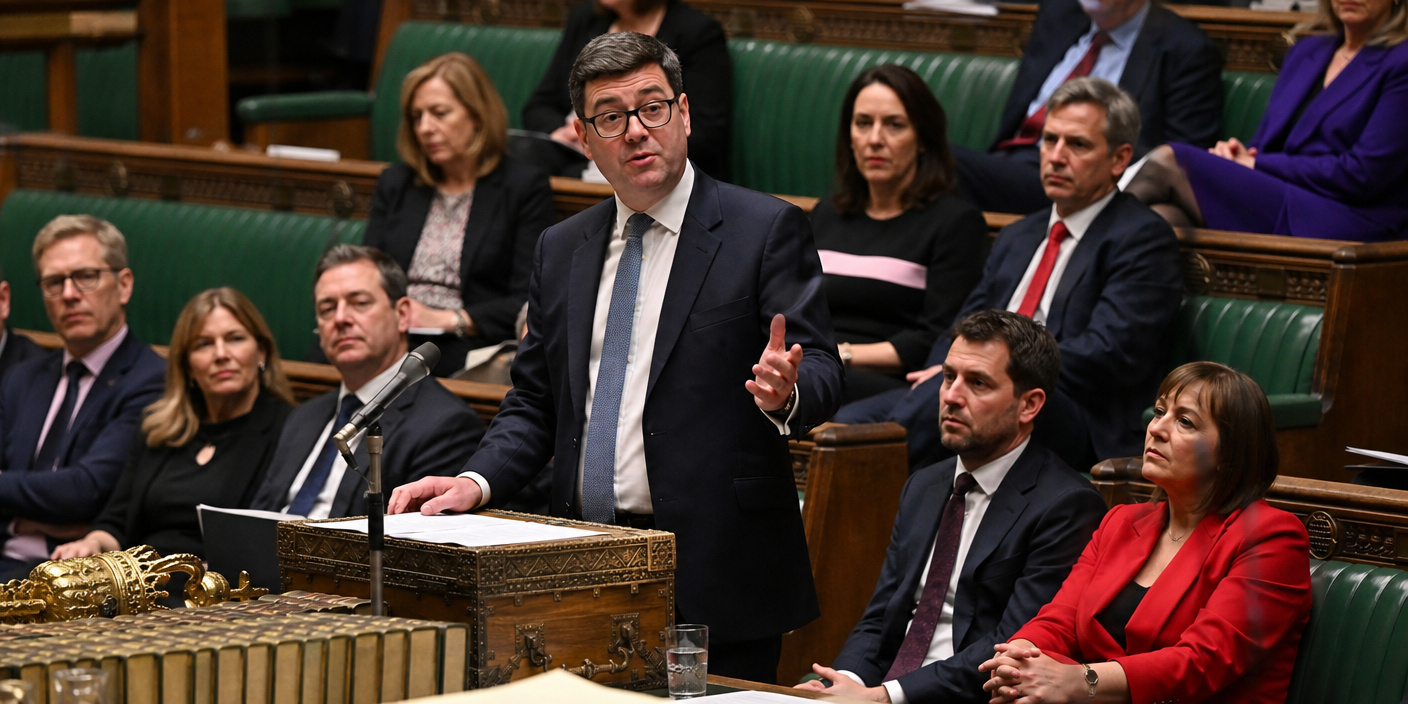
Prime Minister Andy Burnham delivered his inaugural parliamentary address today, solidifying the United Kingdom’s unwavering commitment to Ukraine’s sovereignty while explicitly outlining a strategy to avoid direct combat involvement with Russian forces. Speaking from the dispatch box in the House of Commons, Burnham addressed the growing geopolitical anxiety surrounding the conflict, declaring that the UK would stand by Kyiv “whatever threats” the Kremlin poses to British interests.
Key Highlights
- Unwavering Support: Prime Minister Burnham confirmed that UK military and humanitarian aid to Ukraine will continue unabated.
- Policy of Containment: The new administration maintains a strict policy against direct NATO-Russian military engagement to prevent broader escalation.
- Defiance of Kremlin Rhetoric: The speech serves as a direct rebuttal to recent, aggressive warnings from Moscow regarding Western involvement.
- Focus on Stability: The government intends to balance robust defense support with diplomatic efforts to secure a long-term resolution.
The Strategy of Calculated Defiance
Prime Minister Andy Burnham’s first major policy address from the floor of the House of Commons marked a definitive shift in the UK’s approach to the ongoing war in Eastern Europe. By choosing the Ukrainian conflict as the cornerstone of his maiden parliamentary speech, Burnham signaled that his premiership would be defined by a steadfast adherence to international security commitments. However, the tone of his delivery was notably pragmatic, oscillating between unwavering moral resolve and the cautious reality of modern nuclear-age statecraft.
A Shift in Rhetoric: The ‘Burnham Doctrine’
Political analysts have already begun to dub the new Prime Minister’s approach the “Burnham Doctrine.” Unlike his predecessors, who often utilized emotive language to describe the UK’s role as a primary European disruptor, Burnham’s rhetoric emphasizes “managed resolve.” His central thesis—that Britain must be an indispensable ally to Ukraine without becoming an existential target for Moscow—attempts to navigate a narrow path. The Prime Minister explicitly stated that the UK will not be deterred by “attempts at intimidation or saber-rattling,” a clear reference to recent statements issued by Kremlin officials characterizing Western weapons shipments as direct acts of participation.
Parsing the Kremlin’s Escalation Warnings
The timing of Burnham’s address is critical. Over the past fortnight, Moscow has intensified its rhetoric, suggesting that the continued provision of long-range intelligence and advanced weaponry constitutes a red line. Burnham’s refusal to yield to these warnings represents a high-stakes gamble. By declaring that the UK will stand by Ukraine “whatever threats” it faces, the Prime Minister has effectively called the Kremlin’s bluff, asserting that the UK’s support is a matter of fundamental international law rather than an arbitrary provocation. This stance is designed to assure both the Zelenskyy administration in Kyiv and the broader NATO alliance that the change in leadership in London does not equate to a change in strategic priorities.
The Delicate Balance: Arms without Escalation
While the rhetoric is bold, the operational reality is complex. Defense experts suggest that the government is engaged in a sophisticated balancing act. While arms shipments, including specialized training and intelligence support, will persist, the Prime Minister’s office remains firmly opposed to direct British military intervention. This distinction is vital for maintaining the internal consensus within the House of Commons. Burnham’s speech made it clear that while the UK is a full-throated supporter of the Ukrainian resistance, it is not a belligerent party to the conflict. This nuance is intended to provide the UK with political cover while ensuring that the support provided is both effective and legally defensible under international standards.
Economic Implications and Defense Spending
The economic ramifications of this firm stance cannot be overstated. Supporting the Ukrainian war effort requires significant financial commitment, particularly at a time when the domestic economy is grappling with inflation and infrastructure needs. Prime Minister Burnham alluded to the need for a “robust defense industrial base,” hinting at future announcements regarding increased defense procurement. If the UK is to sustain its current level of support, it must modernize its supply chain and perhaps reconsider its defense budget allocations for the next fiscal year. This fiscal reality will likely be the first major test of his cabinet’s competence.
Diplomatic Ripple Effects in NATO
Beyond the domestic sphere, Burnham’s address has sent ripples through the NATO alliance. By adopting a proactive stance early in his term, he has positioned himself as a potential bridge-builder between the more hawkish European states and those that are more hesitant about prolonged conflict. His commitment to Ukraine suggests that the UK will continue to advocate for a cohesive, unified Western response. Diplomatic sources indicate that leaders in Washington and Brussels are watching the “Burnham Doctrine” closely, viewing it as a litmus test for the future of European security architecture. If Burnham can successfully navigate the threat of Russian retaliation while maintaining high levels of support for Kyiv, he may emerge as a pivotal figure in the collective Western response to the conflict.
Public Opinion and Parliamentary Pressure
Domestically, the Prime Minister faces a divided electorate. While support for Ukraine remains high, the cost-of-living crisis continues to be a top concern for the British public. Burnham’s challenge is to articulate the link between geopolitical stability and domestic prosperity. By emphasizing that the security of Eastern Europe is inextricably linked to the security of the UK, he is attempting to frame aid to Ukraine not as a luxury expense, but as a necessary investment in global peace. Whether this argument will hold sway during potential periods of intense economic volatility remains to be seen, but for now, the Prime Minister has secured a parliamentary mandate for his current course of action.
FAQ: People Also Ask
Q: What did Prime Minister Burnham specifically mean by ‘whatever threats’?
A: The phrase indicates that the government will not modify its defense support policy based on warnings or threats of escalation issued by the Russian government, signaling a policy of strategic resilience.
Q: Will the UK be sending troops to Ukraine?
A: No. The Prime Minister affirmed that while military support and training continue, the UK maintains a clear policy against direct engagement of British combat troops on the ground in Ukraine.
Q: How does this address impact the NATO alliance?
A: The address reinforces the UK’s role as a steadfast ally, intended to provide stability and continuity in Western policy toward the conflict following the change in British leadership.
Q: Are there concerns about the economic cost of this policy?
A: Yes. The government acknowledges the pressure on public finances, but continues to prioritize defense as a necessary component of national and regional security.