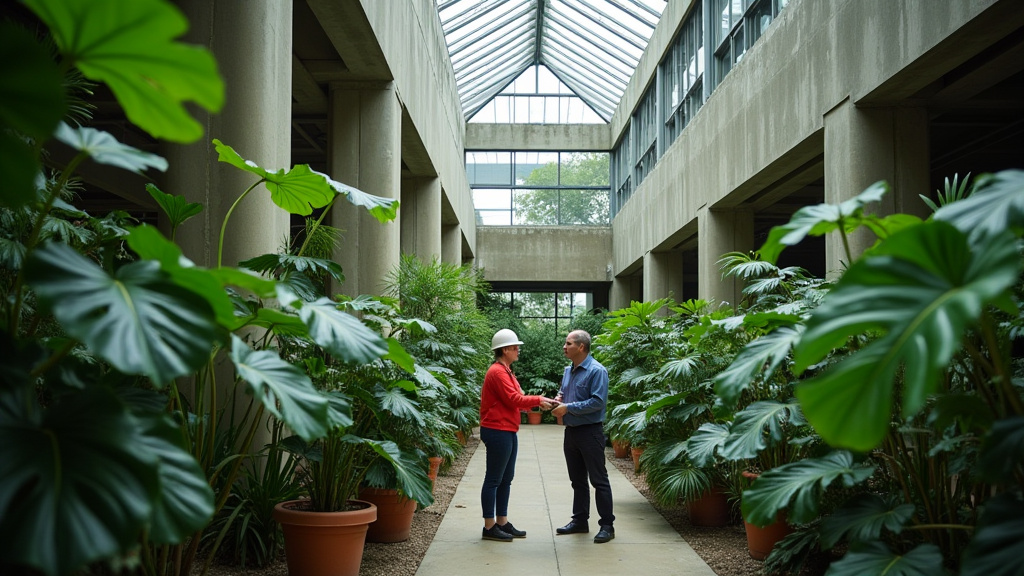
The Barbican Conservatory, widely revered as the ‘green lung of the city,’ has officially closed its doors to the public, marking the beginning of a transformative, multi-year renovation project that is not expected to conclude until 2030. As one of London’s most distinctive architectural and horticultural landmarks, the closure represents a major milestone in the broader strategy to modernize the Grade II-listed Barbican Centre complex. In a gesture of community connection, the institution hosted a final public event, distributing hundreds of plant cuttings to local residents, ensuring that the legacy of this unique space persists in homes across the capital even as the structure itself undergoes extensive structural restoration.
Key Highlights
- Timeline: The Conservatory will remain closed to the public for a comprehensive renewal project scheduled to run until 2030.
- The Green Distribution: In a sustainability-focused farewell, the Conservatory staff distributed hundreds of plant cuttings to the public to prevent waste and encourage local biodiversity.
- Architectural Preservation: The renovation is part of the larger Barbican Centre Renewal program, which aims to address structural maintenance, accessibility, and environmental efficiency while protecting the building’s Brutalist heritage.
- Botanical Scope: The Conservatory houses over 2,000 species of tropical plants and trees, many of which are being cataloged, moved, or preserved during the transition period.
- Historical Status: The Barbican estate, including the Conservatory, is a Grade II-listed site, requiring highly specialized restoration techniques.
A Bittersweet Goodbye to the Brutalist Botanical Oasis
The Barbican Conservatory has long served as a paradoxical marvel—a lush, vibrant, and humid rainforest trapped within the stark, grey geometry of London’s most famous Brutalist housing estate. Since its inception, this ‘green lung’ has offered Londoners a quiet refuge from the frenetic pace of urban life. However, the sheer age of the structure, which dates back to the early 1980s, has necessitated a major intervention. The closure is not merely cosmetic; it is a critical necessity to ensure the long-term survival of both the botanical collection and the architectural integrity of the facility.
Navigating the Complexity of the Renovation
The renovation is a complex engineering challenge. Because the Barbican Centre is a Grade II-listed site, the City of London Corporation and the design teams involved are operating under strict conservation guidelines. They are tasked with balancing the need for 21st-century accessibility, energy efficiency, and modern life-safety standards with the preservation of the original 1982 vision by architects Chamberlin, Powell and Bon. The ‘green lung’ moniker is not hyperbole; the Conservatory’s ability to moderate the environment and provide oxygen and aesthetic relief within the dense urban center of the Barbican Estate makes it a vital piece of the city’s infrastructure. Upgrading the glazing, thermal regulation systems, and structural supports will be the primary focus of the work leading up to the 2030 reopening.
Sustainability and the ‘Plant Cuttings’ Event
The decision to distribute plant cuttings to the local community was praised by environmental advocates and residents alike. In many large-scale conservatory renovations, plant collections are often discarded or destroyed due to the logistics of relocation. By inviting the public to take home cuttings from the Conservatory’s vast collection, the management turned a potentially wasteful operational necessity into a positive civic engagement event. This initiative reflects a growing trend in urban conservation: the democratization of botanical heritage. Residents now host pieces of the Barbican’s history on their windowsills, effectively decentralizing the ‘green lung’ throughout the surrounding boroughs.
The Future: What to Expect in 2030
While the six-year timeline may seem extensive, the scope of the project requires careful orchestration. The Conservatory does not operate in a vacuum; it is part of the wider Barbican Centre Renewal program, which seeks to revitalize the entire campus. Future plans indicate a shift toward more inclusive public spaces, better integration of the botanical areas with the arts venues, and likely, a more robust digital and interactive learning component. The goal is to evolve the Conservatory from a static display of exotic species into a dynamic, sustainable learning environment that better engages with the climate change challenges of the 2030s.
The Intersection of Brutalism and Botany
Perhaps the most compelling aspect of the Conservatory is its architectural framing. The juxtaposition of jagged, cast concrete and sprawling, organic Monstera leaves is a signature aesthetic that has made the venue a darling of social media, photography, and film. The restoration project faces a delicate challenge: maintaining the raw, imposing aesthetic of the Brutalist structure while ensuring that the glass and steel elements—which house the delicate humidity-dependent plants—are capable of withstanding the climate of the next several decades. Architects will need to replace the original glazing and framing systems without compromising the iconic silhouette that defines the Barbican skyline.
FAQ: People Also Ask
Why is the Barbican Conservatory closing?
The closure is part of the broader ‘Barbican Centre Renewal’ project. The facility requires extensive structural, electrical, and environmental upgrades to ensure it remains safe, accessible, and sustainable for the next generation of visitors.
What happens to the plants during the renovation?
While hundreds of cuttings were gifted to the public, the majority of the permanent, mature, and rare plant collection is being managed by a team of horticultural experts. Many specimens are being moved to specialized off-site nurseries and greenhouse facilities where they will be cared for until the renovation is complete.
Can I visit the Barbican Centre while the Conservatory is closed?
Yes, the rest of the Barbican Centre, including the theaters, galleries, cinemas, and library, remains open to the public. Only the Conservatory and its specific access routes are restricted to the public during the construction phase.
Is the 2030 reopening date final?
The 2030 date is the projected timeline set by the development and restoration teams. Like all major infrastructure projects of this scale, it is subject to adjustments based on the findings during the discovery and construction phases, but it currently serves as the official target for project completion.
Why was the ‘plant cuttings’ event significant?
The event was significant because it allowed the institution to maintain a connection with its community during a long period of absence. It prevented the loss of healthy plant matter and allowed residents to become stewards of the Conservatory’s botanical legacy, bridging the gap between a shuttered public space and private home environments.