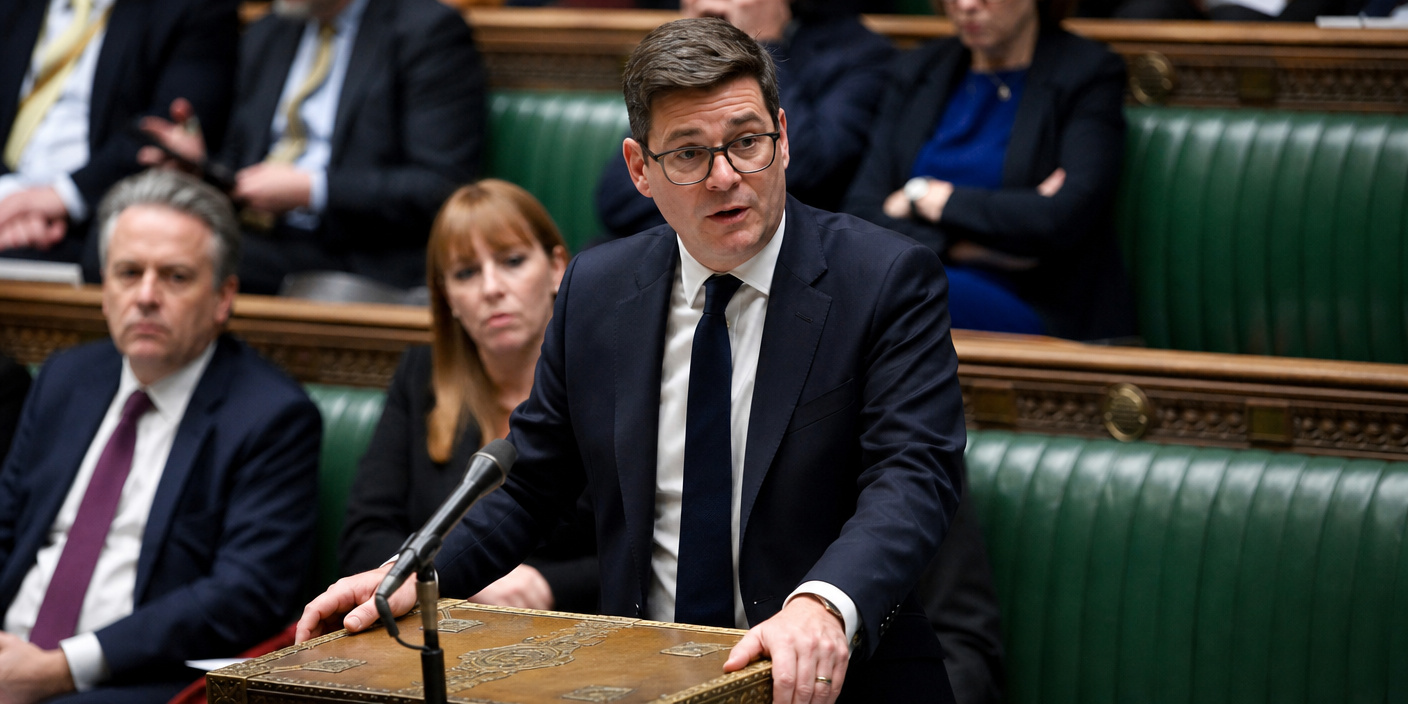
Prime Minister Andy Burnham steps into the furnace of the House of Commons this week, marking his inaugural Prime Minister’s Questions (PMQs) session since assuming the premiership. As the chamber fills, the eyes of the nation are fixed on the new leader, who faces a grueling gauntlet of inquiries concerning the most pressing crises facing the United Kingdom today. This session serves as the first major parliamentary test for the Prime Minister’s legislative agenda and offers a window into how his administration plans to manage the mounting pressure from both the opposition and a restless public.
Key Highlights
- Immediate Legislative Tests: PM Burnham confronts systemic failures including critical prison overcrowding that has reached record capacity.
- Social Care Reform: The administration faces urgent pressure to stabilize a social care sector struggling with funding gaps and workforce shortages.
- Defense Commitments: National security strategy and defense spending are under intense scrutiny as the global geopolitical environment remains volatile.
- The First 100 Days: This PMQs session acts as the initial benchmark for the Prime Minister’s ability to articulate a coherent and effective long-term governance strategy.
Navigating the Crucible of First Prime Minister’s Questions
The ritual of Prime Minister’s Questions is a fundamental component of the British parliamentary system, serving as both a mechanism of accountability and a high-stakes theatrical stage for political leadership. For Prime Minister Andy Burnham, this week’s session is not merely a formality; it is a baptism by fire. Having taken office during a period of significant domestic instability, Burnham’s opening remarks and his responses to the Leader of the Opposition will be scoured by analysts, the media, and his own party for signs of strength, preparedness, and vision.
The Crisis Behind Bars: Confronting Prison Overcrowding
One of the most immediate challenges facing the Prime Minister is the state of the UK’s prison system. With capacity reaching breaking point, the government is expected to face aggressive questioning regarding how it intends to balance public safety with the logistical realities of a packed estate. Sources suggest that Burnham is prepared to outline a strategy that combines temporary relief measures with long-term infrastructure planning. However, the opposition is likely to press him on the lack of judicial funding and the bottleneck in the courts that has exacerbated the problem. The administration must demonstrate that it is in control of the situation before the issue spills over into a deeper legislative crisis.
Social Care: A Fragile System at a Breaking Point
Perhaps even more politically sensitive than justice reform is the ongoing crisis in social care. The sector remains severely underfunded, with providers struggling to maintain staffing levels against a backdrop of increasing demand from an aging population. Prime Minister Burnham has signaled that social care reform will be a cornerstone of his domestic agenda, but the implementation remains a significant hurdle. During this PMQs, the government is expected to face questions regarding the ‘social care funding gap’—a term that has become shorthand for years of deferred policy action. Whether Burnham chooses to announce a new task force or commit to a specific budgetary increase will be a defining moment of his first week. Analysts suggest that the market reaction will depend heavily on the perceived realism of his proposed solutions.
National Security and the Defense Budget
While domestic issues dominate the headlines, the Prime Minister’s performance on national security will be watched just as closely. With ongoing geopolitical tensions affecting global trade and regional stability, the administration is under pressure to clarify its commitment to defense spending. Specifically, the Prime Minister is expected to address the ‘2.5% of GDP’ defense spending target, a benchmark that has become a point of contention within his own party and among international allies. Burnham must project a vision of stability that convinces the electorate that the United Kingdom remains a robust and reliable partner on the global stage. Failure to provide a clear answer on defense procurement or funding could leave him vulnerable to charges of weakness from the opposition benches.
The Political Implications of the First 100 Days
This inaugural PMQs serves as the curtain-raiser for the administration’s first 100 days. Political historians often note that the tone set during the first session can dictate the momentum for the remainder of the term. For a Prime Minister like Burnham, who has inherited a complex portfolio of inherited issues, the goal is to maintain the narrative of ‘competent management.’ He must navigate the session by demonstrating that he can field difficult questions without appearing reactive or defensive. The opposition, eager to capitalize on the administration’s early days, will undoubtedly attempt to create a ‘wedge issue’ around the delivery of services. The Prime Minister’s ability to pivot from defense to domestic policy, while maintaining a firm grasp of the facts, will be the true test of his leadership style.
FAQ: People Also Ask
1. What is the significance of the first PMQs for a new Prime Minister?
It serves as the first real-time, unscripted test of the Prime Minister’s command of their cabinet’s policy, their ability to handle pressure from the opposition, and their overall communication style. It sets the narrative tone for the incoming administration.
2. How does PM Burnham plan to address the prison overcrowding crisis?
While the full details are expected during the parliamentary session, the administration has signaled a focus on immediate capacity expansion combined with a long-term review of judicial sentencing guidelines to alleviate pressure on the system.
3. Why is social care such a major focus for this administration?
Social care is currently seen as one of the most critical ‘pressure cooker’ issues in the UK. It impacts the NHS, the economy, and the welfare of the elderly, making it a central concern for voters across the political spectrum.
4. Will defense spending be a central topic of debate?
Yes. With evolving threats to national security, the government’s stance on reaching specific defense expenditure targets is a key point of discussion that intersects with both domestic fiscal policy and international relations.