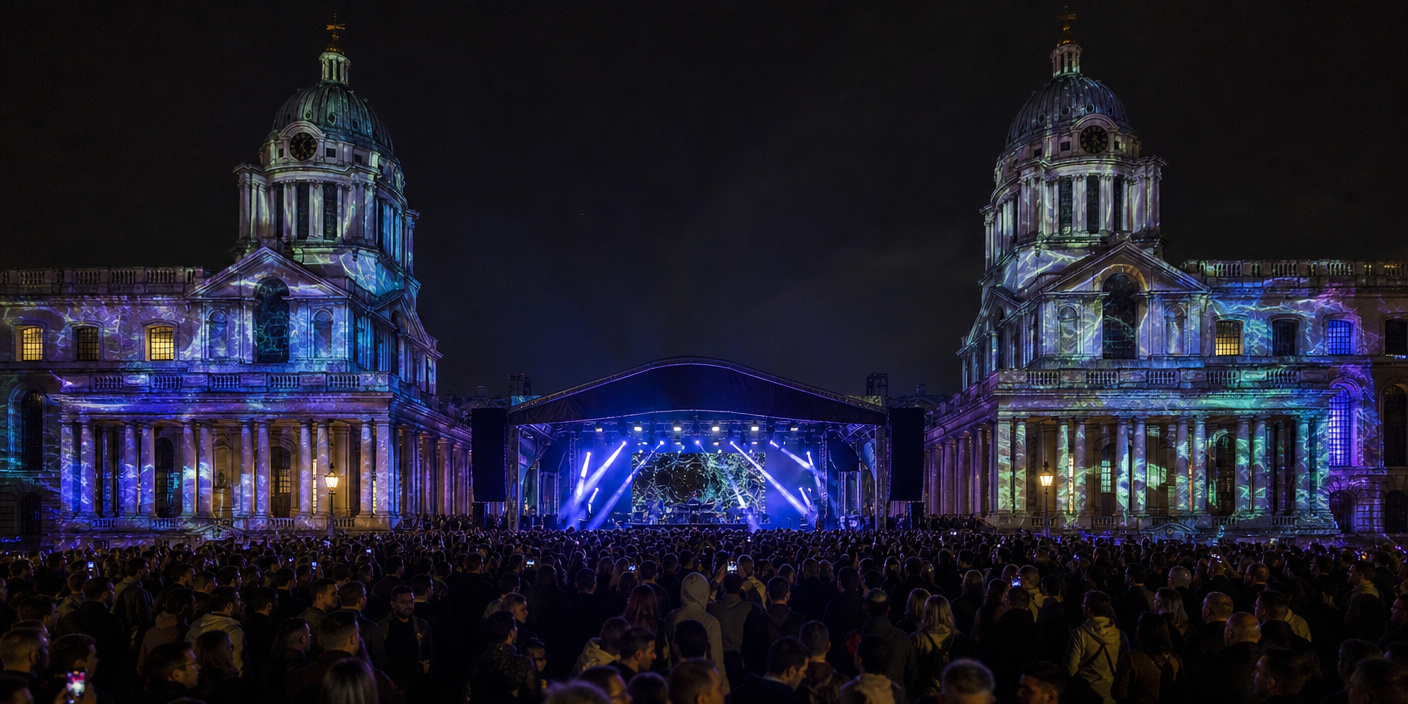
The Old Royal Naval College in Greenwich is trading its usual solemn quiet for the pulse of the London electronic music scene this week, as the Labyrinth on the Thames 2026 festival returns to the historic riverside landmark. This week-long series, known for merging cutting-edge production with heritage architecture, is set to transform one of London’s most prestigious UNESCO World Heritage sites into a cavernous, open-air dance floor. With headline shows from industry titans Overmono and Adriatique, the event serves as a study in contrast, pitting 18th-century Baroque architecture against the relentless, forward-thinking soundscapes of modern electronica.
Key Highlights
- Headline Events: The festival features back-to-back major performances: UK duo Overmono takes the stage on August 7, followed by Swiss melodic house maestros Adriatique on August 8.
- Iconic Venue: The Old Royal Naval College provides a dramatic backdrop, utilizing the historic courtyard for light displays and immersive sonic experiences.
- Format: The festival focuses on an open-air, site-specific format, prioritizing the interplay between sound design, light projection, and the landmark’s unique acoustics.
The Architecture of Sound: Greenwich’s New Rhythm
Site-specific festival production is undergoing a rapid evolution in London, and Labyrinth on the Thames 2026 is at the forefront of this movement. Rather than utilizing traditional concrete-box warehouses or sprawling green-field campsites, the organizers have opted for the Old Royal Naval College. This venue, designed by Sir Christopher Wren, presents unique challenges and opportunities. The stone colonnades and vast, open-air courtyards create a natural, albeit complex, acoustic environment that demands high-precision sound engineering.
For the 2026 iteration, the production team has focused heavily on the visual component—specifically, how light displays interact with the ornate facades of the King William and Queen Mary courts. By integrating projection mapping that highlights the architectural details of these structures, the festival effectively turns the architecture itself into a performer. This marriage of heritage and high-fidelity sound offers a counterpoint to the standardized, repetitive festival layouts seen elsewhere in the city. It challenges the audience to experience music not merely as a sonic input, but as an environmental intervention that changes how we view historically significant public spaces.
The Heavyweights: Overmono and Adriatique
The 2026 lineup for the Labyrinth series reflects a dual focus on the UK’s homegrown talent and international melodic techno dominance. Overmono, the Welsh brother-duo consisting of Tom and Ed Russell, have spent the last half-decade redefining the sound of UK dance music. Their performance on August 7 is expected to draw heavily from their recent catalog, which masterfully blends the grit of hardcore rave with the emotional weight of ambient electronica. Their ability to synthesize disparate influences makes them a perfect fit for the Old Royal Naval College, a venue that itself represents a complex layering of history.
Following them on August 8, the Swiss duo Adriatique brings a starkly different aesthetic. Adrian Shala and Adrian Schweizer have cemented their reputation in the global scene with sets that are characterized by deep, hypnotic arrangements and soaring melodies. Their performance in a space as grandiose as the Greenwich riverfront is likely to lean into the atmospheric potential of the location. Expect a set that utilizes the expansive, open-air nature of the site to build tension and release in a way that feels cinematic and expansive.
The Future of Site-Specific Events
Secondary to the music is the evolving nature of London’s nighttime economy. The movement toward hosting electronic music events in historically protected or architecturally significant venues is a strategic pivot away from the gentrification that has often displaced traditional nightclub spaces in East and South London. By partnering with cultural heritage sites like the Old Royal Naval College, Labyrinth on the Thames provides a template for how event promoters can work alongside heritage conservation efforts. This symbiotic relationship—where ticket revenue supports the upkeep of historical landmarks while the venue provides an unparalleled aesthetic experience—is likely to become a blueprint for major metropolitan event series heading into the latter half of the decade.
This approach also provides a solution to the “generic festival” fatigue. As attendees grow more accustomed to standardized festival setups, the exclusivity and visual storytelling of a site like the Old Royal Naval College offer a premium value proposition. It changes the festival from a “music event” into a “cultural moment,” where the location is just as vital to the memory of the night as the artists on the lineup.
FAQ: People Also Ask
Is Labyrinth on the Thames an all-ages event?
No, Labyrinth on the Thames is an 18+ event. Due to the nature of the venue and the event series, valid photo identification is mandatory for entry.
How does the location impact the sound quality?
Because the Old Royal Naval College is a heritage site with stone surfaces, the sound team utilizes directional line-array speakers to minimize echo and maximize clarity within the courtyard, ensuring the audio remains sharp without damaging the surrounding architectural structures.
Are there VIP options for the Overmono and Adriatique shows?
Yes, the organizers typically offer tiered ticketing, including VIP access that provides priority entry, dedicated bars, and elevated viewing platforms that offer the best vantage point for the light displays projected onto the historic facades.