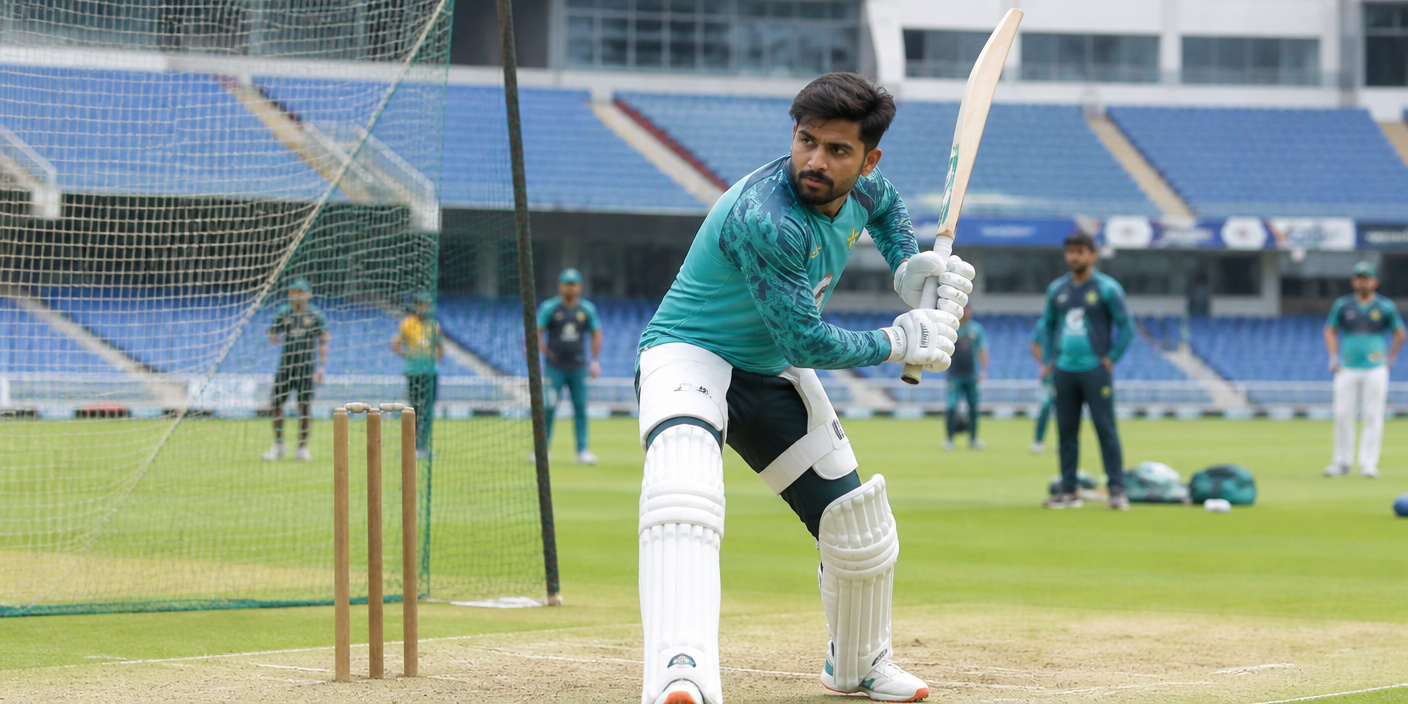
Pakistan’s cricket fraternity and international fans breathed a collective sigh of relief today as the Pakistan Cricket Board (PCB) confirmed that captain Babar Azam remains on track for the highly anticipated first Test against England at Headingley. The star batter suffered a hand injury during a warm-up fixture against a Professional County Club Select XI, a moment that sent shockwaves through the touring party and halted play momentarily as Azam was forced to retire hurt. While the incident initially raised alarms regarding his availability for the opening clash of the series, subsequent medical assessments have provided the reassurance that the captain is expected to lead his side onto the pitch as scheduled.
Key Highlights
- Incident Details: Babar Azam suffered a hand injury during a warm-up match against a Professional County Club Select XI, leading him to retire hurt.
- Official Clearance: The PCB has officially confirmed that Azam is currently on track to participate in the first Test match against England at Headingley.
- Strategic Relief: As the linchpin of Pakistan’s batting order, Azam’s availability is vital for the team’s strategic approach against the challenging English conditions.
Navigating the Crisis: The Tactical Stakes of Azam’s Fitness
The apprehension surrounding Babar Azam’s fitness serves as a stark reminder of the immense reliance Pakistan places on its captain. In modern international cricket, where schedules are increasingly congested, the physical toll on marquee players is a constant variable in team management. When Azam, arguably the world’s most consistent batter across formats, walked off the field during the warm-up against the Professional County Club Select XI, it was not merely a physical setback but a potential structural collapse of Pakistan’s batting blueprint.
The Anatomy of a High-Stakes Warm-Up
Warm-up fixtures are designed to acclimatize players to local conditions—the swinging ball, the specific humidity of the English summer, and the unique pace of the pitches. When a premier player like Azam suffers an injury in such a setting, it disrupts the entire preparation cycle. The team management, led by the coaching staff and medical personnel, has had to quickly recalibrate, shifting from a focus on tactical drills to a rigorous recovery protocol. The fact that the injury occurred during a game meant to build momentum highlights the thin line between necessary preparation and high-stakes risk. The decision to retire hurt was undoubtedly precautionary, reflecting the mature approach modern cricketing boards are adopting to protect their most valuable assets ahead of high-profile Test series.
The Headingley Factor: Conditions and Challenges
Headingley is renowned for its idiosyncratic conditions. The pitch often offers a distinct challenge for visiting batters, characterized by seam movement and variable bounce that can undo even the most technically gifted players. For Babar Azam, the venue is not just another stadium; it is a battleground where his leadership and technical proficiency will be tested against a robust England bowling attack. With the confirmation of his fitness, the focus returns to his ability to anchor the innings and navigate the English swing. Pakistan’s ability to put up a competitive total is inextricably linked to Azam’s presence at the crease; his capacity to rotate strike and build long, patient partnerships is the defensive wall upon which Pakistan’s tactical approach is built.
The PCB’s Medical Protocol and Future Load Management
The PCB’s rapid response and transparency regarding the injury underscore a significant shift in professional cricket management. In years past, injuries were often cloaked in ambiguity. However, the current standard demands quick, precise communication to manage stakeholder and fan expectations. This incident brings to the forefront the ongoing conversation about load management. Can modern stars continue to play in every warm-up, domestic, and international fixture without risking burnout or injury? As the global cricket calendar expands, the PCB and other cricket boards will likely face increasing pressure to adopt more stringent player welfare protocols, perhaps limiting participation in non-essential fixtures for senior players.
FAQ: People Also Ask
1. Was the injury sustained by Babar Azam considered severe?
No, while the injury during the warm-up match against the Professional County Club Select XI necessitated that he retire hurt, the PCB has confirmed that he remains on track for the first Test, suggesting the issue was not long-term or structural.
2. How does Babar Azam’s absence affect Pakistan’s team strategy?
Babar Azam is the primary anchor of the Pakistani batting lineup. His absence would force a total reshuffle of the middle order, placing significant pressure on younger, less experienced batters to handle the moving ball in English conditions. His inclusion is critical for both the team’s tactical stability and morale.
3. Will the injury affect his fielding and captaincy duties at Headingley?
While medical staff are monitoring his recovery, the PCB’s clearance implies that he is expected to fulfill all duties, including captaincy and fielding. However, team management will likely continue to monitor the hand’s response to high-impact fielding drills leading up to the toss.
4. Why are warm-up matches so important for touring teams?
Warm-up matches are essential for players to adjust to the nuances of foreign playing conditions, such as the pitch composition, weather, and the specific movement of the ball in England compared to the sub-continent. They serve as the final testing ground before the high-pressure environment of a Test series begins.