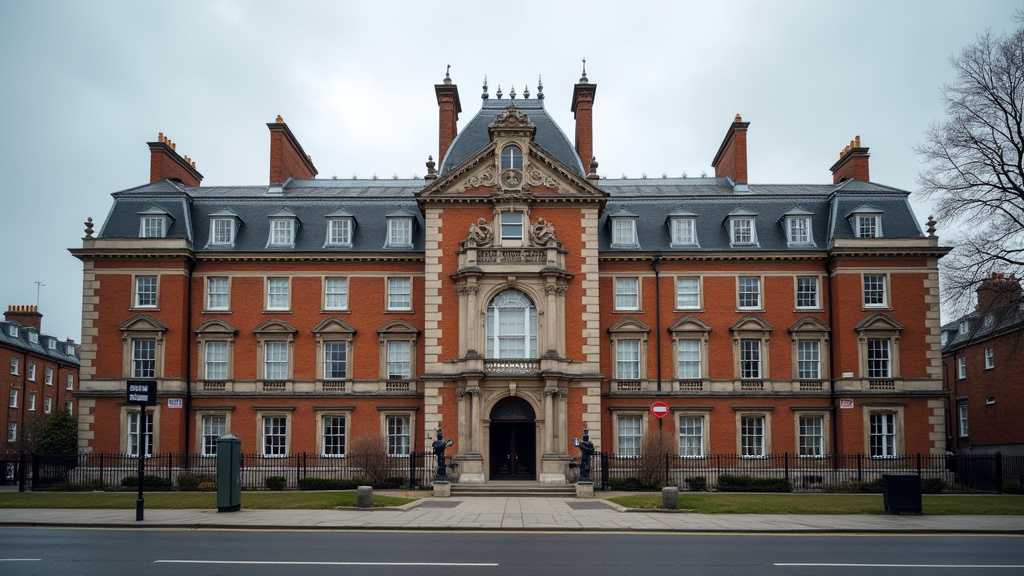
As the sun sets over the River Thames today, August 16, 2026, the historic grounds of the Old Royal Naval College in Greenwich are transforming into the epicenter of the electronic music world. Michael Bibi, a titan of the modern dance scene, takes center stage to headline the grand finale of the “Labyrinth on the Thames” series. This sold-out performance represents a high-water mark for the event, which has spent the summer utilizing one of London’s most significant UNESCO World Heritage sites as a living canvas for light, sound, and immersive art.
The Sonic Architecture of Greenwich
The choice of the Old Royal Naval College—designed in part by Sir Christopher Wren—as the host for an electronic music finale is an exercise in intentional contrast. The venue, characterized by its baroque grandeur and sprawling neoclassical colonnades, provides a stark visual counterpoint to the sleek, digital precision of Michael Bibi’s performance. Tonight’s event is not merely a concert; it is a sonic intervention. The production team has integrated high-fidelity sound systems designed to navigate the complex acoustics of the site’s stone architecture, ensuring that the driving, melodic house beats for which Bibi is renowned resonate through the courtyard without compromising the integrity of the 17th-century landmark.
For the thousands of attendees, the experience is framed by the juxtaposition of the Greenwich skyline and the intricate light installations that have become a hallmark of the Labyrinth series. As Bibi performs, synchronized lasers and projected visual art are mapping the geometry of the Painted Hall and the surrounding facades, effectively turning the college into a pulsating, luminescent vessel. This marriage of historic preservation and contemporary counter-culture highlights a shifting trend in London’s event landscape: the move toward ‘experiential heritage,’ where iconic locations are activated by modern performance art rather than remaining static monuments.
Michael Bibi: A Curated Journey
Michael Bibi’s presence at the helm of this finale is significant. Known for his ability to curate long-form sets that traverse the spectrum of house and techno, Bibi brings a narrative quality to his performance that suits the theatrical nature of the Labyrinth series. His setlist for this evening is meticulously crafted to match the environment—beginning with atmospheric, ambient textures that mirror the calm of the river at twilight, before accelerating into high-tempo, bass-heavy tracks that define his signature sound.
Industry insiders have noted that Bibi’s recent output focuses on the ‘minimalist maximalism’ approach—using fewer elements to create a larger, more encompassing sonic pressure. By performing in such a structurally imposing venue, Bibi is required to compete with the sheer scale of his surroundings. Unlike traditional nightclub settings, which rely on intimate, enclosed darkness, the open-air nature of the Old Royal Naval College forces the artist to command the space entirely through the strength of the rhythm and the visual accompaniment. This is a defining moment in Bibi’s 2026 tour, cementing his reputation not just as a DJ, but as a live performer capable of adapting to unconventional, prestige-tier venues.
The Cultural and Economic Ripples
The success of the Labyrinth on the Thames series serves as a case study for cultural tourism in Greenwich. Beyond the music, the event has acted as a catalyst for local engagement. The Greenwich borough has seen a surge in foot traffic, hospitality spending, and international attention throughout the summer event window. The series has demonstrated that high-quality electronic music events, when managed with cultural sensitivity, can integrate seamlessly into historical districts, potentially opening the door for further collaborations between the music industry and heritage trusts.
Furthermore, the production requirements for this event are substantial. The organizers have implemented strict noise management and crowd control measures to respect the residential and historic nature of Greenwich, setting a potential blueprint for how major urban centers can host large-scale, loud, and energetic events without causing undue friction. This operational success is likely to lead to increased demand for such ‘heritage-adjacent’ event licensing in the coming years.
Secondary Angles: Exploring the Nuance
1. Acoustic Engineering in Ancient Spaces: The engineering challenge of tonight’s performance is immense. Sound designers have had to utilize directional audio arrays to prevent sound bleed into the residential areas of Greenwich, while simultaneously ensuring the ‘thump’ of the bass remains visceral for the crowd. This technology represents the future of outdoor urban festivals.
2. The Resilience of the ‘Labyrinth’ Brand: Labyrinth has successfully branded itself as a curator of prestige. By distancing itself from the ‘warehouse rave’ aesthetic and moving toward high-art architectural backdrops, the brand is appealing to a more affluent, older demographic of music fans who value comfort and prestige as much as the music itself.
3. Future Predictions: With the 2026 series wrapping up tonight, industry speculation is already turning to 2027. There is talk of expanding the Labyrinth model to other heritage sites across the UK, potentially utilizing castles or industrial-era dockyards in Liverpool or Newcastle. The ‘Greenwich Blueprint’ is currently being viewed as the gold standard for site-specific electronic events.
FAQ: People Also Ask
Q: What makes the Labyrinth on the Thames series unique?
A: The series distinguishes itself by hosting world-class electronic artists exclusively at iconic, historical landmarks, specifically utilizing the architecture and history of the venues as part of the overall visual and sonic production, rather than just as a backdrop.
Q: Why was the Old Royal Naval College chosen for the finale?
A: As a UNESCO World Heritage site and an architectural masterpiece, the Old Royal Naval College offers a prestige and grandeur that elevates the event. Its open, grand courtyard provides a unique, large-scale capacity for outdoor immersive experiences.
Q: Will there be more shows in the Labyrinth series?
A: While tonight is the grand finale of the 2026 summer series, organizers have indicated that the success of these events has fast-tracked planning for 2027, with announcements for new heritage locations expected in early 2027.
Q: Is Michael Bibi playing any other UK dates this month?
A: Following this sold-out performance in Greenwich, Michael Bibi is moving on to a sequence of international festival appearances. This show is his exclusive London performance for this specific event series.