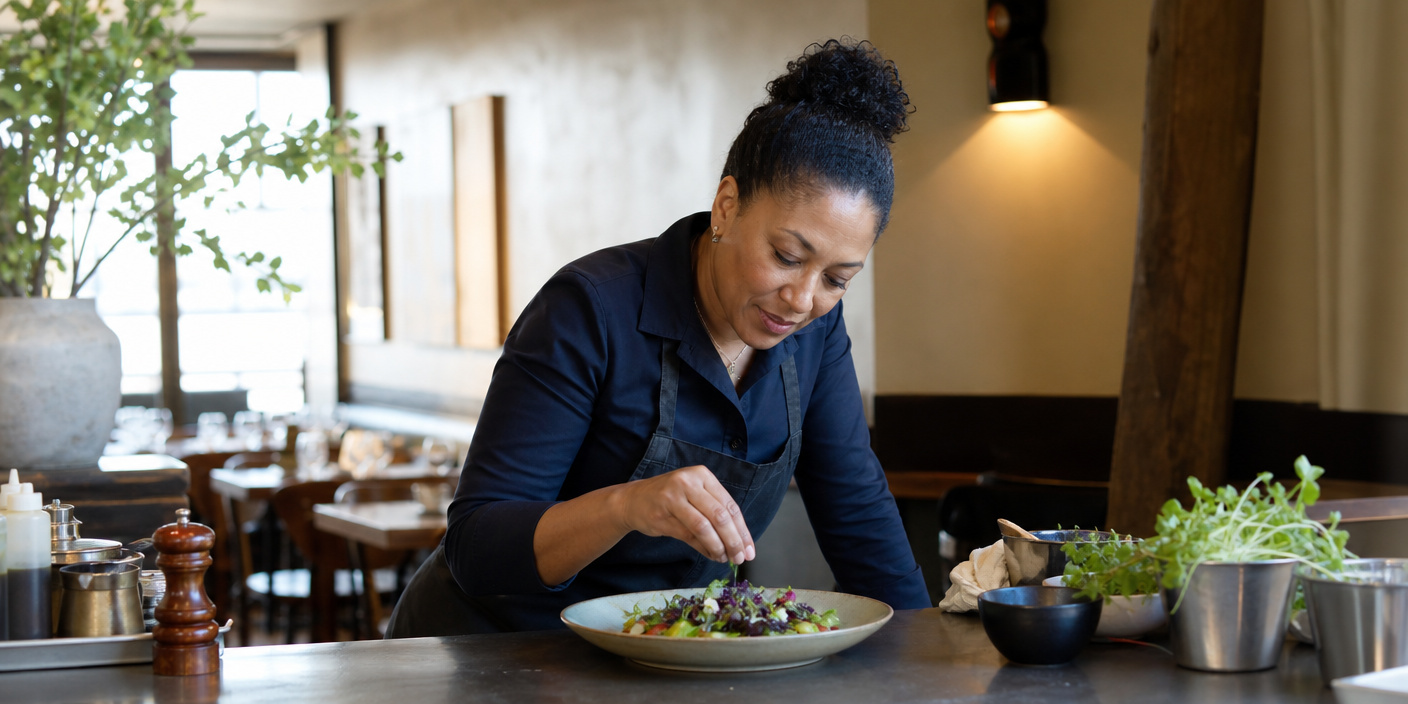
The Good Food Guide has officially unveiled its ‘100 Best Local Restaurants 2026’ list, marking a significant moment for the British culinary landscape. In a year defined by the resilience of small-scale independent businesses, eleven distinguished London restaurants have secured their places on this prestigious list, showcasing the capital’s vibrant shift away from destination fine dining toward accessible, creative, and community-centric gastronomy. The selection, which highlights neighborhood staples and innovative newcomers alike, underscores a nationwide appreciation for restaurants that act as the beating heart of their local boroughs.
Key Highlights
- Eleven London restaurants have been named in the prestigious ‘100 Best Local Restaurants 2026’ list by The Good Food Guide.
- The selection emphasizes a pivot toward ‘neighborhood chic,’ prioritizing local accessibility, creative flair, and sustainable community impact over traditional, expensive fine-dining formats.
- Featured London standouts include the authentic Italian-inspired Tiella Trattoria, the innovative Southeast Asian-influenced Mambow, and the highly acclaimed Teal by Sally Abé.
- The rankings are determined through a rigorous, anonymized inspection process that evaluates culinary consistency, service atmosphere, and, crucially, the restaurant’s role within its immediate neighborhood.
- This list serves as a crucial barometer for the post-cost-of-living crisis culinary economy, validating restaurants that provide high-end quality at accessible price points.
The New Guard of London Gastronomy: Analyzing the 2026 Good Food Guide Winners
The 2026 edition of The Good Food Guide’s ‘100 Best Local Restaurants’ is more than a mere collection of eateries; it is a cultural document. By focusing specifically on ‘local’ establishments, the Guide acknowledges a fundamental shift in the way Londoners dine. The era of the stuffy, overly formal destination restaurant is receding, replaced by a sophisticated, relaxed approach to dining that prioritizes seasonal ingredients, approachable price points, and a genuine connection to the local community. This list effectively legitimizes the ‘neighborhood restaurant’ as the most important category in modern British food culture.
Defining the ‘Good Food Guide’ Criteria
What does it take to crack the top 100? Unlike guides that focus purely on technical execution or wine lists, The Good Food Guide’s criteria for local restaurants are inherently multi-dimensional. Inspectors look for consistency, the warmth of the welcome, the ability to cater to local families and foodies alike, and the distinct ‘personality’ of the kitchen. For a London restaurant to make the cut, it must function as a reliable constant in a neighborhood’s life. It must be as suitable for a Tuesday night weeknight meal as it is for a celebratory weekend dinner. This inclusivity is the hallmark of the 2026 cohort.
Spotlight on the London Standouts: Tiella, Mambow, and Teal by Sally Abé
Among the eleven London winners, three names have particularly resonated with critics and locals alike. Tiella Trattoria stands as a prime example of the ‘neighborhood staple’ done right—offering authentic, produce-led Italian comfort food that eschews the pretension of more centrally located Italian institutions. Its success highlights a growing appetite for regional Italian cooking that focuses on the ‘tiella’ style of baking, bringing a authentic piece of Mediterranean culture to a London postcode.
Then there is Mambow. By bridging the gap between traditional Southeast Asian flavors and modern, casual London dining, Mambow has carved out a niche that feels both exciting and essential. Its inclusion on the list validates the movement of chefs who are stripping away the formalities of ‘fusion’ to focus on the raw, bold flavors of their heritage, served in an environment that encourages long, leisurely meals.
Finally, Teal by Sally Abé represents the pinnacle of the modern neighborhood bistro. Sally Abé, a chef with a formidable pedigree, has utilized her platform to create a space that feels personal and approachable. Her inclusion highlights a growing trend: the migration of elite-level culinary talent from big-ticket West End kitchens into smaller, community-focused independent projects. This trend is vital for the health of London’s dining scene, as it brings technical brilliance into local streets.
The Economic Impact of the ‘Local Hero’ Award
For these eleven London restaurants, a spot on the 2026 list is more than just a certificate on the wall; it is a vital economic catalyst. In the current economic climate, where independent hospitality businesses face significant challenges—from rising utility costs to fluctuating supply chain prices—national recognition provides a much-needed boost in visibility and footfall. These awards help democratize dining success, proving that a restaurant does not need a massive marketing budget or a central Mayfair location to be considered among the best in Britain.
Future Predictions: Where Does London Dining Go From Here?
As we look beyond the 2026 list, the trajectory for London’s culinary scene seems clear. The ‘local restaurant’ model is becoming the primary engine of growth. We can expect to see more chefs leaving established groups to start smaller, highly focused concepts in residential areas. Furthermore, the reliance on hyper-local sourcing—not just as a marketing buzzword, but as a logistical necessity—will likely become the standard. The Good Food Guide’s 2026 list acts as a roadmap for this evolution, pointing diners toward the establishments that are not only surviving but thriving by putting their community first.
FAQ: People Also Ask
Q: How does The Good Food Guide select its ‘100 Best Local Restaurants’?
A: The Good Food Guide uses a mix of anonymous inspections and public feedback. The criteria focus on culinary quality, service consistency, and, importantly, the restaurant’s reputation and impact within its immediate neighborhood rather than its national or international profile.
Q: Why are there only 11 London restaurants on the list?
A: The Good Food Guide focuses on a nationwide spread to highlight culinary excellence across the entirety of Britain. By capping the London entries, the guide ensures that the list remains representative of the diversity and quality found throughout the UK, rather than becoming dominated by the capital.
Q: Is the 2026 list focused on fine dining?
A: No. The ‘Best Local Restaurants’ list specifically excludes formal destination fine dining. The focus is on accessible, community-oriented, and frequently visited restaurants that offer high-quality cooking in a relaxed, often casual setting.
Q: How can I find the full list of 100 restaurants?
A: The full list is published on The Good Food Guide’s official digital platforms and in their annual publication. It covers a diverse range of cuisines, from traditional British gastropubs to modern global eateries.