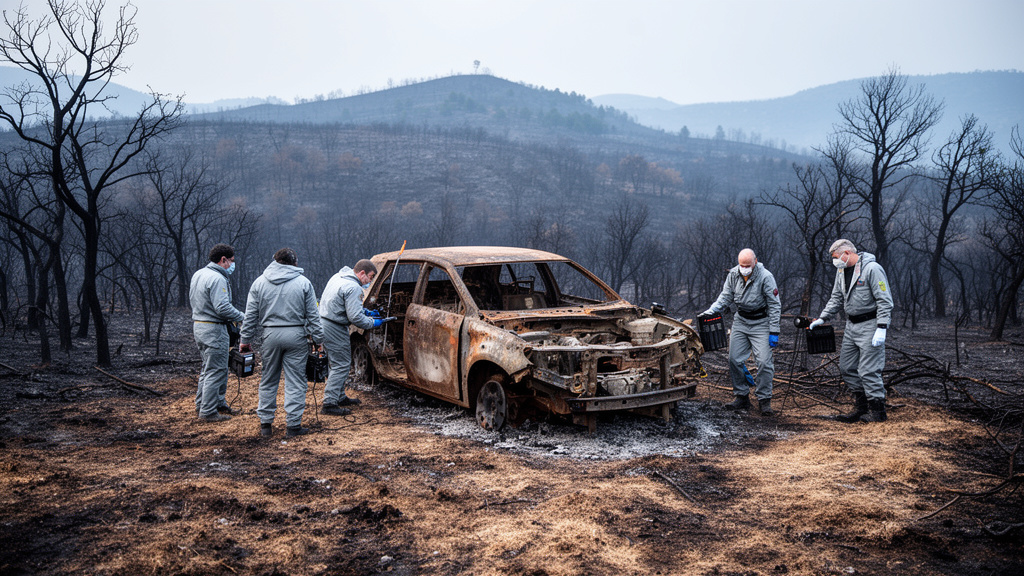
The discovery of human remains inside a vehicle long after an official recovery operation represents more than a personal tragedy for Danielle Gillam-Kirton; it signifies a catastrophic failure in forensic protocols and international disaster management. When Gillam-Kirton finally gained access to the vehicle belonging to her parents, John and Janice Gillam—who tragically perished in the 2022 Spanish wildfires—she was met with the horrifying reality that the authorities had failed to conduct a thorough search of the scene. Her discovery of bone fragments inside the wreckage has ignited urgent questions regarding the accountability of the agencies involved and the protocols mandated for disaster site recovery.
Key Highlights
- The Incident: John and Janice Gillam were among those who lost their lives in the devastating 2022 wildfires in the Sierra de la Culebra region of Zamora, Spain.
- The Failure: Months after the incident, their daughter, Danielle Gillam-Kirton, discovered human remains within the couple’s vehicle, which had ostensibly been cleared by local authorities.
- Systemic Oversight: The incident highlights a severe disconnect between standard forensic recovery procedures and the reality of field operations during large-scale environmental disasters.
- Calls for Accountability: The family is now seeking transparency regarding how such a significant oversight occurred and who holds responsibility for the incomplete investigation.
The Anatomy of a Forensic Oversight
The 2022 wildfire season in Spain, particularly the events in the Sierra de la Culebra area, was defined by unprecedented environmental stress, extreme temperatures, and a logistical nightmare for emergency services. However, the explanation for the oversight in the Gillam case remains insufficient for a grieving family navigating the complexities of international law. The recovery of human remains is a foundational step in any death investigation, yet in this instance, the vehicle was effectively returned to the family with, unbeknownst to them, the physical evidence of their parents’ final moments still inside.
The Role of the Guardia Civil
In Spain, the Guardia Civil typically spearheads investigations involving sudden or unnatural deaths, coordinating with local forensic pathologists to ensure the scene is processed for evidence and remains. The primary objective is twofold: to identify the victims for the family and to preserve any evidence that might explain the cause of death. In the case of the Gillams, this process appears to have been severely compromised. Experts in forensic recovery note that in disaster zones, the sheer scale of the destruction often leads to overwhelmed resources. However, basic vehicle clearance protocols mandate a “sieve-and-sift” technique, where the interior of the vehicle is systematically searched by trained forensic technicians. The fact that bone fragments were found suggests that this standard procedure was either skipped or performed with gross negligence.
Cross-Border Procedural Barriers
This case also underscores the nightmare of cross-border grieving. When British citizens are involved in fatal incidents on foreign soil, they are often at the mercy of the foreign legal system’s efficiency and transparency. Families are frequently distanced by language barriers, legal system disparities, and an inability to physically attend the site of the recovery. For the Gillam family, the delay in receiving the vehicle and the subsequent realization of the oversight highlights the vulnerability of survivors who are dependent on foreign police reports to piece together the final moments of their loved ones’ lives. The lack of clear communication between Spanish authorities and the British consulate, or the family directly, adds a layer of systemic trauma that is often overlooked in official post-incident assessments.
The Long-Term Psychological Toll
Beyond the forensic failure, there is a profound psychological toll. For a survivor, the discovery of remains is not merely a “find”; it is a re-traumatizing event that forces the family to confront the death all over again. By failing to perform a complete recovery, the investigating authorities inadvertently denied the family a proper closure, forcing them to participate in the forensic recovery themselves long after the grieving process should have reached a moment of stillness. This incident raises a critical question: what mechanisms are in place to ensure that when such errors occur, the state takes immediate responsibility? Currently, the response from the responsible agencies remains under intense scrutiny as the Gillam family seeks answers to their questions about whether this was an isolated incident or part of a wider, concerning pattern of forensic mismanagement in the region.
FAQ: People Also Ask
Q: What happened to John and Janice Gillam?
A: John and Janice Gillam were tragically killed during the 2022 wildfires that swept through the Sierra de la Culebra area in the Zamora province of Spain.
Q: How did their daughter, Danielle Gillam-Kirton, discover the remains?
A: Danielle discovered the bone fragments while inspecting the vehicle that had been recovered from the site and returned to the family months after the wildfire incident, revealing that the initial forensic sweep was incomplete.
Q: What are the primary concerns regarding this investigation?
A: The primary concerns include the failure of local authorities, specifically the investigating units responsible for forensic recovery, to thoroughly search the vehicle, and the lack of accountability and communication regarding the oversight.
Q: Are there legal repercussions for this type of forensic failure?
A: Such failures often lead to intense internal reviews and potential civil action. However, the legal landscape for holding foreign emergency services accountable for negligence is complex, often requiring diplomatic intervention.