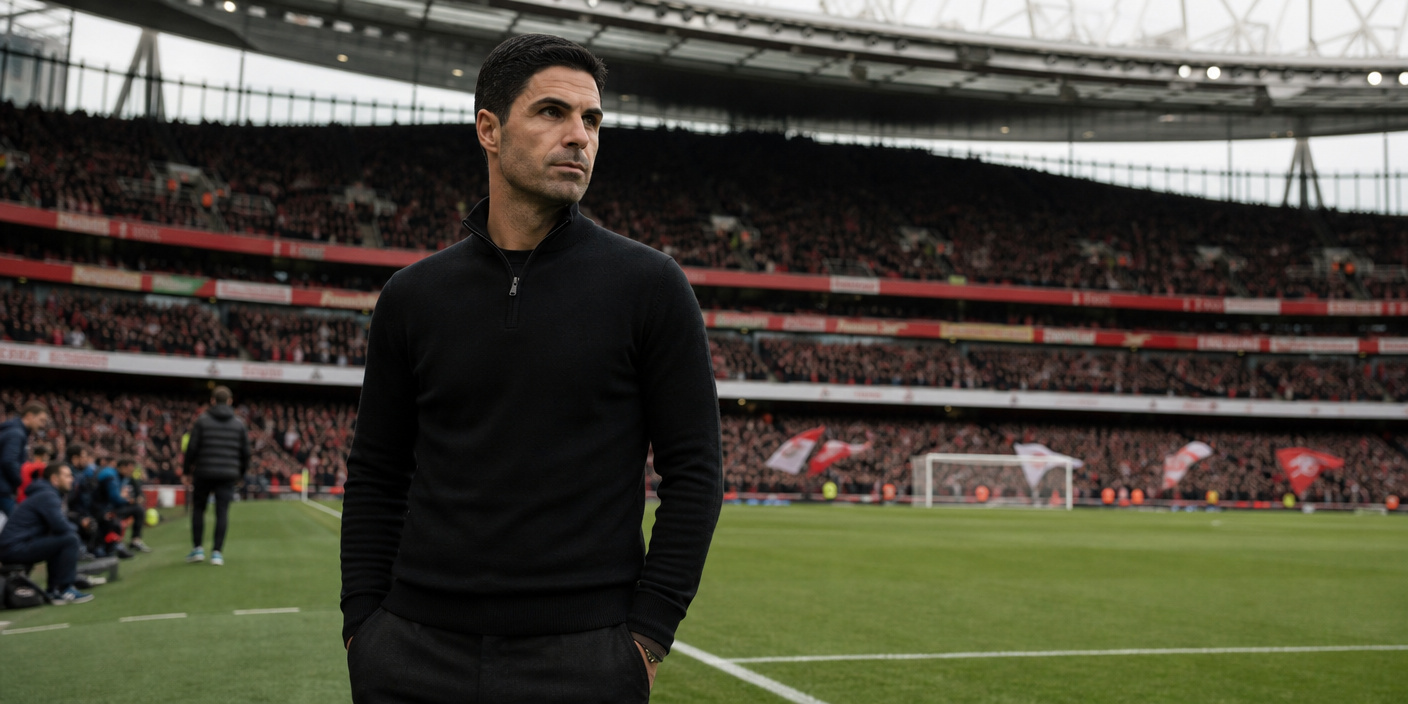
In a decisive move that signals continued stability and ambition for the club, Arsenal Football Club has confirmed that manager Mikel Arteta has agreed to a contract extension, ensuring he remains the architect of the team’s project until 2030. The agreement solidifies the commitment between the Spaniard and the North London outfit, effectively silencing speculation regarding his future and reinforcing the board’s faith in the ‘process’ initiated upon his arrival in December 2019.
Key Highlights
- Long-Term Commitment: Mikel Arteta has signed a contract extension keeping him at Arsenal until 2030, marking a decade-long vision for the club.
- Strategic Alignment: The renewal underscores a unified vision between Arteta, the Kroenke Sports & Entertainment ownership, and the sporting hierarchy.
- Project Continuity: The extension provides a stable platform for the club to continue its trajectory in the Premier League and pursue major silverware, including the Champions League.
- Cultural Legacy: The deal cements Arteta’s role in reshaping the club’s identity, recruitment policy, and on-field tactical philosophy.
Cementing the Arsenal Project: A Vision for 2030
The decision to extend Mikel Arteta’s tenure until 2030 is more than just a managerial contract; it is a profound declaration of intent. Since taking over the reins at the Emirates Stadium, Arteta has transformed the club from a side drifting in transition to a genuine, consistent contender for the Premier League title. This new deal serves as the foundation for the next phase of the ‘Arsenal Project,’ a term that has become synonymous with the club’s rigorous recruitment standards, tactical discipline, and cultural overhaul.
Tactical Evolution: Building a Championship Pedigree
Under Arteta, Arsenal has evolved from a team struggling to find its identity to one of the most structurally sound units in European football. His tactical blueprint has been characterized by a fluid, possession-based approach underpinned by a high-intensity pressing system that has become the hallmark of the modern Gunners. The 2030 horizon allows Arteta the luxury of time—a rare commodity in the volatile world of top-flight English football—to iterate on his tactical models.
By securing his future, the club ensures that the ‘non-negotiables’ established by the Spaniard remain the standard. The tactical shift has seen Arsenal improve defensively while maintaining a creative, free-flowing attacking structure. As the team continues to integrate younger talents and refine its defensive transitions, the prospect of an even more dominant squad by 2030 remains a tangible goal rather than a distant aspiration. The continuity this contract provides is critical; players know exactly what is expected of them, and the coaching staff can focus on long-term development rather than short-term survival.
The Financial and Structural Impact
Kroenke Sports & Entertainment (KSE) has increasingly demonstrated a willingness to back the sporting project with significant investment. By tying down the manager until 2030, the club has provided clarity to investors, commercial partners, and fans alike. This stability is reflected in the way Arsenal approaches transfer windows. With the manager’s position secure, recruitment strategy can be planned over multiple cycles, allowing the club to identify and target specific profiles that fit the Arteta mold years in advance.
This structural stability also bolsters the club’s negotiating position. Players arriving at the Emirates now know they are joining a club with a unified, long-term vision. The influence of Sporting Director Edu Gaspar, working in tandem with Arteta, has been instrumental in this efficiency. Together, they have cleared out high-wage, underperforming assets and replaced them with a cohesive core of young, hungry, and talented individuals who are now in the prime of their careers. The extension until 2030 ensures that this core group remains part of an environment where the managerial philosophy is a constant.
Cultural Shift and the North London Identity
Beyond the spreadsheets and tactical formations, Arteta has succeeded in reconnecting the club with its supporters. The ‘us against the world’ mentality fostered in the dressing room has resonated with the fanbase. By embracing the history of the club and demanding a high level of accountability, Arteta has restored the pride associated with wearing the Arsenal shirt.
This cultural transformation is perhaps his most lasting achievement to date. The club no longer feels fragile under pressure; instead, it exhibits a resilience that was often missing in the previous decade. As we look toward 2030, the aim is to transition from being a ‘contender’ to becoming a ‘perennial winner.’ The extension acts as a shield, protecting the project from the noise of inevitable setbacks, and ensuring that the internal culture remains focused on winning, not just competing.
Future Ambitions: The European Frontier
While domestic success is the priority, the goal of this long-term deal is undoubtedly to hoist the Champions League trophy. Arteta has shown an appetite for learning, constantly evolving his approach to handle the rigors of European nights. With five more years to mold his squad, the pressure to deliver a major European title will grow, but the club has clearly signaled that it believes Arteta is the man to navigate that path. The consistency of management will be the biggest factor in bridging the gap between Arsenal and the historical giants of European football.
FAQ: People Also Ask
1. Why was Mikel Arteta’s contract extension significant for Arsenal?
It provides long-term stability at the managerial level, ensuring the club’s tactical and recruitment philosophies remain consistent for the next half-decade, crucial for sustained success in the Premier League.
2. How long is Mikel Arteta’s new deal?
Following the recent agreement, Mikel Arteta is contracted to remain as the manager of Arsenal until 2030.
3. What does this mean for Arsenal’s transfer strategy?
It allows the club to plan recruitment cycles years in advance, targeting players who fit a long-term tactical vision rather than reacting to short-term needs, effectively aligning the squad with the manager’s 2030 outlook.