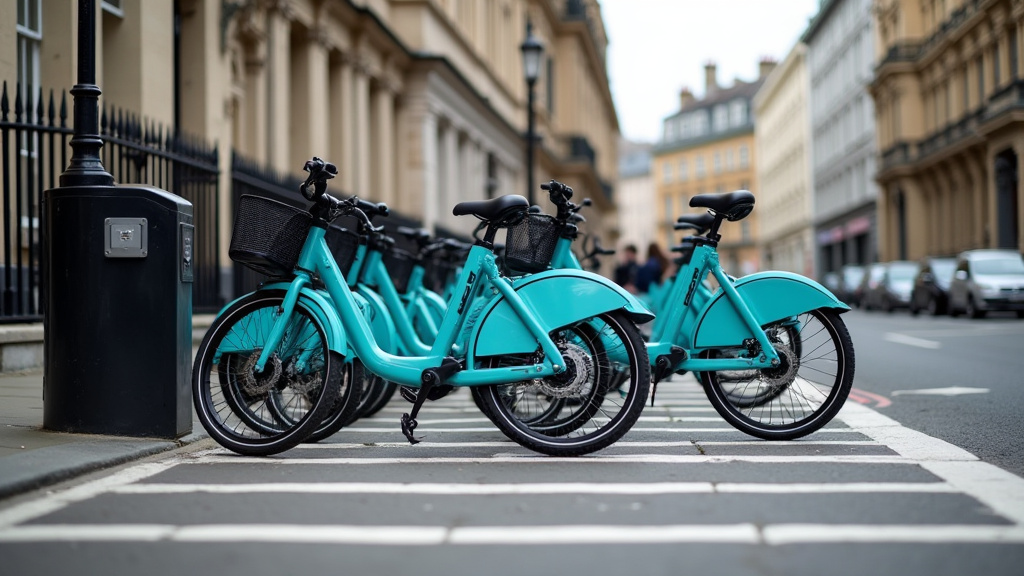
London’s streets are set for a major regulatory overhaul as Mayor Sadiq Khan accelerates plans to end the ‘Wild West’ atmosphere currently surrounding the city’s dockless e-bike sector. For years, the rapid proliferation of app-based rental bikes has offered a green alternative to private car ownership, yet the lack of a standardized regulatory approach across London’s 32 boroughs and the City of London has led to pervasive issues regarding pavement clutter, public safety, and accessibility. By shifting from a fragmented, borough-specific contract system to a comprehensive, London-wide licensing framework, the Mayor’s office, in partnership with Transport for London (TfL), aims to impose strict order on a market that has often operated with minimal accountability.
Key Highlights
- Unified Licensing: The shift moves away from individual borough agreements to a single, London-wide licensing framework managed by Transport for London (TfL).
- Accessibility Focus: New rules will prioritize clear pavements, mandating designated parking areas and reducing ‘free-floating’ bike clutter that endangers pedestrians, particularly those with visual impairments.
- Safety Standards: Operators will be held to strict technical and operational standards, ensuring bikes are not only parked responsibly but are also maintained to high safety specifications.
- Borough Integration: While the framework is centralized, it is designed to work in tandem with local councils to address hyper-local concerns about density and parking zones.
Transforming the Urban Micro-Mobility Landscape
The current state of the dockless e-bike market in London has been characterized by disjointed governance. Historically, different boroughs have negotiated their own separate contracts with various operators—such as Lime, Dott, and Tier. This patchwork approach has resulted in scenarios where a user might ride a bike across a borough boundary and find themselves in a regulatory vacuum, or worse, leaving a bike in a ‘no-man’s land’ that technically defies the rules of neither jurisdiction effectively.
Mayor Khan’s new vision is to eliminate this ambiguity. By centralizing the licensing process under TfL, the city intends to create a uniform ‘Code of Conduct’ for both operators and riders. The goal is not to eliminate these bikes, which remain a vital component of London’s decarbonization strategy, but to enforce a ‘smart’ deployment model. This involves utilizing GPS geofencing technology to restrict where bikes can be parked, effectively forcing users to return vehicles to designated bays rather than abandoning them in the middle of narrow footpaths.
The Pavement Crisis: Prioritizing Pedestrian Safety
Perhaps the most significant push behind this policy is the ongoing crisis regarding pavement accessibility. For visually impaired Londoners, wheelchair users, and those pushing strollers, the current ‘Wild West’ model of haphazardly dumped e-bikes poses a daily hazard. The proposed licensing framework intends to mandate that operators invest in greater physical infrastructure, including marked parking pens, to ensure that public space remains accessible to all.
Regulatory experts suggest that this shift will likely necessitate a reduction in the total number of bikes available for rent in high-density areas, shifting the priority from sheer quantity to quality of service. Operators will be required to demonstrate not just their ability to provide bikes, but their operational capacity to retrieve, rebalance, and repair them efficiently.
Balancing Innovation with Urban Order
From an economic perspective, this is a delicate balancing act. London’s micro-mobility sector has thrived precisely because of its low barrier to entry and high flexibility. Too much regulation risks stifling this innovation, potentially driving operators out of the market. However, the current status quo has reached a tipping point where public frustration with sidewalk clutter has become a political liability.
This framework represents a maturation of the sector. By institutionalizing the relationship between private tech companies and public transport authorities, London is signaling that it considers e-bikes to be an extension of the public transit network rather than a separate, unregulated entity. This could lead to better integration with Oyster and Contactless payment systems in the future, further blurring the lines between private rental and public utility.
The Historical Context: From Disruption to Regulation
To understand the necessity of this move, one must look at the historical trajectory of ‘disruptive’ transport technologies. Like the ride-hailing apps that preceded them, dockless bikes arrived as an uninvited disruption to the established urban order. Initially, cities were eager to adopt them to meet climate goals, often overlooking the logistical realities of urban density.
London’s move towards a consolidated licensing model mimics similar transitions seen in cities like Paris and New York, where rapid deployment led to public backlash, subsequently resulting in tighter, centralized control. This policy is a recognition that sustainable urban planning cannot rely on the ‘move fast and break things’ ethos of the tech industry; it requires a structured, collaborative relationship between municipal authorities and private enterprise to ensure long-term viability.
Future Projections for London’s Streets
Looking ahead, the successful implementation of this framework could fundamentally reshape how Londoners commute. If the licensing system effectively clears the pavements, we can expect a more harmonious integration of cyclists and pedestrians.
However, the challenge remains in enforcement. Creating a license is one thing; monitoring thousands of bikes across the city is another. The success of the Mayor’s plan will ultimately depend on the technological capabilities of the operators to enforce geofencing and the ability of TfL to impose meaningful penalties on those who fail to comply. If successful, London could set a global standard for how major metropolises successfully integrate micro-mobility into the fabric of the city without sacrificing pedestrian rights or safety.
FAQ: People Also Ask
1. Will this new framework ban dockless e-bikes in London?
No, the plan is not to ban e-bikes but to regulate them more strictly. The goal is to transition from a ‘free-floating’ system to a managed model using designated parking zones.
2. Who will manage the new licensing system?
Transport for London (TfL) will take the lead on managing the licensing framework, moving the authority away from the fragmented approach of individual borough contracts.
3. How will this impact current operators like Lime or Dott?
Operators will be required to adhere to a centralized set of rules regarding parking, maintenance, and safety. They may need to adjust their operational models to fit within the new, uniform requirements set by TfL.
4. Why is the Mayor calling the current situation a ‘Wild West’?
This term refers to the current lack of a unified set of rules across London. Different boroughs have different requirements, leading to inconsistent parking and safety standards that create confusion and pavement clutter.