The arrest of five men near the RAF Fairford military installation in Gloucestershire has triggered a high-level counter-terrorism operation, now centered on identifying potential foreign state involvement. The suspects, all based in London, were apprehended under suspicion of terrorism and explosives-related offenses, marking a significant development in the oversight of national security at critical infrastructure sites. As the investigation progresses, the focus has narrowed toward the possibility of Iranian state interest, a development that underscores the heightened geopolitical tensions currently infiltrating the domestic security landscape.
The Anatomy of the Investigation
The operation, conducted by officers from Counter Terrorism Policing South East (CTPSE), represents a classic multi-agency response to threats against sensitive government and military facilities. Following the initial arrests, which were made on suspicion of being involved in the commission, preparation, or instigation of acts of terrorism, as well as separate allegations regarding explosives, the men were detained for questioning. In the United Kingdom, police have the authority to detain individuals under the Terrorism Act 2000, which provides extended timeframes for interrogation compared to standard criminal offenses. This additional time is frequently utilized by investigators to analyze digital evidence, forensic data, and intelligence leads before determining whether to charge suspects or release them on bail.
The decision to release these five individuals on bail—subject to strict conditions—is a procedural move that indicates police have moved into a phase of deep-dive investigation. This does not imply innocence; rather, it reflects a strategic shift where investigators are prioritizing the verification of intelligence and the analysis of potential foreign links over immediate detention. The involvement of the intelligence community suggests that the suspected activity may transcend domestic radicalization, pointing instead toward organized, potentially state-sponsored surveillance or sabotage.
Strategic Significance of RAF Fairford
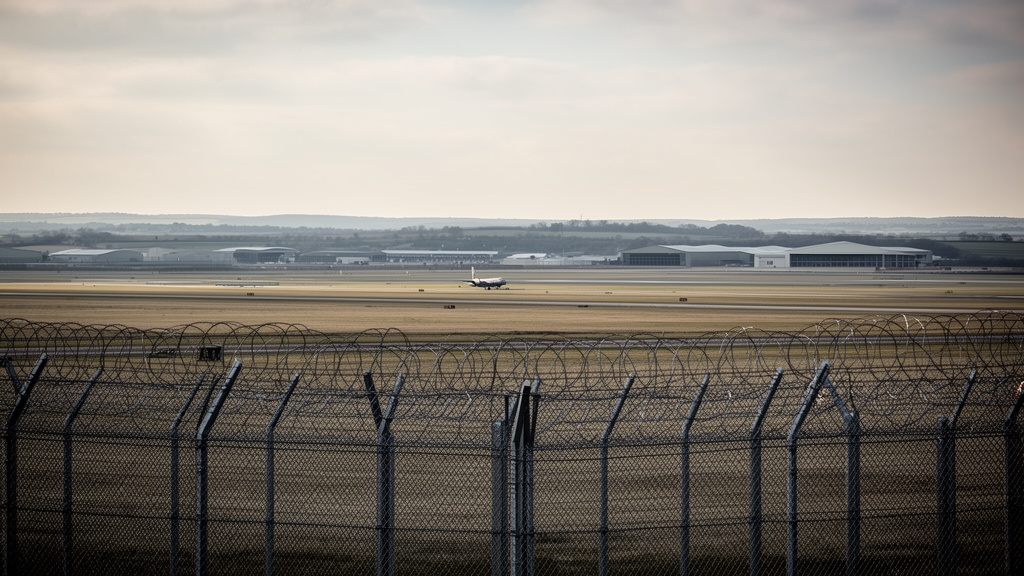
To understand the gravity of these arrests, one must consider the operational nature of RAF Fairford. While nominally a Royal Air Force station, Fairford functions as a critical forward operating location for the United States Air Force (USAF). It is one of the few European bases capable of supporting heavy bomber aircraft, including the B-52 Stratofortress, and serves as a vital hub for global reconnaissance and intelligence gathering. Throughout history, and particularly during periods of increased friction with powers like Russia and Iran, Fairford has been a strategic asset for the U.S. and NATO.
Any unauthorized activity near the perimeter of such a base—particularly involving suspected explosives—is treated with the utmost seriousness. The potential for intelligence gathering by hostile entities is a constant concern for British and American military planners. An Iran-linked investigation, should it be substantiated, would represent a significant escalation in the scope of hostile activities observed in the UK, moving beyond cyber-espionage and into the realm of physical reconnaissance against NATO military assets.
Legal and National Security Context
The UK’s counter-terrorism apparatus is designed to respond rapidly to such threats, yet it must operate within the strict confines of the law. Terrorism investigations involving foreign state actors often involve the intersection of the Terrorism Act 2000 and the Official Secrets Act. The complexity here lies in proving intent. Was the group conducting surveillance for an external power? Were they attempting to source materials for an improvised explosive device? Or were they involved in a preliminary reconnaissance operation? These are the questions currently being parsed by the Crown Prosecution Service (CPS) in coordination with security services like MI5.
Furthermore, the “Iran link” aspect of the probe suggests that investigators are looking for connections to Islamic Revolutionary Guard Corps (IRGC) affiliates or intelligence operatives, groups known for their long-range covert operations. If such a connection were proven, it would likely prompt a significant diplomatic response from the Foreign, Commonwealth and Development Office, potentially leading to sanctions, the expulsion of diplomats, or a public hardening of the UK’s stance against Iranian influence operations on British soil.
Exploring Secondary Angles
1. The Evolution of Hybrid Warfare: This incident highlights the shift from conventional military threats to hybrid warfare, where non-state actors or proxies are used to probe the vulnerabilities of critical military infrastructure without triggering a full-scale conventional response.
2. The Role of Local Policing in National Defense: Often, national security issues are viewed through the lens of intelligence agencies, but this case emphasizes the critical role of local forces (like those in Gloucestershire) and regional counter-terror units in providing the first line of defense through community vigilance and rapid response.
3. Public Transparency vs. National Security: There is an inherent tension between the public’s right to know regarding national security threats and the police’s need to maintain operational silence. This investigation tests how the UK government communicates threats without compromising ongoing international intelligence cooperation.
As the investigation continues, the focus will remain on the electronic and forensic evidence recovered from the suspects. The outcome of this probe will likely dictate future security protocols for U.S. bases in the UK, which may see an increase in surveillance, stricter perimeter security, and heightened integration with local intelligence units to preempt similar attempts in the future.
FAQ: People Also Ask
1. What is the specific role of RAF Fairford?
RAF Fairford is a key U.S. Air Force base in the UK, crucial for global projection. It is primarily used for strategic bomber deployments and specialized intelligence, surveillance, and reconnaissance (ISR) missions, making it a high-value target for monitoring by foreign states.
2. Does being released on bail mean the investigation is over?
No. In major terrorism investigations, police frequently release suspects on bail with strict conditions (such as electronic tagging or movement restrictions) while they analyze large volumes of complex data, forensics, and intelligence that cannot be fully processed within the initial detention period allowed by law.
3. What does it mean if there is an ‘Iran link’ in a terrorism investigation?
It suggests that police are looking into whether the suspects were acting on behalf of, or in alignment with, Iranian state interests or affiliated proxies. This implies the potential for the incident to be classified as state-sponsored espionage or sabotage, rather than merely domestic criminality.