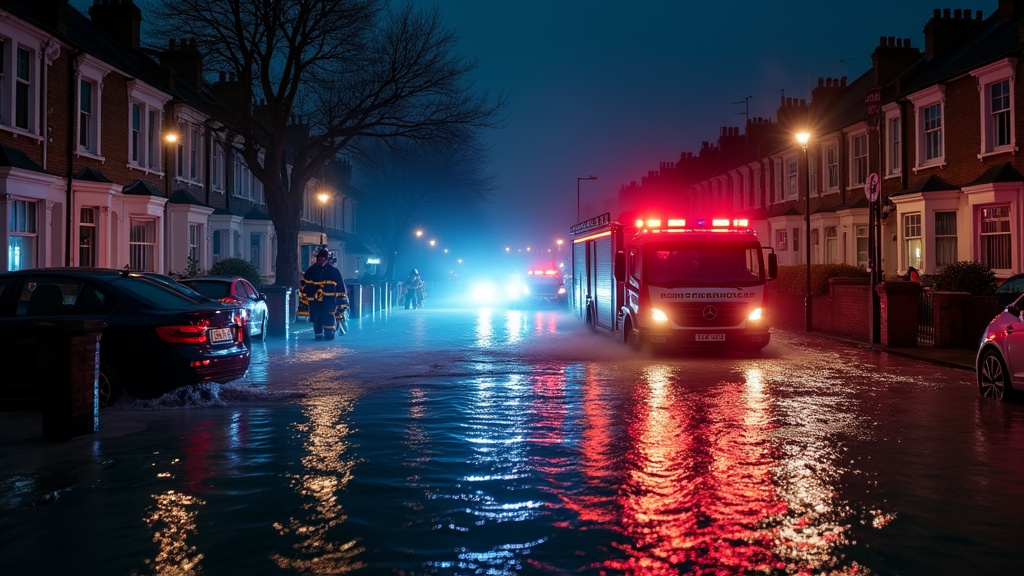
A sudden and powerful burst water main plunged parts of North London’s Islington area into chaos on Sunday evening, submerging streets under nearly half a metre of water and forcing approximately 30 residents from their homes. The incident, which unfolded shortly after 10:00 p.m. on August 10, triggered a massive emergency response from the London Fire Brigade and other agencies, highlighting the vulnerability of urban infrastructure to unforeseen failures.
The Deluge Descends on Cantonbury Street
The tranquility of a Sunday night was shattered as residents in the Cantonbury Street area witnessed an alarming surge of water. The torrent rapidly turned residential thoroughfares into raging rivers, with water levels quickly reaching an astonishing 44 cm. This significant depth rendered roads impassable and threatened countless properties, sending a ripple of concern throughout the densely populated borough. The immediate danger prompted swift public advisories, urging people to avoid critical areas that included Essex Road, Elmore Street, Halifford Street, and To Kools Road. A stern warning was also issued against the perilous act of driving through the floodwaters, emphasizing the hidden dangers of submerged vehicles and debris.
Emergency Forces Mobilize Amidst the Flood
In response to the escalating crisis, the London Fire Brigade launched a substantial operation, dispatching a contingent of 70 firefighters to the Cantonbury Street scene. Arriving swiftly after the initial reports, these dedicated professionals immediately set about mitigating the widespread damage. Their efforts were concentrated on preventing further ingress of water into residential properties, employing tactical measures such as the deployment of specialized flood barriers and strategically placed sandbags. These vital interventions helped to divert the relentless flow, protecting homes from the most severe impacts of the deluge and showcasing the critical role of emergency services in urban disaster management. The collective action demonstrated a robust response to what quickly became major news for residents and the wider London community.
Community Impact and Evacuation Efforts
The most immediate and profound impact of the burst water main was felt by the residents whose homes were directly in the path of the flood. The evacuation of approximately 30 individuals underscores the severity of the situation and the necessity of prioritizing human safety. These residents faced the daunting prospect of leaving their properties behind, uncertain of the damage they might return to. The local authority and emergency services worked in tandem to ensure the safe relocation of those affected, providing support and guidance during a distressing time. Such events, while fortunately rare in their scale, remain a popular topic of public concern, prompting discussions about urban resilience.
Road Closures and the Path to Recovery
As daylight broke on Monday, August 11, the extent of the disruption became even clearer. Islington Council moved swiftly to confirm critical road closures necessary for both public safety and the ongoing repair efforts. Notably, Cantonbury Street was shut down, with the closure spanning from Essex Road to Aaron Walk. This vital artery’s temporary cessation significantly impacted local traffic and daily routines, highlighting the widespread logistical challenges posed by such an incident in a busy urban environment.
Thames Water, the utility company responsible for the ruptured main, also provided an update on the situation. A spokesperson confirmed that the immediate priority of halting the water flow had been successfully achieved. Furthermore, they stated that the site had been secured, and an important step in the recovery process, the removal of parked cars from the affected areas, had been completed. While the immediate danger has subsided, the process of assessing the full extent of the damage, conducting necessary repairs, and restoring normalcy to the affected streets of Islington will be a significant undertaking in the days to come. This incident serves as a stark reminder of the hidden infrastructure that underpins our daily lives in London and the profound disruption that can occur when it fails.