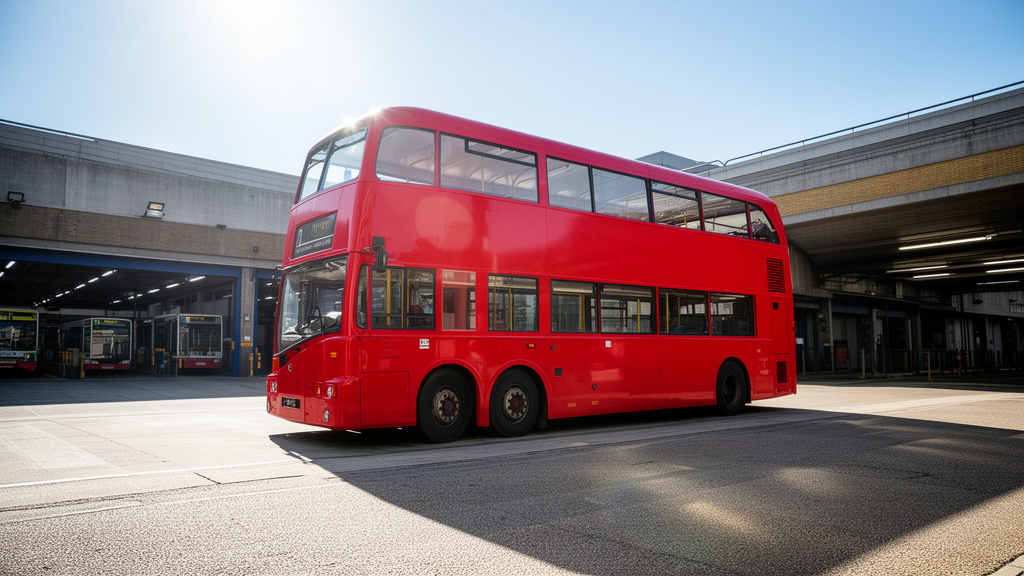
As temperatures continue to climb across the capital, a renewed wave of industrial action has gripped the London bus network. Bus drivers, represented primarily by Unite the Union, have initiated targeted strikes in response to what they describe as ‘unbearable and dangerous’ working conditions. At the center of the dispute is the failure of onboard air conditioning systems, which drivers claim are frequently broken, poorly maintained, or entirely absent in older models, forcing staff to operate vehicles in cabin temperatures that regularly exceed safe Health and Safety Executive (HSE) guidelines.
The Anatomy of the Dispute
The industrial action is not merely a request for pay parity, but a critical health and safety mobilization. Drivers report that while external temperatures in London have soared, the environment inside the driver’s cab—often a glass-encased cockpit—acts as a heat trap. Without functional climate control, these cabins can reach temperatures of 40°C (104°F) or higher during peak summer traffic. The dispute highlights a complex issue involving Transport for London (TfL), which sets the regulatory standards for bus operators, and the private bus companies (such as Arriva, Go-Ahead, and Stagecoach) contracted to deliver the service.
While TfL has mandates for vehicle quality, the implementation and maintenance of air conditioning systems have historically been left to the discretion of operators, provided they meet specific age and safety criteria for vehicles. Drivers argue that this ‘laissez-faire’ approach to fleet maintenance has allowed aging buses—many of which were never designed with adequate ventilation for a warming climate—to remain in circulation during severe heatwaves, placing both driver and passenger safety at risk.
The Technological and Infrastructure Gap
Central to the argument is the discrepancy between modern commuting expectations and legacy infrastructure. Many buses in the outer London boroughs utilize older chassis designs that lack modern, high-capacity HVAC systems. Retrofitting these vehicles is a capital-intensive process that operators have been reluctant to fund without a clear mandate from TfL or a direct subsidy. Unite the Union representatives have pointed to the ‘air con deal’—a loose framework of promises made by operators to ensure fleet reliability—as fundamentally broken. They argue that the promised upgrades to the air conditioning units have been delayed, canceled, or poorly executed, leaving drivers to bear the brunt of the heat.
From an operational standpoint, the friction arises from the delicate balance of service continuity. Transport for London is under immense pressure to ensure the bus network remains operational, as it serves as the backbone of transport for millions of Londoners who cannot rely on the Tube. This creates a leverage point: the union knows that halting the bus service significantly impacts the city’s economic mobility, while operators are wary of the costs associated with an immediate, city-wide fleet upgrade program.
Health, Safety, and the Regulatory Landscape
There is a broader debate occurring regarding workplace safety legislation in the UK. Unlike in some European jurisdictions, the UK does not have a strict, legally mandated maximum working temperature for workplaces. Instead, the HSE provides guidance that temperatures should be ‘reasonable.’ However, trade unions argue that a driver’s cab, which is a specialized workstation, constitutes a unique environment where heat exhaustion poses an immediate risk to public safety. A driver suffering from heat stress faces impaired reaction times, fatigue, and potential fainting—all of which could result in catastrophic accidents.
This strike is forcing a re-evaluation of whether TfL contracts need to include more rigid, enforceable clauses regarding internal cab temperature management. Experts suggest that as climate change drives more frequent heatwaves in the UK, the current voluntary ‘best effort’ approach to air conditioning will no longer suffice, and will likely necessitate a regulatory overhaul of fleet procurement contracts.
Looking Ahead: The Future of the Fleet
As the strike progresses, the impact is being felt across the city. Commuters face reduced services and long wait times, while the economic implications for bus operators are mounting daily. The resolution of this dispute will likely serve as a blueprint for other transport sectors dealing with similar climate-related operational strains. Both sides are currently at an impasse; the union is calling for an independent audit of all bus fleet air conditioning systems, while operators continue to cite the prohibitively high cost of rapid fleet renewal amidst current economic volatility.
Ultimately, this conflict serves as a case study in how climate change is testing the resilience of urban infrastructure. It is no longer a question of passenger comfort; it has become a fundamental labour rights issue regarding the ability to work in a safe, environmentally controlled space.
FAQ: People Also Ask
Q: Why are London bus drivers specifically striking over air conditioning?
A: Drivers are striking because many bus cabins lack adequate air conditioning, causing temperatures to rise to dangerous levels during heatwaves. They argue that this impacts their health, safety, and ability to operate buses safely.
Q: What is the role of Transport for London (TfL) in this dispute?
A: TfL sets the standards for bus operators but does not directly own or maintain all buses. The dispute puts pressure on TfL to enforce stricter standards for air conditioning and maintenance in the contracts they sign with private bus operators.
Q: How does this strike affect London commuters?
A: The strike leads to significant service disruptions, including reduced bus frequencies, longer wait times at stops, and an increase in commuter reliance on alternative transport methods, such as the London Underground or cycling.
Q: Is there a legal ‘maximum temperature’ for workplaces in the UK?
A: There is no specific legal ‘maximum temperature’ in the UK. The Health and Safety Executive (HSE) advises that employers must provide a ‘reasonable’ temperature in the workplace, which is a subjective standard that is currently being challenged by unions in the context of transport roles.