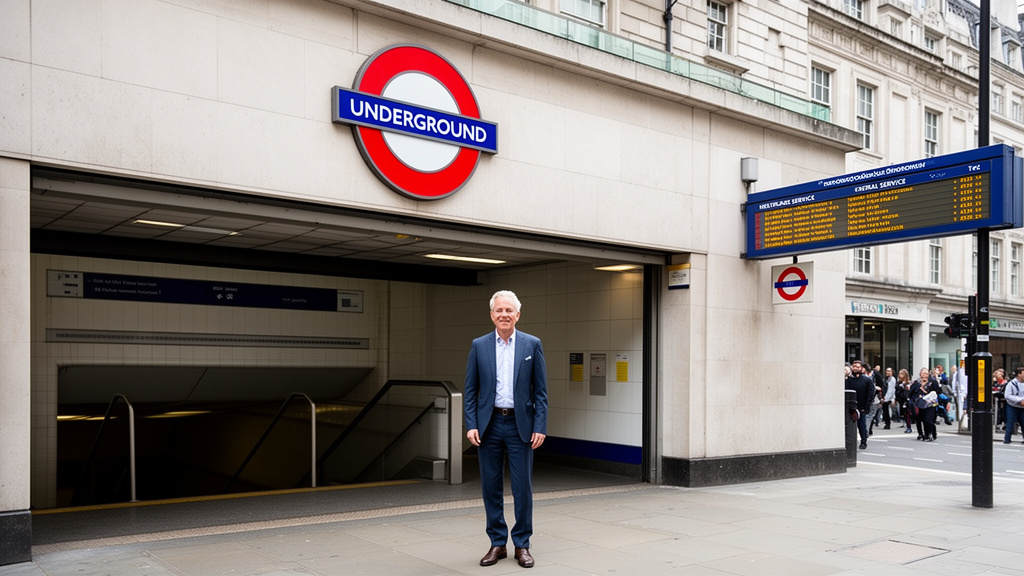
Commuters across Central London are facing severe transport disruptions today following a “casualty on the tracks” incident that has halted operations between Embankment and Earl’s Court stations. Transport for London (TfL) has confirmed that the Circle, District, and Hammersmith & City lines are experiencing significant delays and partial suspensions as emergency services attend the scene to manage the situation and conduct necessary investigations.
Key Highlights
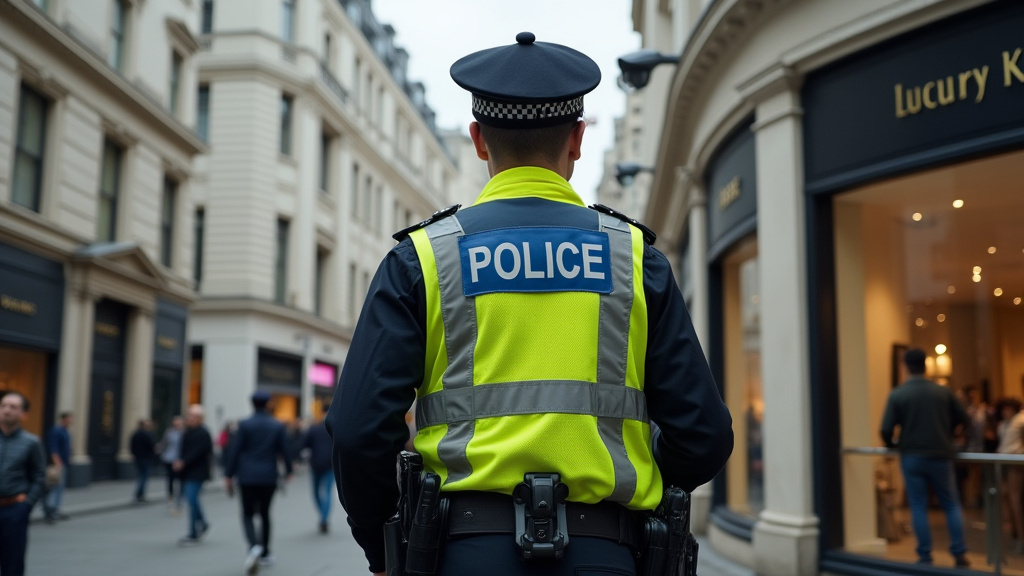
- Emergency Response: Emergency services, including the British Transport Police (BTP) and medical teams, are currently on-site between Embankment and Earl’s Court.
- Line Impact: Severe delays are affecting the entirety of the Circle, District, and Hammersmith & City lines, with partial suspensions in place to facilitate response efforts.
- Travel Advice: TfL strongly advises passengers to check the status of their journeys before traveling and to utilize alternative bus routes or National Rail services where possible.
- Operational Status: The suspension is expected to remain in effect while the area is cleared; commuters should anticipate ongoing disruption throughout the rush hour period.
The Operational Impact of London’s Underground Emergency
The London Underground system acts as the circulatory system for the UK capital, and the abrupt closure of any major artery—particularly the stretch between Embankment and Earl’s Court—creates immediate, cascading consequences. This specific section of the network serves as a critical junction, linking the historic District line with the orbital Circle line and the busy Hammersmith & City branch. When a “casualty on the tracks” occurs, the protocols triggered by Transport for London are swift and uncompromising, prioritizing the safety of the individual and the preservation of the scene for police investigation.
The Anatomy of a System Suspension
When an incident of this nature is reported, the control room immediately implements a “Code Red” equivalent for line operation. The power to the electrified rails is cut in the specific zone to allow emergency services safe access to the track bed. Unlike a mechanical failure, where a train might be moved or a signal fixed, a track casualty requires a forensic approach. The British Transport Police must secure the area to determine the circumstances of the event, which often prolongs the suspension significantly beyond the initial discovery time.
For passengers, this manifests as a sudden “standstill” on trains, followed by slow-speed movement to the next station to offload commuters, after which the line is fully closed. The complexity of the interlinked signaling between the District and Circle lines means that a delay at Embankment ripples outward, affecting train dispatch frequencies all the way to Ealing Broadway and Upminster.
Navigating the Commuter Fallout
For the thousands of commuters caught in this disruption, the immediate challenge is finding alternative navigation. Central London is dense, but the displacement of passengers from the Underground forces them onto the already crowded bus network and over-ground rail services. TfL typically activates mutual ticket acceptance, allowing Underground passengers to use their tickets on local buses at no additional cost. However, the sheer volume of redirected commuters often leads to “crush loads” on alternative routes, compounding the difficulty of the morning or evening commute.
Economic analysts have frequently pointed to these major transport disruptions as significant productivity drains. Even a two-hour delay across these three major lines can result in millions of pounds in lost economic activity, as office workers, service staff, and tourists are stalled in the network.
Safety Infrastructure and Future-Proofing
The London Underground is one of the oldest subway systems in the world, and balancing its Victorian-era architecture with modern safety protocols remains a constant challenge. Incidents on the tracks often reignite public discourse regarding platform safety. While modern stations (like those on the Jubilee line extension) feature platform screen doors—a physical barrier that prevents access to the track bed—the older stations between Embankment and Earl’s Court remain “open-platform” designs.
Transport for London continually evaluates its safety infrastructure, balancing the massive capital expenditure required for platform screen doors against the operational realities of aging tunnel systems. While infrastructure improvements are ongoing, today’s incident serves as a stark reminder of the vulnerability of the network and the critical importance of the mental health and emergency response initiatives that TfL funds in partnership with organizations like the Samaritans and the BTP.
FAQ: People Also Ask
Q: How long will the disruption on the Circle, District, and Hammersmith lines last?
A: While TfL aims to clear incidents as quickly as possible, investigations into track casualties typically take several hours. Commuters should check the TfL status updates website or the ‘TfL Go’ app for the latest estimated time of resumption.
Q: Can I get a refund for my delayed journey?
A: Yes, if your journey is delayed by 15 minutes or more due to a delay on the London Underground, you are eligible to claim a refund for that single fare via the TfL website.
Q: Are there alternative routes I can take to bypass the affected area?
A: Passengers are advised to use local bus routes or consider alternative National Rail services. TfL staff are actively providing guidance at major interchanges; keep an eye on station announcement boards for specific route changes.
Q: Is it safe to travel on other parts of the Underground?
A: Yes. The rest of the London Underground network remains operational, though overcrowding is likely on alternative lines that serve similar geographic areas. Always check the live map before commencing travel.