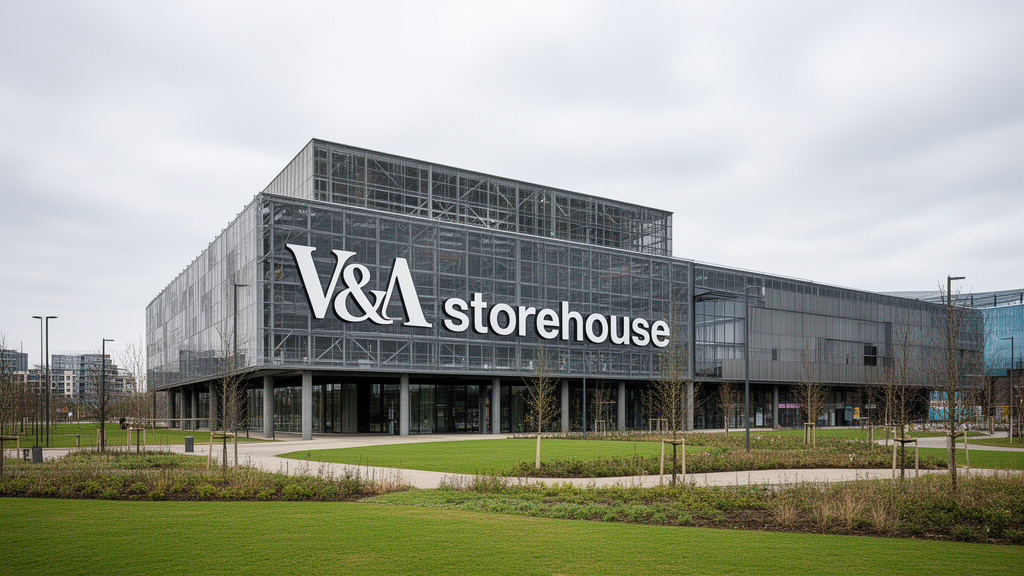
Staff at the V&A Storehouse, the newest and most expansive facility within the Victoria and Albert Museum’s portfolio in London, have voted overwhelmingly to authorize strike action. The decision, driven by members of the Public and Commercial Services (PCS) union, highlights a growing chasm between museum management and the operational staff responsible for the care and security of the institution’s vast archives. The dispute centers not merely on wages, but on fundamental working conditions—specifically, the accessibility of hydration and essential bathroom breaks during long, often physically demanding shifts.
The Flashpoint: Dignity at Work
The core of the conflict at the V&A Storehouse, located within the Queen Elizabeth Olympic Park, revolves around the daily logistics of the workforce. Representatives from the PCS union have stated that staff have faced significant hurdles in accessing basic amenities. For workers tasked with the stewardship of world-class artifacts in a massive, semi-industrial environment, the inability to take timely hydration or sanitation breaks has been described by union officials as a violation of basic human dignity. The strike vote serves as a stark signal that the workforce, which spans visitor assistants, security, and collections support staff, has reached a breaking point regarding the internal management policies governing their daily routines.
A Broader Movement Across the V&A
This industrial action is not an isolated incident contained within the Storehouse walls. It is part of a systemic dispute affecting multiple V&A sites across London, including the flagship institution in South Kensington. The union has argued that the centralization of management policies has led to a ‘one-size-fits-all’ approach that fails to accommodate the specific physical demands of different sites. By voting to strike, staff are effectively demanding a renegotiation of working protocols that have been implemented without adequate consultation with the frontline employees who are most impacted by these logistical constraints.
Anatomy of a Cultural Labor Dispute
The Shift Toward Industrialized Museum Work
The nature of museum work has undergone a significant transformation over the last decade. As institutions like the V&A expand into ‘Storehouse’ models—massive facilities designed for research and public access—the operational reality has moved closer to warehousing and logistics. This shift requires a reconsideration of labor rights. The V&A Storehouse is not merely an office; it is a complex, sprawling facility. Management, however, has been accused of applying rigid, retail-style break policies that are incompatible with the realities of navigating such a large, specialized environment. This disconnect is at the heart of the current stalemate.
Economic Impact and Operational Continuity
A strike at the V&A Storehouse presents a significant operational challenge. Unlike the main V&A site, which relies on high-volume foot traffic, the Storehouse model is designed for deep-dive research, public tours, and long-term conservation. Any disruption to the staffing levels here threatens to halt the accessibility of the collection, impacting researchers, school groups, and international scholars who rely on booked sessions. Economically, the museum faces the double-edged sword of lost revenue and reputational damage. If the strike persists, it could necessitate the cancellation of scheduled public access days, forcing the V&A to navigate a public relations crisis while simultaneously attempting to address the grievances of its workforce.
Future Implications for Cultural Institutions
The outcome of this labor dispute will likely serve as a bellwether for other major cultural institutions in the United Kingdom. As museums face budget tightening, the temptation to streamline operational costs often leads to the erosion of staff working conditions. If the V&A staff succeed in securing better, more flexible terms, it will embolden other museum workers currently navigating similar disputes. Conversely, a failure to reach an agreement could lead to an exodus of skilled staff who have deep institutional knowledge—a loss that would be felt far more acutely than the temporary closure of a facility.
FAQ: People Also Ask
Why are V&A Storehouse staff striking specifically about bathroom and hydration breaks?
While industrial disputes often focus on pay, the grievances at the V&A Storehouse are centered on the ‘basic’ working environment. Staff have reported that current management policies make it prohibitively difficult to access water or restrooms during shifts, particularly in a facility as large as the Storehouse. For the union, this is a matter of health, safety, and human dignity.
How does this strike affect the wider Victoria and Albert Museum network?
The action at the Storehouse is part of a coordinated movement involving the PCS union across various V&A locations. Because the museum operates under centralized policies, a victory for the Storehouse staff could force management to revisit and revise break-time policies across the entire network, including the South Kensington main site.
Is the V&A Storehouse currently open to the public?
The V&A Storehouse operates on a specific public access model. Potential visitors should check the official V&A website for the latest updates regarding closures. If the strike action proceeds, it is highly likely that tours and research access will be suspended, as the facility cannot safely operate without the required security and collections support staff.
What is the next step for negotiations?
The ball is now in the court of V&A management. Having received a strong mandate from the workforce via the strike ballot, the PCS union is calling for immediate, constructive dialogue. If management refuses to address the specific grievances regarding working conditions, the union has indicated that further escalation, including coordinated walkouts, is highly probable.