As the London art calendar shifts into the autumn season, the city’s galleries are unveiling a new wave of compelling exhibitions. For art enthusiasts and collectors alike, September represents a critical moment to witness the trajectory of contemporary discourse. Expert critic Tabish Khan has curated a definitive list of five exhibitions that are currently commanding attention across the capital. These selections offer more than just aesthetic pleasure; they provide a lens through which to view current trends, from the evolution of sculptural minimalism to the intimate narratives of emerging global voices.
The Curatorial Landscape: Why September Matters
The arrival of September in London signals a revitalized energy in the commercial and institutional art sectors. Following the quieter summer months, galleries strategically schedule their strongest, most conceptual exhibitions to coincide with the return of collectors and the general public. This period is often where the most significant dialogues between established masters and rising stars occur. By focusing on galleries like White Cube and Tiwani Contemporary, we are not merely looking at art; we are observing the strategic positioning of artists within the global market.
1. Gabriel Orozco at White Cube, Bermondsey
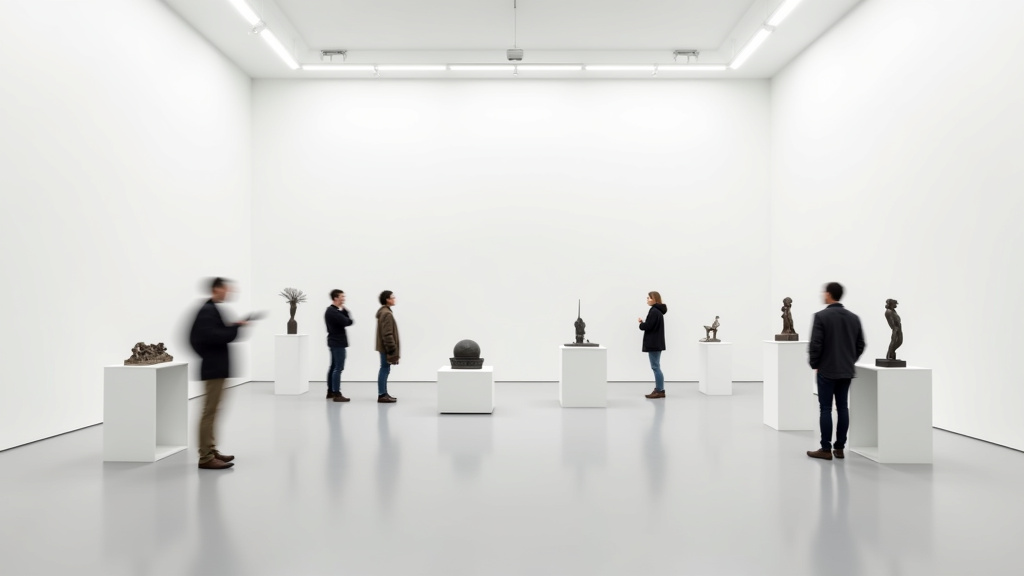
At the forefront of this month’s recommendations is Gabriel Orozco’s highly anticipated return to White Cube in Bermondsey. Orozco, a titan of contemporary practice known for his cerebral approach to everyday objects, continues to challenge our perception of space and form. This exhibition is essential viewing for those interested in the evolution of conceptual sculpture. Orozco’s ability to imbue the mundane—bicycle wheels, billiard tables, or circular motifs—with profound mathematical and existential weight remains unparalleled. His work demands a slow, deliberate engagement, pushing the viewer to rethink the architecture of the gallery space itself.
2. Sabrina Tirvengadurum at Tiwani Contemporary
Shifting from the monumental to the intimate, Sabrina Tirvengadurum’s exhibition at Tiwani Contemporary provides a vital contrast. Tirvengadurum’s practice is deeply rooted in personal and collective history, utilizing techniques that prioritize tactility and emotional resonance. Her work often invites the viewer into a space of reflection, offering a necessary counterpoint to the high-gloss, high-stakes atmosphere of larger London galleries. For those interested in the ‘human-centric’ turn in contemporary art, this show is a mandatory visit.
3. The Hayward Gallery: Exploring Architectural Dialogue
The Hayward Gallery remains a cornerstone of the Southbank, consistently pushing the boundaries of what a public gallery can achieve. Currently, their curation mirrors the shifting socio-political climate, often prioritizing artists who interrogate the intersection of history and modern identity. Engaging with the Hayward’s September lineup allows visitors to understand how institutional spaces are currently tackling the ‘post-pandemic’ appetite for larger, more immersive installation works.
4. The Royal Academy of Arts: Bridging Tradition and Modernity
No list of London exhibitions would be complete without acknowledging the Royal Academy of Arts. While the Academy is often associated with historical preservation, its contemporary programming—specifically during the late-summer transition—highlights the ongoing conversation between classical techniques and digital-age disruption. It serves as a necessary anchor for understanding where contemporary art fits within the longer timeline of British cultural history.
5. Sadie Coles HQ: The Pulse of Contemporary Sculpture
Finally, Sadie Coles HQ consistently highlights the cutting-edge of the commercial market. Their September exhibitions often feature a blend of established contemporary figures and experimental projects that test the limits of media. This space is where one goes to gauge the ‘market temperature’ of London, offering insights into what collectors are buying and what trends are likely to dominate the upcoming Frieze London season.
Secondary Angles: Art, Economy, and Future Trends
Beyond the specific works on display, there are three critical secondary angles to consider this September.
First, consider the economic impact of the London gallery circuit. The influx of international visitors for the autumn season significantly boosts the hospitality and secondary art sectors, creating a micro-economy that sustains the city’s creative ecosystem.
Second, the trend toward solo-artist retrospectives indicates a shift in gallery strategy; by focusing on a singular, deep-dive narrative, galleries are fostering more meaningful relationships between the artist and the audience, moving away from the ‘mixed-bag’ group shows that dominated the last decade.
Third, we are seeing a digital-physical hybrid future. Many of these galleries are integrating augmented reality or online viewing rooms to supplement the physical experience, ensuring that the art remains accessible to a global audience even as we return to in-person viewing.