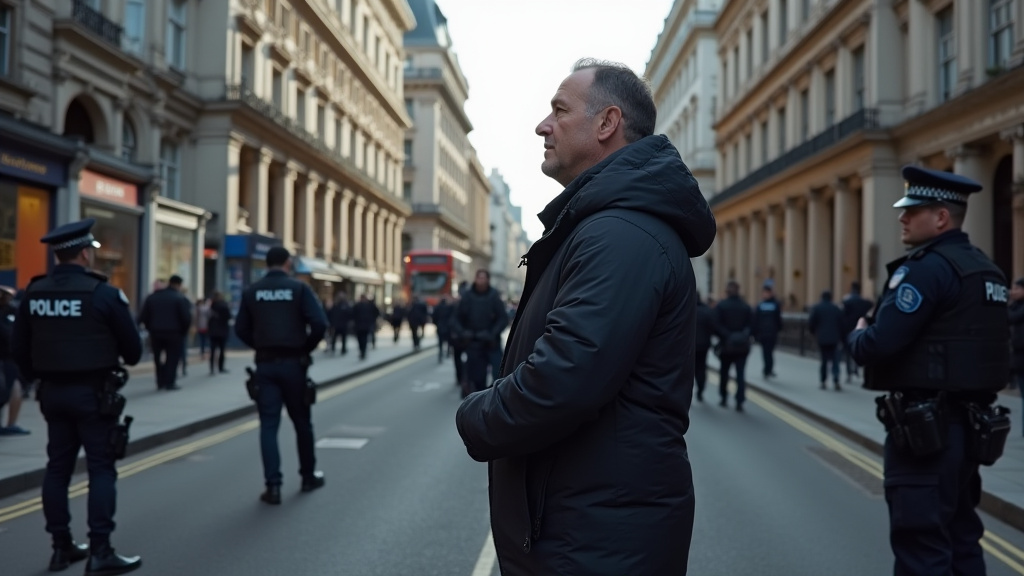
The Metropolitan Police have issued a stark warning to student organizers planning a pro-Palestine march scheduled for October 7 in London. In an unprecedented move aimed at maintaining public order and community safety, senior officers have requested that the organizers voluntarily call off or relocate the event. The intervention stems from the recognition that October 7, 2024, marks exactly one year since the Hamas-led massacre in Israel—a date that holds deep, traumatic significance for the Jewish community globally and in the UK.
The Anatomy of the Police Intervention
The Metropolitan Police, tasked with balancing the right to peaceful protest against the duty to prevent public disorder and distress, have cited the highly sensitive nature of the anniversary. By initiating early dialogue with the student groups involved, the police are attempting to leverage the powers granted under the Public Order Act to avoid a repeat of the heightened tensions seen throughout previous protests in London.
Officers have emphasized that the primary concern is not the content of the protest itself, but the specific timing. The event, if permitted to proceed on this date, risks crossing the threshold from lawful assembly into an act that would cause significant, targeted distress to Jewish staff and students. This is a crucial nuance: the intervention is less about the politics of the protest and more about the management of public order on a day of national and international mourning for the victims of the October 7 massacre.
Legal Framework and Policing Strategy
The policing of demonstrations in the UK has undergone significant legislative change in recent years, particularly following the amendments introduced by the Police, Crime, Sentencing and Courts Act 2022. These powers grant the police greater latitude to impose conditions on protests that threaten to cause ‘serious disruption to the life of the community’ or, in specific contexts, create a direct threat to public safety.
Under Section 12 and Section 14 of the Public Order Act 1986, the Metropolitan Police have the authority to impose conditions regarding the route, duration, and even the maximum size of a protest. While the police are currently pursuing a voluntary agreement, the failure of organizers to comply with these requests could force the force to utilize these statutory powers to either restrict the march or, in extreme circumstances, apply to the Home Secretary for a temporary ban on public processions.
The Campus Climate and International Tension
Secondary to the immediate police intervention is the broader question of the ‘campus climate’ within UK universities. The October 7 anniversary poses a severe challenge to higher education institutions, which have struggled to balance their legal obligations to ensure freedom of speech against their duty of care to protect all students from harassment and intimidation.
University campuses have become hotbeds for the debate surrounding the Israel-Palestine conflict. Many Jewish students have reported feeling increasingly unsafe, citing the proliferation of protests that, while sometimes framed as anti-war, have occasionally devolved into rhetoric that crosses into antisemitism. The current situation in London highlights the disconnect between the intent of the protesters—who argue they are advocating for human rights—and the perception of the Jewish community, who view the timing of such an event as a provocation.
Historical Context: The Significance of Timing
Why does the date matter so much? The events of October 7, 2023, represented the single deadliest day for Jewish people since the Holocaust. For many, the date is not just a political marker but a day of profound grief.
From a sociological perspective, staging a protest on the first anniversary of a traumatic event is viewed by critics as a calculated attempt to maximize emotional impact. The Metropolitan Police are keenly aware of this dynamic. By attempting to move the march, they are not only looking to reduce the operational burden on their officers but are also attempting to prevent the protest from becoming a focal point for counter-protests, which would exponentially increase the risk of violence and public disorder.
Future Implications for Protest Policing
The outcome of this standoff will set a significant precedent for how the Metropolitan Police handle future protests tied to sensitive anniversaries. If the march proceeds as planned despite police warnings, it will force the government to reconsider the limitations of the current Public Order Act. Conversely, if the organizers agree to move the date, it may establish a new norm of ‘negotiated protests’ where the police play a more active role in setting the calendar of public demonstrations to safeguard community cohesion.
Ultimately, the situation underscores the difficulty of protecting democratic rights in a society deeply fractured by international conflict. As the date approaches, all eyes will be on the organizers and the Met to see if a compromise can be reached before the streets of London become the battleground for the memory of October 7.